By Quincy Winston, Iridium Diversity & Inclusion Council member and Customer Care Support Specialist
As February unfolds, so does the celebration of Black History Month, a time dedicated to recognizing and honoring the rich tapestry of African American contributions that have shaped the United States and the world. This annual observance is a poignant reminder of the pivotal role African Americans have played in history, culture, science, politics, and beyond. It serves as a platform to celebrate achievements, shed light on historical struggles, and foster a deeper understanding of the ongoing fight for equality and justice.
The origins of Black History Month can be traced back to the pioneering work of Dr. Carter G. Woodson, known as the “Father of Black History.” In 1926, Dr. Woodson, along with the Association for the Study of Negro Life and History, established “Negro History Week” to coincide with the birthdays of Abraham Lincoln and Frederick Douglass. The week aimed to ensure that the achievements and history of African Americans were incorporated into the broader historical narrative.
Over time, Negro History Week evolved into Black History Month, officially recognized in the United States in 1976. This extension acknowledged the need for a more comprehensive exploration of African American contributions and struggles throughout history.
Black History Month is not just a month; it is a powerful reminder of the need for ongoing dialogue, understanding, and action. By recognizing and celebrating the contributions of African Americans, we honor the resilience, strength, and spirit that have shaped the nation’s history. As we reflect on the achievements of the past, let us also commit to creating a future where diversity is celebrated, equality is embraced, and justice prevails for all.
This milestone achievement and partnership propels Iridium into a select league of technology providers uniquely positioned to help customers take advantage of all AWS has to offer and accelerate their journey to the cloud.
A Paradigm Shift in Satellite IoT Connectivity
Developers seeking a unified platform to manage connected devices can harness the power of Iridium CloudConnect in tandem with AWS’s supporting infrastructure and services. This translates to reduced engineering time, lowered operating costs, and expedited development of IoT products and applications.
For existing AWS customers, Iridium CloudConnect eliminates the barriers of terrestrial coverage, enabling easy expansion of service footprints. This accessibility opens avenues for enhanced service offerings and improved performance through Iridium satellite connectivity.
With Iridium CloudConnect, IoT is no longer limited by distance—expanding innovation, efficiency, and possibilities anywhere in the world.
Empowering Iridium CloudConnect through AWS Validation
Iridium CloudConnect stands as a testament to the unrelenting pursuit of innovation, integrating the truly global reach of the Iridium network with AWS IoT and cloud services. Since its inception, the solution has made it easier for companies to extend their IoT connectivity to more than 80% of the Earth’s surface that lacks terrestrial coverage. Iridium CloudConnect’s successful AWS validation re-emphasizes its capacity to meet and exceed these benchmarks, making it a leading trusted partner in the world of IoT solutions.
The partnership between Iridium and AWS builds on an alliance that provides IoT solutions to benefit mutual customers. It signifies a collaborative endeavor to innovate, overcome technical complexities, and deliver exceptional value. By combining Iridium’s truly global coverage and weather-resilient, highly reliable satellite network capabilities with AWS’s leading cloud platform, this partnership continues the trajectory of transformative solutions.
Other Posts
Check out our other posts in this series to learn more about the Iridium – AWS partnership and what it enables:
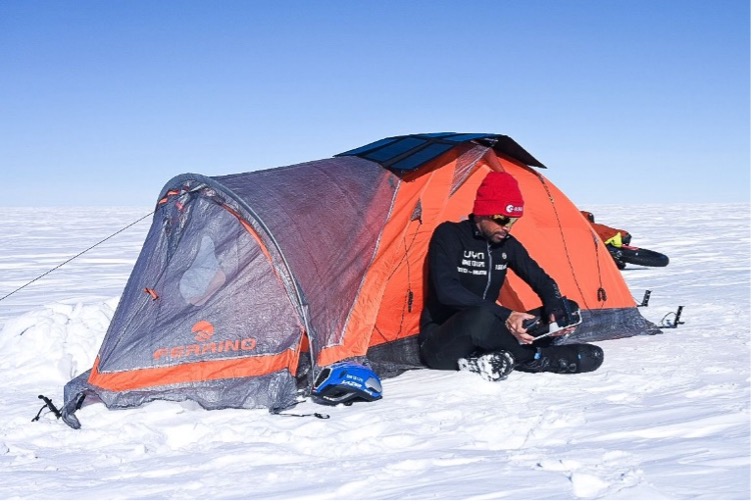
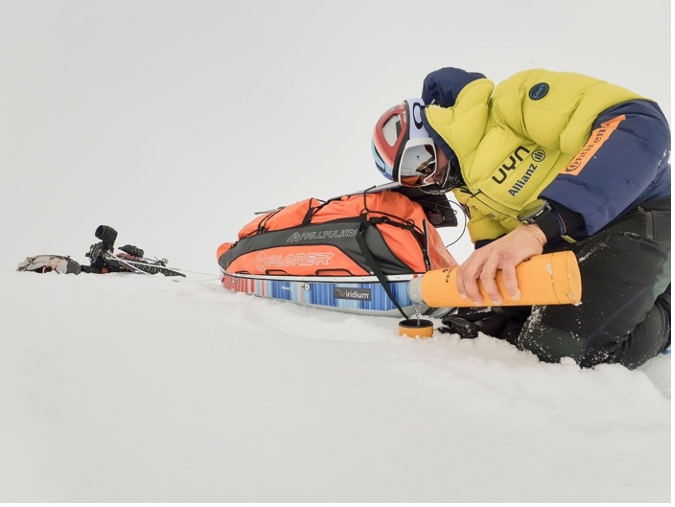
MCLEAN, VA., January 16, 2024 – Iridium Communications Inc. (Nasdaq: IRDM) is proud to announce its support of Omar Di Felice and the Antarctica Unlimited Project, the longest solo riding attempt by bicycle on the continent. The Italian ultra cyclist, well known for his difficult solo-biking treks in some of the world’s most remote locations, has travelled to Antarctica to cycle across the continent in an effort to set a record while spreading climate change awareness.
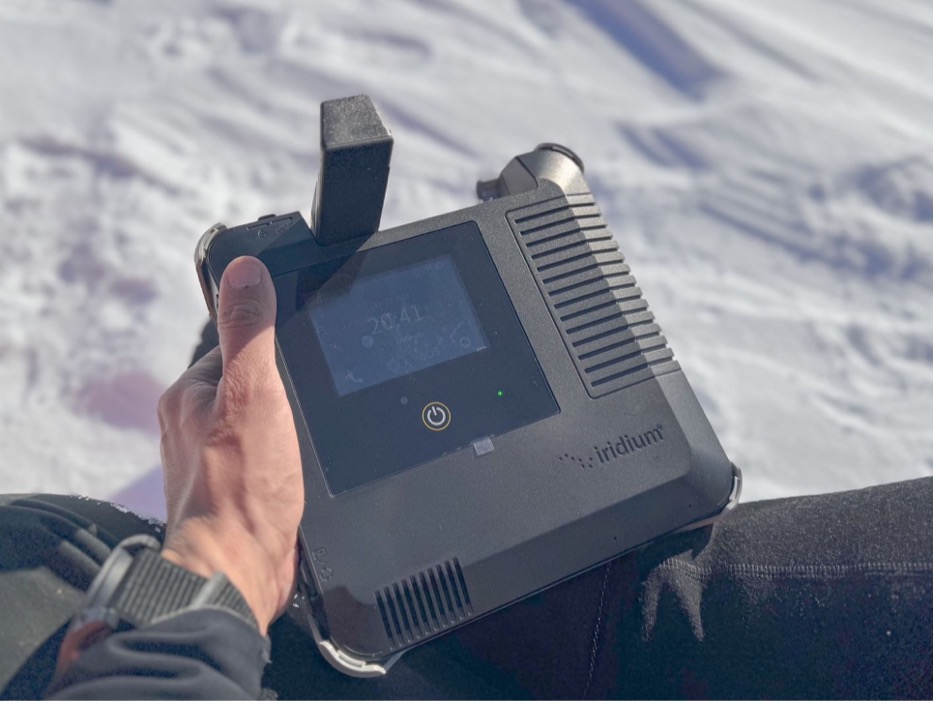
Enduring a journey in such an extreme environment requires Omar to use durable equipment and a reliable network that can withstand harsh conditions. Along his route, Omar has at his disposal an Iridium Extreme® and Iridium GO! exec®, both of which feature military-grade housing and use Iridium’s truly global, weather-resistant, L-band network—making them the perfect communication solutions for his journey. The devices are used primarily for safety and overall communication purposes, allowing Omar to get in contact with whomever, whenever, from anywhere, throughout his journey.
“It is the biggest and most ambitious project of my life. It’s not a secret that Antarctica is one of the world’s most remote and unforgiving places. When I was in the beginning stages of building this project, I knew my safety had to be top of mind,” said Di Felice.
“I was incredibly grateful to discover that devices connected with Iridium’s network could reach Earth’s polar regions. The Iridium Extreme has given me unmatched peace of mind knowing that I can signal for an SOS and reach help in a moment’s notice. It’s also been very useful to have the chance to share pictures with those following my journey via the Iridium GO! exec.”
The Iridium Extreme and Iridium GO! exec are portable, water-resistant (IP65 rating), and robust satellite communication devices that operate over the Iridium satellite network.
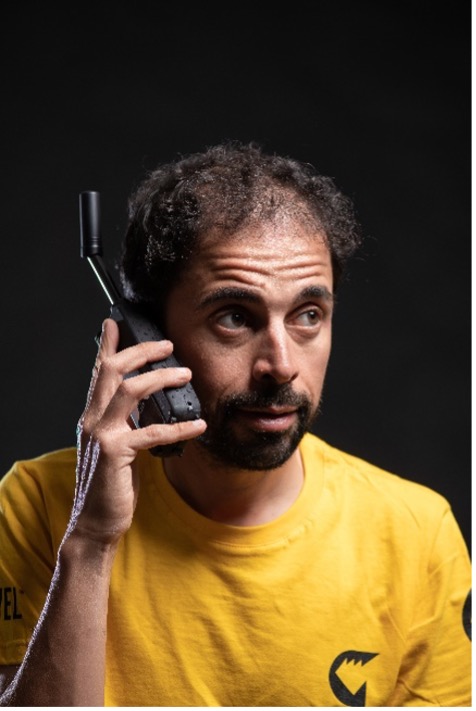
Iridium Extreme allows users to voice call and signal for SOS anywhere in the world, enabling off-grid outdoor enthusiasts, such as Di Felice, to focus on what’s in front of them without being disconnected from emergency services.
Di Felice using the Iridium Extreme satellite phone
Iridium GO! exec provides satellite connectivity for your smartphone. The reliable tandem of the device and the Iridium GO! exec App allows users to share pictures, text message, e-mail, and browse the Internet from their own smartphones.
Iridium® is the only mobile voice and data satellite communications network that spans the entire globe. Iridium enables connections between people, organizations and assets to and from anywhere, in real time. Together with its ecosystem of partner companies, Iridium delivers an innovative and rich portfolio of reliable solutions for markets that require truly global communications. In 2019, the company completed a generational upgrade of its satellite network and launched its new specialty broadband service, Iridium Certus®. Iridium Communications Inc. is headquartered in McLean, Va., U.S.A., and its common stock trades on the Nasdaq Global Select Market under the ticker symbol IRDM. For more information about Iridium products, services and partner solutions, visit www.iridium.com.
Press Contact:
Jordan Hassin
Iridium Communications Inc. Jordan.Hassin@iridium.com
+1 (703) 287-7421
Investor Contact:
Kenneth Levy
Iridium Communications Inc. Ken.Levy@Iridium.com
+1 (703) 287-7570
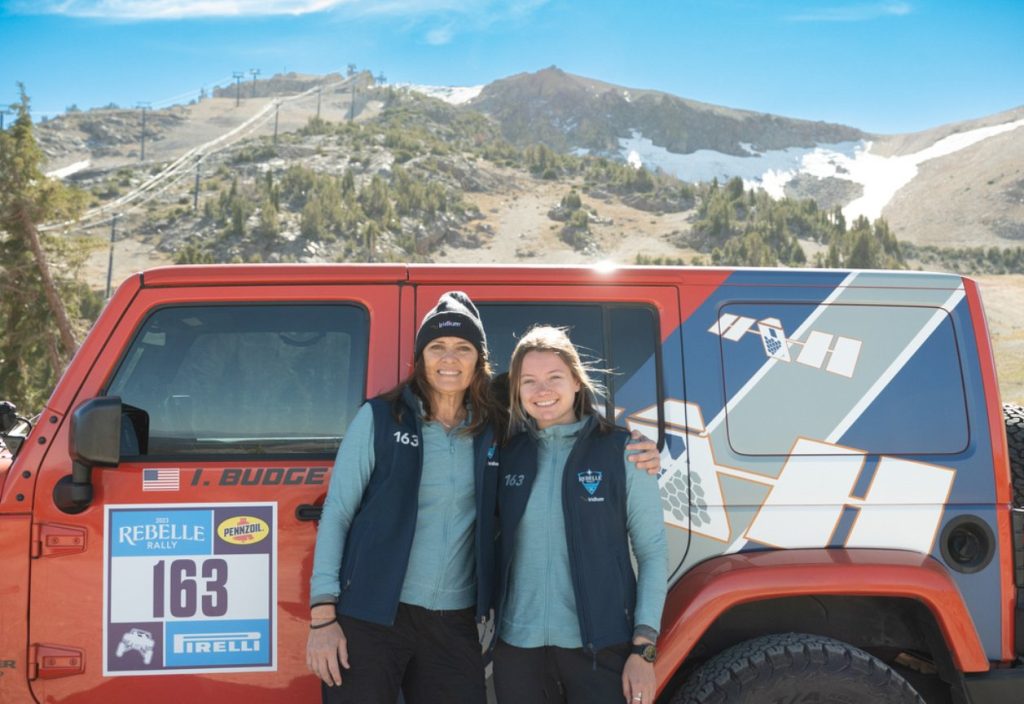
Last month, four Iridium® team members tested their limits against 62 other teams in the Rebelle Rally. Spanning more than 2,000 kilometers across the Nevada and California desert, it’s the first women’s off-road navigation rally in the United States.
Iridium is proud to stand as the Rebelle Rally’s official communications and safety partner, ensuring teams have access to emergency communications services as they navigate the desert without cell service and only their maps, compasses, roadbooks, and wits to guide them.
Let’s check back in with our competitors now that the race is done and they’ve had some time to reflect on the experience:
What motivated you to compete in the Rally?
“Personally, my motivation was to try out a challenge that was known to be difficult and really see what I was made of,” said Severson. “When I was applying to compete in the Rebelle Rally, I was new to Arizona and new to Iridium, so it was just a great opportunity to jump in, learn about Iridium, and learn about myself.”
“I was really intrigued by the Rebelle Rally when I watched Iridium COO, Suzi McBride, participate,” said Swazey. “I thought, ‘What a great challenge and awesome opportunity.’ I’m no stranger to off-roading and this looked like an amazing, empowering, and gritty competition.” She continued, “This was my first time competing in any type of off-road competition, rally, or race. The closest thing I could liken it to was being deployed with the U.S. forces in the Middle East—extreme temps, grit and grind, and an overwhelming sense of teamwork and accomplishment at the end.”
Team NEXT Wave: Cindy Swazey & Annabelle DaSilva
As an Iridium employee, what did it mean to you to participate in this experience?
“As an engineer who’s buried in the weeds most of the time, I don’t always get the opportunity to see how our products impact people in a day-to-day way,” Budge explained. “While the Rebelle Rally isn’t an emergency situation, without Iridium the reality of the race would be incredibly different. It really changes your mindset while you’re in the event because you have the confidence and security that Iridium is there should you need to get in touch with someone.”
How did you utilize Iridium Connected™ technology during the Rally?
DaSilva describes an instance when she and partner, Swazey, broke the housing of an axle during the Rally. “It was probably the worst incident we had during the race, and we were so grateful to have an Iridium satellite phone at hand to call for dispatch,” she recalls. “The response and mechanic assistance was incredible, and our car was fixed and
ready to go so we could be at the starting line the next morning!”
Team Desert Crush: Isa Budge & Lauren Severson
What was a standout moment from the competition?
DaSilva: “Everything about the Rally was so exciting, but I think my favorite part was camping in Coyote Buttes [a section of the Paria Canyon-Vermilion Cliffs Wilderness spanning extreme south-central Utah and north-central Arizona] under the stars. The bonding experience of camping with the other women competing in the race was truly awesome.”
Budge: “On the second-to-last day of the Rally, Lauren and I participated in an x-enduro, a course for higher skill level off-roading with step-by-step directions. It was a difficult challenge, and we were directly tailing the leading team at first but then hit this chute in the sand that took us a couple of times to get up. We were stuck and turned around for more than an hour. Long story short, we found the flag before the leading team! It was so rewarding that, in our roundabout way, we found the flag, did some crazy driving, and scored the points!”
Severson: “A really standout moment for me was when Isa and I were following a roadbook and ended up backtracking to find a missed turn. Just when we thought we’d make it to the checkpoint in time we heard our shock dragging on the ground. We ended up taking the shock off and missing the checkpoint, but we just had so much fun doing that challenge despite the obstacles. It was a great lesson that sometimes you can’t have it all, and we decided to have fun rather than race to the checkpoint with a malfunction.”
Swazey: “There were so many standout moments—camping under the stars with a group of women, totally isolated from the world, no electronics or phones, in the middle of nowhere with just maps, vehicles, some food and each other. It was serene, humbling, and tranquil—if only for a moment. Also seeing Suzi and John McBride at the finish line made me smile from the inside out!”
What was your main takeaway from participating in the Rally?
Severson: “Overall, I think our gratitude for being there really helped us succeed. Even if something wasn’t going our way, we’d just think ‘how crazy is it that we’re here,’ so we didn’t spend much time upset with ourselves.”
Budge: “A big takeaway for me was to not to take it too seriously. We weren’t competing against professionals, we were out there to showcase Iridium and the kind of people we are. It’s a personal challenge, and it was just a cool opportunity to take part in.”
DaSilva: “The Rally was really a great adventure that created a lot of team spirit. I feel like the values of the event aligned well with our company values. That, and the collaboration. Even when Cindy and I were stuck in the dunes, other teams came to help us even if that meant they’d lose some time. It was really amazing.”
Swazey: “The driving was challenging, the days were long and the checkpoints and enduros endless. I pushed myself harder than I have in the past ten years since my military retirement. This experience is difficult and gritty and amazing and beautiful and frustrating and rewarding. This was not just a competition; this is the kind of experience that shows you who you are and what you are made of.”
What is one piece of advice you would give to someone interested in signing up for the next Rally?
DaSilva: “My advice for future teams would be not to overthink the experience. Iridium’s presence at the event gave us preparation and peace of mind. It allows you to enjoy the moment.”
Severson: “I was lucky to be pretty free during our training season, so to any future participants: I would think about the time you’ll want to take to train. If this year isn’t your year, maybe the next will be. There’s no rush. It’s such a special opportunity, you want to time it right to get the most out of the experience.”
Budge: “The Rebelle Rally isn’t rocket science, but it takes effort. Don’t be put off by the challenges of this experience and don’t be intimidated. If you’re willing to put in the work, success is attainable.”
Swazey: “Do your research! Talk to all the previous competitors, have a healthy understanding of what you’re getting into. Preparation prior to the event is key. Block off time to do inventory, practice mapping skills, and go over the vehicle. And make sure to read the competition guide. There is a lot of useful and mandatory information in there.”
As the dust settles on the 2023 Rebelle Rally, it’s evident that the journey extended far beyond the Nevada and California desert. Our Iridium team members, Isa, Lauren, Cindy, and Annabelle, emerged not only as spirited competitors but as trailblazers exemplifying resilience, teamwork, and the embodiment of Iridium’s mission. Their reflections highlight the profound impact of this experience, showcasing personal growth, camaraderie, and the invaluable role of Iridium’s technology in navigating challenges.
Their journey is a testament to the enduring spirit of exploration and the empowering capabilities of both human determination and cutting-edge technology. Cheers to their remarkable accomplishments and the indelible mark left on the sands of the Rebelle Rally.
To celebrate Iridium’s 25th anniversary, we’re reflecting on the eras that made the company what it is today. From its iconic inception to infamous bankruptcy to its rise from the ashes, learn more about the world’s first and only truly global satellite network.
Growth
With the second-generation constellation operational, Iridium quickly began to see returns on its $3 billion investment. Less than a year after completing the constellation refresh, Iridium closed on a $1.45 billion refinancing loan that would kick off this era of financial freedom and steady growth. The agreement allowed Iridium to repay its previous credit facility related to Iridium NEXT and provided a $100 million five-year revolving loan facility.
This freed up a lot of resources and allowed the company to shift gears and dedicate its time, attention and spending to driving growth and innovation more than ever before. The three main areas of focus included (and still do to this day)—the unique attributes of the upgraded network, end user device experience and Iridium’s partner ecosystem.
Flexin’
The flexibility and highly programmable nature of the new network allow technology developers across all industries to create and innovate an unlimited amount of new products and services. From satellite phones, satellite messengers and IoT solutions, to midband, broadband, Positioning, Navigation and Timing (PNT) services and PTT capabilities, the refreshed network has proven to be an engine for growth and innovation.
This flexibility has also brought on a variety of end user devices. Iridium originally began with two offerings—satellite phones and pagers. Today, while those phones are still available, there are also radios, transceivers and chipset licensing options that allow companies to embed Iridium connectivity directly into their own products. All of this has made Iridium connectivity more accessible to end users, including businesses, governments, NGOs and consumers around the globe.
As Iridium grew so did its global partner network. Shifting gears to the present, today there are approximately 500 partners, creating and collaborating with Iridium to bring new products and services to market that have made Iridium ConnectedTM products and services the gold standard for critical communications.
Relentless Innovation
While there are too many growth era accomplishments to list, the following are some noteworthy moments from the past few years.
Aside from the many product unveilings, service launches and new partnerships that occurred over the past few years, it is important to also highlight the many impressive financial accomplishments to paint a complete picture of Iridium’s growth era and transformation. For instance, in 2009, recurring service revenue (a key measurement of success and growth for the company) was $213 million. As stated in the earnings report for the full-year 2022, that number steadily increased to $534.7 million. Additionally, from the beginning of the Iridium NEXT era in 2017 to present day, Iridium grew at nearly a ten percent Compound Annual Growth Rate (CAGR) on service revenue. This has resulted in a gradual growth of active network subscribers to approximately 2.2 million as of October 2023.
While nobody can predict the future, Iridium expects its growth era to continue for a long time. Iridium recently forecasted approximately $1 billion in annual service revenue and $3 billion in shareholder returns through 2030. Iridium is also committed to rewarding its investors, with a share buyback program authorized for $1 billion through 2025 and offering a dividend. These impressive numbers, accomplishments and predictions are representative of Iridium’s transformation. The past 25 years have been filled with the highest of highs and some very low lows, but Iridium is confident in its ability to keep growing, keep innovating and keep succeeding.
To celebrate Iridium’s 25th anniversary, we’re reflecting on the eras that made the company what it is today. From its iconic inception to infamous bankruptcy to its rise from the ashes, learn more about the world’s first and only truly global satellite network.
Transformation
In September 2006, Iridium was about to enter its transformation era. Matt Desch had just been named CEO and was presented quite the challenge: to launch a second-generation satellite constellation, usher in a new phase of fast growth and (hopefully) enjoy a CapEx holiday.
TL;DR
Iridium did it all. But for those of you who want the full story, please enjoy the rest of this chapter and stay tuned for chapter four.
Going Public
With no time to spare, in February 2007 Iridium announced its plans for the Iridium® NEXT program—a $3 billion network replacement program which many viewed as incredibly risky. In 2009, Desch led Iridium through a SPAC transaction to become a public company, renaming the company Iridium Communications Inc., and shortly thereafter, in 2010, announced partnerships with Thales Alenia Space and SpaceX—to build the Iridium NEXT satellites and to launch the constellation, respectively.
Winning
Between the years 2011 and 2017, there were times when it felt like momentum was coming to a screeching halt. However, that notion couldn’t have been less true. Despite many challenges and unpredictable road blocks (can you say launch delay?), there were many wins. It would be impossible to list them all, but the following achievements should help to provide context.
In 2011 alone, Iridium won the ‘North American Telecom Deal of the Year for 2010’ for its $1.8 billion Coface deal to finance the Iridium NEXT program; the Federal Aviation Administration (FAA) approved Iridium for the Future Air Navigation System (FANS); the company reached 500,000 subscribers, and the Iridium Extreme® became the first satellite phone to offer SOS service.
In 2012, Iridium and NAV CANADA announced a joint venture, Aireon, to revolutionize global air traffic surveillance. It was then announced that each Iridium NEXT satellite would carry Aireon’s technology as a hosted payload, showcasing how much was riding on the program’s success (figuratively and literally).
Soon after in 2013, Iridium announced a first-of-its-kind five-year, fixed price, unlimited airtime contract with the Department of Defense (DoD) Defense Information Systems Agency (DISA); and in 2014 Iridium launched Iridium GO!®, its global satellite hotspot device. In 2015, Iridium launched Iridium Push-to-Talk (PTT), and also announced Iridium Certus® — its next-generation L-band satellite broadband platform that would operate over the refreshed constellation.
So, yeah, a lot was accomplished.
Up Next: NEXT
Then finally, in 2017, the Iridium NEXT program gained momentum again. On January 14, 2017, SpaceX successfully launched the first batch of 10 Iridium NEXT satellites to Low Earth Orbit (LEO) onboard its Falcon 9 rocket. Over the next two years, every Iridium NEXT launch went off without a hitch, delivering 75 satellites to space without service interruption. Each successful launch marked a major company and industry milestone, bringing Iridium one step closer to achieving what many thought was impossible. On February 5, 2019, the final two Iridium NEXT satellites were successfully activated into the operational constellation, completing the largest technology refresh the space and satellite industries had ever seen.
While the eighth launch marked the end of Iridium’s network transformation era, it signified the start of a new era filled with rapid growth, relief (phew!) and the CapEx holiday of Matt Desch’s dreams.
To celebrate Iridium’s 25th anniversary, we’re reflecting on the eras that made the company what it is today. From its iconic inception to infamous bankruptcy to its rise from the ashes, learn more about the world’s first and only truly global satellite network.
Ruh Roh.
Soon after activating the Iridium® network in November 1998, Motorola realized the numerous challenges they faced. The Iridium project was an idea ahead of its time. Creating the world’s first truly global network sounded like it would be a highly-sought-after service for voice and data needs—and it was—but not for the customer initially intended.
When the Iridium constellation was first built, the belief was the network would be used by international business travelers. Having the ability to call anyone from anywhere on the planet sounded great. At the same time, the lighter, smaller, and cheaper cell phone rapidly grew in service availability in the places people most often were: towns and cities. This led to the start of trying times for Iridium.
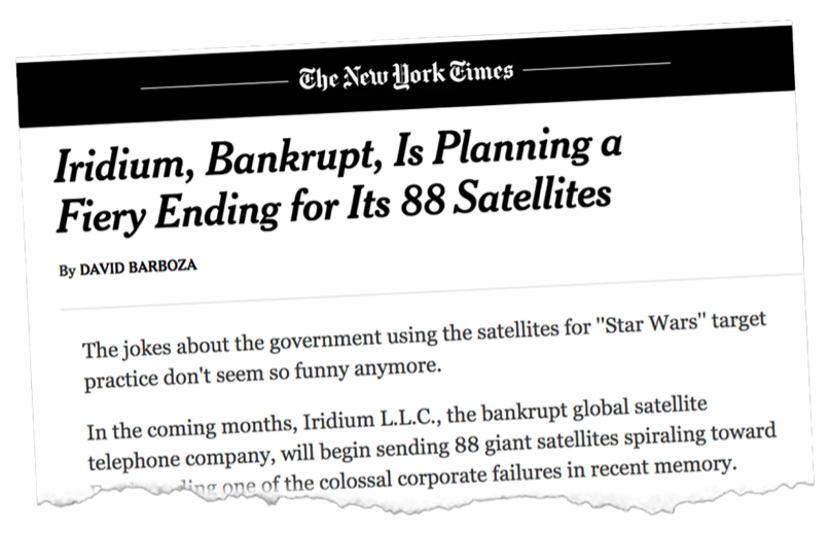
After financing such a large space technology project that involved 20 launches, Iridium needed to reach one million network subscribers in its first year to keep operations running. Nine months after launching its service, Iridium had only 62,000. After not seeing the return expected from customers less than two years after launching its service, Iridium found itself in bankruptcy court with a small group of investors doing anything possible to take over the network and prevent its fiery deorbit. If not for them, the Iridium we know today would not exist.
Back From the Brink
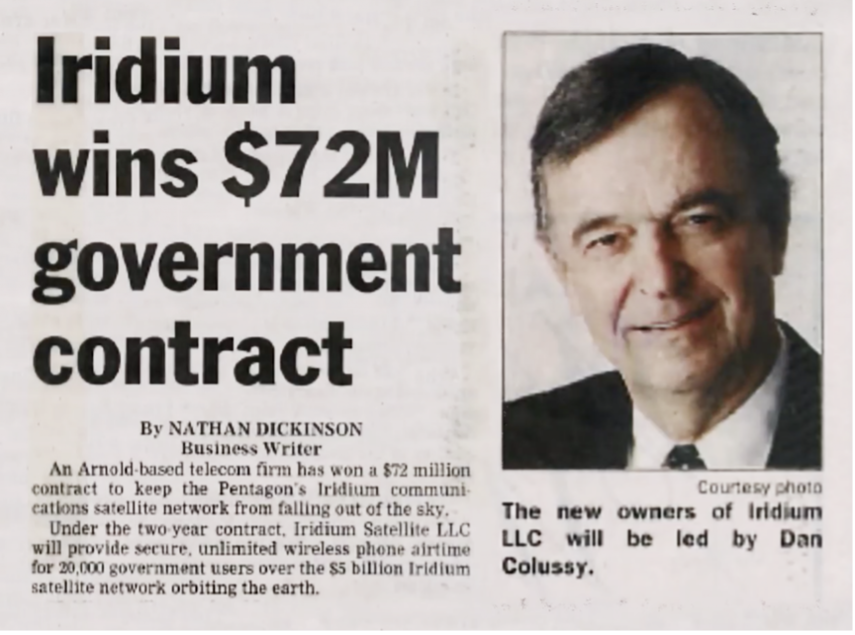
After nearly facing the deorbiting of its satellites in December of 2000, the reborn Iridium’s eventual first CEO, Dan Colussy, and other notable investors secured a two-year, multimillion-dollar contract with the U.S. Department of Defense (DoD). The partnership officially marked Iridium’s territory in the telecommunications industry and gave leaders the time needed to put together a new commercial market approach. Instead of focusing on the international business traveler, the newly formed leadership targeted specific markets where cell towers could not exist but reliable communications were essential. Vast areas of the Earth—including the oceans, airways, mountain ranges, and polar regions—had little to no connectivity until Iridium. This gave the company a sound business plan to launch its service and products into a largely untapped market.
Experienced leaders and investors from around the industry wanted to join the company’s newfound beginnings when Iridium relaunched its commercial service in 2001. Just two years later, the DoD renewed its service contract for another year while Iridium introduced the first iteration of Iridium Short Burst Data® (SBD®). After finally finding its footing on the commercial side of the communications industry, Iridium passed its next milestone by surpassing 100,000 commercial subscribers in 2003.
Once Colussy and others fought to bring Iridium out of the bankruptcy, the technology landscape had already begun to shift. It didn’t take long before the satellites originally launched with an expected design life of approximately seven years needed a plan for their replacement if the network and company were to survive. Just a few years later, in 2006, leadership was transferred to a new CEO, Matt Desch, and a new era of Iridium was about to unfold.
To celebrate Iridium’s 25th anniversary, we’re reflecting on the eras that made the company what it is today. From its iconic inception to infamous bankruptcy to its rise from the ashes, learn more about the world’s first and only truly global satellite network.
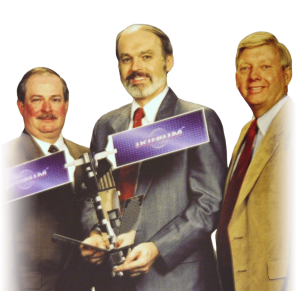
In 1987, a few bold thinkers envisioned a revolutionary system of communications. Bary Bertiger, Ray Leopold, and Ken Peterson met working as engineers at Motorola. Although cell phones existed, they were not yet ubiquitous, and spotty cell service was a huge issue. The group began brainstorming how to create a phone that would work everywhere in the world. As the inventor of the first handheld mobile phone, the DynaTAC, Motorola was well positioned to solve that problem. Instead of building cell towers across the entire planet, the group thought: Why not put those towers in the sky?
Motorola Strategic Electronics Division engineers Bary Bertiger, Ken Peterson, and Ray Leopold
Their proposal did not go without objections and setbacks. Many of Bertiger, Leopold, and Peterson’s colleagues did not see the importance and for a time it was a passion project they dedicated hours to outside of work. Critics raised dozens of concerns ranging from size, cost, and corporate approval to sheer feasibility. Despite this, the project captured the imaginations of those who were involved, and the naysayers motivated them even further.
Once the idea was formally approved, it expanded to a Motorola research lab in Arizona, built partially based on technology developed for U.S. President Ronald Reagan’s abandoned Strategic Defense Initiative (dubbed “Star Wars”). The group brainstormed ideas other than satellites, including fleets of planes and balloons. Upon deciding on satellites, their next dilemma was where the satellites should deploy. The architecture of the network called for a polar orbit and for the satellites to be as close to earth as possible, making Low Earth Orbit (LEO) the perfect fit.
The constellation was originally expected to need 77 satellites to provide global coverage, making Iridium—the element with an atomic number of 77—the ideal name due to the system’s design resembling electrons (the satellites) orbiting a nucleus (the Earth). Engineers later discovered only 66 satellites were necessary to cover the Earth, but the element Dysprosium didn’t have quite the same ring to it, so the name Iridium endured.
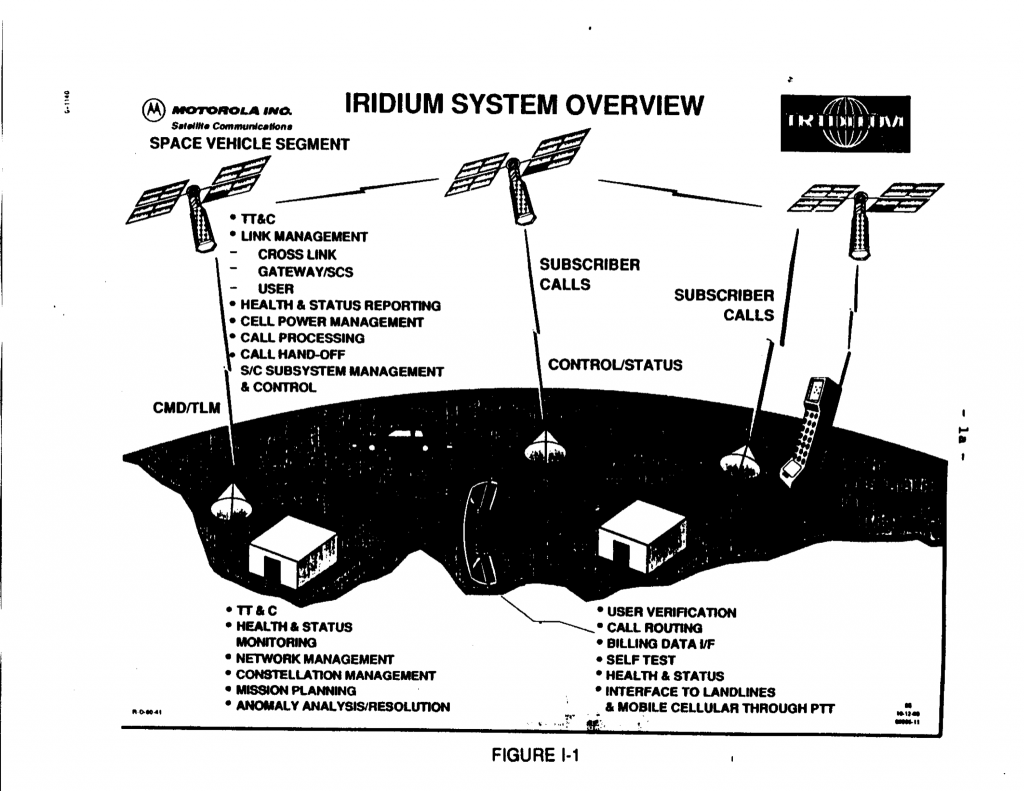
Original Iridium System Overview
Over the next decade, more than 90 satellites were built and launched. At the time, the Iridium® satellite constellation was the largest to be put into space, and the most complex engineering project in history. After 20 successful launches in 13 months, Iridium’s cross-linked, autonomous, and global network was fully operational.
Iridium announced that the world’s first global handheld satellite phone and paging system was commercially available on November 1, 1998. The inaugural call was a symbolic moment, with U.S. Vice President Al Gore dialing up Gilbert Grosvenor, Chairman of the National Geographic Society and great-grandson of Alexander Graham Bell – best known for his invention of the telephone – ringing in the next revolution of communication.
In honor of National Hispanic Heritage Month, Iridium team members share what the month means to them and from where they draw their inspiration and motivation.
Q.: May you share how you chose your profession and how you ended up in your role at Iridium?
A.: I started working in Telecom in 1996 for a carrier in Puerto Rico. I was brought on to a team implementing new business systems and telecom networks as additional properties or licenses were purchased. I had the opportunity to work on projects in the Dominican Republic, Jamaica and across some markets in the US. I came to Iridium for these same reasons. As a telecommunications company we have a unique network, but the back office and business systems are very alike in that they always need improving and finding efficiencies for our customers internal and external alike.
Q.: What does National Hispanic Heritage Month mean to you?
A.: It’s a celebration of our cultures, plural. Although many Hispanic and Latino cultures are similar, we also have differences in how we celebrate and when. I was born in New Jersey but raised in Puerto Rico. Although an island of the US, we are very much our own and proud of it.
Q.: What has been your biggest inspiration / motivation?
A.: My family, my wife and two daughters. Everyday! I was also raised by some of the strongest women I know: my grandmother, mom, and aunt. Watching them work hard is something I still think about and remember as often as I can.
Maria De Los Santos – Associate Director, Accounting
Q.: Can you share how you chose your profession and how you ended up in your role at Iridium?
A.: When I was growing up, I watched my mother meticulously keep track of household income and expenses in a spiral notebook. Even though she only had a 6th grade education, she was very intelligent and an excellent money manager. I attribute my interest in accounting to her.
I was recruited for a staff accountant position at Iridium 16 years ago and it has been such a great adventure to experience all the changes at Iridium in that time, from becoming a public company to launching a new constellation to growing from a company of 123 employees to almost 800!
Q.: What does National Hispanic Heritage Month mean to you?
A.: It is a time to reflect on the achievements of Hispanic and Latino people who have achieved so much despite the barriers they have had to break. For example, Ellen Ochoa, who was the first female Hispanic astronaut, and Jose Hernandez, a Latino astronaut who grew up in a family of migrant farm workers (there’s a movie about his life called A Million Miles Away).
Q.: What has been your biggest inspiration / motivation?
A.: My parents were my biggest inspiration. Neither had education beyond 6th grade, and they came from Mexico with nothing. Yet, throughout our childhood, they emphasized the importance of education and ingrained in their three children that education is the one thing nobody can take away. When we were children, homework was the single most important job in our home, superseding chores and everything else. They accomplished so much by working extremely hard and setting high expectations for their children.
Luis Ortiz – IT Security Analyst
Q.: Can you share how you chose your profession and how you ended up in your role at Iridium?
A.: I’ve always been a tinkerer. When I was in middle school, I would take the family desktop apart and put it back together for fun, even breaking it in the process more than once. Regarding my role at Iridium, I started at the service desk a few years ago while I was finishing my bachelor’s degree in Cybersecurity. I’m thankful to have had the opportunity to transition into the team and learn from such a diverse and experienced group.
Q.: What does National Hispanic Heritage Month mean to you?
A.: National Hispanic Heritage Month is an annual celebration dedicated to recognizing and celebrating the contributions, culture, and history of Hispanic and Latino Americans. It’s Junot Diaz bringing magic realism to the English language. It’s about figures like Sonia Sotomayor, who have left an indelible mark on the history of the United States, and icons such as Selena Quintanilla, whose legacy continues to inspire the likes of Jennifer Lopez, showcasing how these extraordinary individuals have contributed to and influenced American society.
Q.: What has been your biggest inspiration / motivation?
A.: As a first-generation American, my family has always been a huge inspiration. My parents migrated here to provide my brothers and me with better opportunities. So, naturally, I thank them for shaping the person I am today. It’s due to their sacrifices that I can provide for my own family, which has recently grown by one with the addition of my daughter, Camila, who has become my motivation to continue improving myself.
I’d like to also mention two other people who have been recent inspirations. Eric J. Belardo, the founder and Executive Director of RaicesCyber.org, has been an inspiration. Eric created Raices to help the Latino community break into the notoriously challenging field of Cybersecurity. The second person who has inspired me is my best friend, Luis Inarra. Despite facing what at times seemed like insurmountable odds, he graduated at the top of his class and is currently practicing law in the state of Alabama. These two gentlemen face adversity head-on and welcome challenges with a smile. I admire them both and consider myself fortunate to know them.
Every summer, Iridium® interns make a truly global difference in a variety of roles ranging from engineering, computer science, astrophysics, business, human resources, marketing, finance and more. Learn more about Bharath Kumar Nagalamadagu Govindaraju, Radio Frequency (RF) Engineering Intern in this Q&A.
Can you please introduce yourself and tell us more about your internship at Iridium?
My name is Bharath Kumar Nagalamadagu Govindaraju, and I am a graduate student at George Mason University, specializing in Internet of Things (IoT) and Network Security. I have worked as an IoT and Electronics Engineer for three years and tend to focus on socially unconventional projects that address real-time issues people face.
With a passion for IoT, I was elated to join the innovative team at Iridium as an RF Engineering intern in the Iridium Certification group under the guidance of Senior Engineering Manager, Omid Nia. The company’s reputation for pushing boundaries and fostering a culture of creativity and excellence resonated deeply with my aspirations. Little did I know that this summer would exceed my expectations, opening doors to hands-on learning and collaboration that would leave an indelible mark on my professional journey.
From the onset, I learned about the complexities and intricacies of satellite communications (SATCOM) and IoT through captivating projects. Guided by experienced mentors, my responsibilities required analytical thinking and creativity.
Can you share more about the Iridium Connected™ product you created this summer? What does it do, and what motivated you to pursue this project?
Ever since I was young, I have been interested in agriculture and have had various connections to it, both directly and indirectly. The challenges faced by the agriculture industry and how to overcome them have always been fascinating to me. One of the most pressing issues in the field is the depletion of soil nutrients due to overuse, which can lead to erosion and lower yields.
Climate change has also brought about unpredictable weather patterns, which can negatively affect crop growth and result in crop failure. Additionally, water scarcity, pests, and diseases are all significant challenges that farmers must contend with, often resulting in lower crop yields and income losses for farmers.
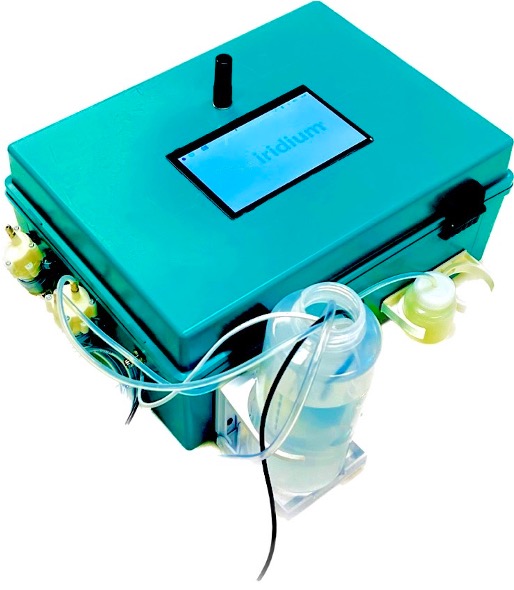
During my internship at Iridium, we developed a prototype to help solve all these problems, based on the concept of precise and scientific farming methodologies for efficient usage of resources. Iridium’s Agronomical Management System—also known as Green Box—constantly monitors the whole process in which we have segregated the vital elements of farmland into three different ways:
Environment Management System
Consists of a DHT11 sensor, which captures the temperature and humidity of the surroundings.
Water Management Sensors
Includes pH, Total Dissolved Solids (TDS), and water temperature sensors, which are essential for assessing water’s cleanliness and overall quality.
Soil Management Sensors
Soil moisture sensors automate water pumping.
Maintaining optimal soil moisture levels is vital for healthy and hydrated plants, so regularly monitoring the moisture content of the soil is critical to promoting optimal plant growth.
Take note of any dry soil areas and water them thoroughly, keeping a close eye on the moisture levels to ensure they remain consistently moist.
Iridium’s Agronomical Management System, aka Green Box
The microprocessor is linked to all the sensors and pumps, including the Iridium 9603 Module. The pH of water is checked at regular intervals, and in case of any abnormalities, the pH buffer solution is pumped to bring it back to the necessary pH level. The status of all sensors and devices is constantly monitored, and the data is transmitted to the Iridium satellite network and received at the designated IP address.
Using Iridium’s satellite communication services, this product can be installed anywhere on Earth, providing convenience and accessibility for users worldwide. Its portability simplifies the installation process and ensures that users can easily set it up without any hassle. Whether in a bustling city or a remote location, this product can be easily installed and put to use. Its versatility and reliability make it a valuable tool for individuals and businesses.
What is something you’ve taken from your internship at Iridium?
The guidance and mentorship I received at Iridium were integral to my growth. The open-door policy encouraged candid conversations where I could seek advice, discuss challenges, and explore opportunities. These interactions fine-tuned my technical skills and provided a glimpse into the art of thriving in a dynamic work environment.
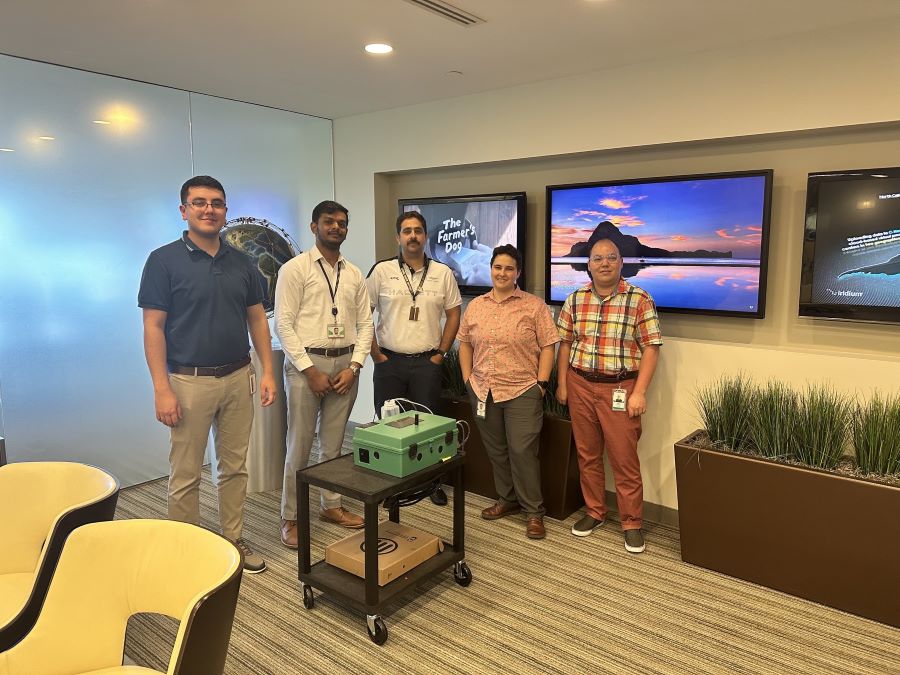
Bharath with members of Iridium’s engineering team
Reflecting on my summer at Iridium, my gratitude is boundless for its profound impact on me and my career. The exposure to cutting-edge technologies, the camaraderie of brilliant minds, and the culture of perpetual learning have equipped me with tools to navigate the ever-evolving landscape of RF Engineering and SATCOM.