Iridium Deployed is a video series highlighting real-world applications of Iridium Connected™ devices & services.
Ecologist Dr. Jared Stabach from the Smithsonian’s National Zoo & Conservation Biology Institute talks about his research on the movement patterns of large terrestrial mammals. He also discusses how emerging technologies such as GPS tracking collars and high-resolution imagery help ecologists better understand and monitor changes occurring across the planet.
At Iridium, we know great technology is nothing without great people. In this video series, we take you Behind The Network to provide an in-depth look at Iridium’s key differentiator to becoming one of the world’s leading SATCOM providers: our team members.
Encompassing a wide range of backgrounds and experiences, employees across the company share how they joined Iridium, where their passion for their work comes from, how their role impacts the company, and more.
Let’s go Behind The Network with Kalina Leiling, MarketingManager!
Iridium Deployed is a video series highlighting real-world applications of Iridium Connected™ devices & services.
Solar storms can disrupt the aviation industry, terrestrial-based telecommunications, satellite systems, and even power grids—but scientists at the Johns Hopkins University Applied Physics Laboratory (APL) continue to study ways to mitigate their impact.
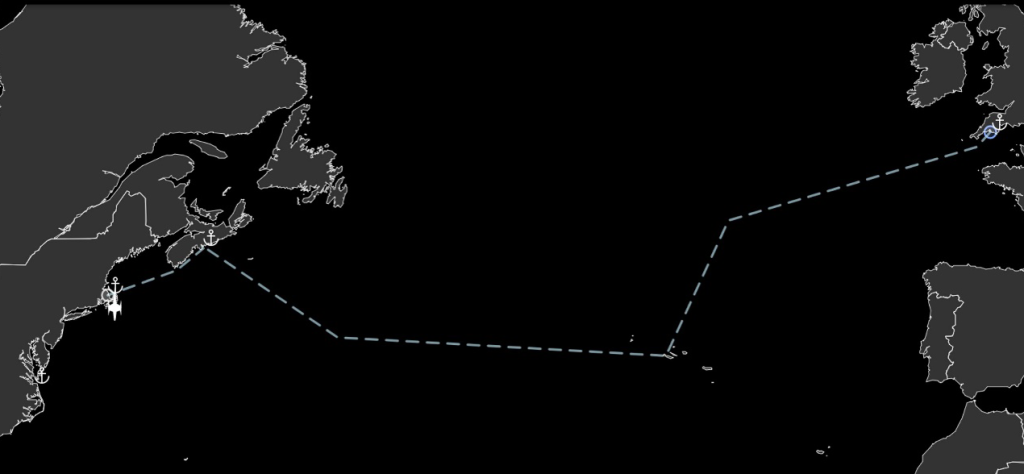
The Mayflower Autonomous Ship (MAS) began its journey on April 27, 2022, when it departed—like its 17th Century namesake–from Plymouth, England. The Uncrewed Surface Vessel (USV) then embarked on a 3,500 nautical mile journey across the Atlantic Ocean, with the aim of recreating the sailing ship’s landing destination at Plymouth Rock in Plymouth, Massachusetts.
Despite several unscheduled stops due to ship operating technical issues, the MAS managed to successfully arrive at port on June 30, 2022.
Map detailing the Mayflower Autonomous Ship’s journey from Plymouth, England, to Plymouth, Massachusetts, USA.
AI Captain Steering The Ship
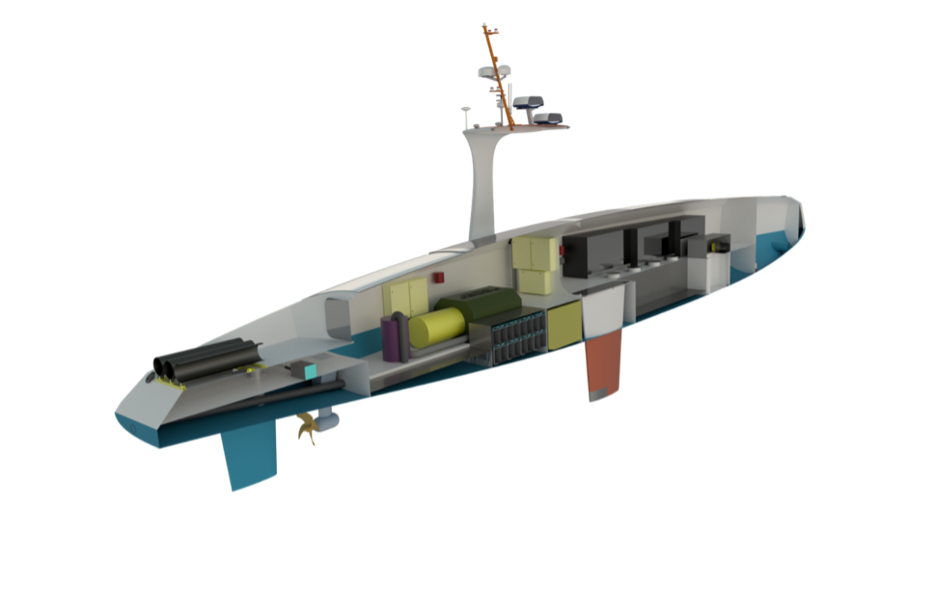
Developed by Promare and IBM, the MAS was packed with an array of scientific instrumentation designed to push the limits of possibility. One of the most popular and intriguing instruments was HyperTaste, an electronic tongue that “tastes” seawater to evaluate ocean health.
With a complex Artificial Intelligence (AI) capability powered by IBM’s AI engine Watson—cleverly renamed AI Captain for the MAS voyage—the uncrewed vessel was designed to sail across the ocean without human intervention.
“We used a number of data sets to train the AI engine and make it self-sufficient,” said Brett Phaneuf, CEO of Promare. “Despite having a human in the operational loop for MAS, AI Captain performed extremely well and rarely required the team’s intervention. AI Captain would alert us if there was another vessel nearby or a significant event occurring. For example, we had several curious fishing vessels watching the MAS, plus the four full high-definition cameras observed a few dolphins. Otherwise, it was boring.”
“We intended for the MAS to operate offline, thinking that we wouldn’t have access to high-speed data. Therefore, we employed edge processing capabilities onboard to firstly perform decision making and secondly to significantly reduce the amount of data transferred over the air,” said Don Scott, CTO of Promare. “Having the ability to push updates to the MAS over the air and manage both the software containers and computer resources gave a new dimension of remote management.”
Enthralling MAS Viewers Globally
The success of the MAS depended on several companies across different sectors collaborating to find solutions. One of the most beloved features of the MAS voyage was the MAS400 video stream.
“The public loved to engage with the MAS, viewing both its cameras and telemetry. We had hundreds of thousands of views of the MAS cameras during the transatlantic voyage – the public felt part of this unique journey,” Phaneuf said.
Typically, video streaming requires heavy bandwidth that quickly consumes lots of data, restricting its use to specific scenarios, but Iridium partner Videosoft managed to efficiently deliver the MAS400 video stream through its video compression software technology.
VideoSoft is a leading provider of advanced video compression technologies that enable efficient, high-quality video transmission over low-bandwidth networks. Their video compression engine can even operate on low-power, single-board computers, (e.g., Raspberry Pi or Jetson Nano) that are typically already installed onto uncrewed vessels. This reduces the data that need to be transmitted, freeing up bandwidth and reducing latency.
“The VideoSoft encoders were able to simultaneously transmit several real-time video streams over Iridium Certus,” said Stewart McCone, CEO of VideoSoft. “Our highly efficient, real-time video compression provided a new level of situational awareness and allowed the public to view the MAS’s journey.” The server allowed the MAS team to focus on one video stream of interest, enabling significantly higher resolution and frame rates essential for operational decision making.
“There is a perception that high bandwidth is required for video transmision. The reality is that our compression engine will operate down to 4 Kbps per second link. Therefore, the 352 Kbps uplink from the [Thales] VesseLINK 700 was more than sufficient for our video requirements,” McCone said.
The Maritime Autonomous Revolution
“We are just at the start of the autonomous and USV revolution,” said Wouter Deknopper, Vice President & General Manager of Maritime for Iridium. “USVs are regularly performing automated tasks that were previously very labour intensive, reducing the time for project delivery and carbon impact on the environment. The MAS project has become the gold standard in USV operation, demonstrating that [Beyond Line of Sight] BLOS operation of an asset is enabled by Iridium Certus. Incorporating edge processing techniques and efficient video compression enables USV operators to push their boundaries beyond what they thought was possible.”
Continued Contributions to Ocean Sciences
After completing its original purpose, the MAS continues to do important scientific work in the United States. The vessel has performed several research missions for multiple organizations including the Woods Hole Oceanographic Institute, providing critical information on the health of our oceans and the life within them. Promare and their sister company MSubs continue to build other USVs and autonomous vessels for multiple deployments.
“Our experience from the MAS continues to drive innovation both within M-SUBS and in the wider USV community,” Phaneuf said. “Iridium Certus is a critical piece of our autonomous jigsaw, enabling BLOS operation for our future assets and allowing us to push the boundaries of what’s possible.”
Among the segments that make up the aviation market, commercial aviation is one of the largest and fastest growing. According to a report by Allied Market Research, the commercial aircraft market size is projected to reach $192.76 billion in value by 2030. With commercial aircraft transporting people and goods across the entire planet, reliable communications technology, especially satellite communications (SATCOM) solutions are a must.
So, buckle your seatbelts and put your seat backs in the upright position, it’s time to learn about how Iridium® SATCOM keeps commercial aircraft connected.
What Is Commercial Aviation?
Think big-name commercial airliners that transport people and goods from point A to point B. These aircraft require robust connectivity onboard that can enable critical communications for pilots in the cockpit, flight crew members, aircraft telematics and safety applications. Iridium has been a leader in the industry for over a decade and has worked alongside global regulators including the International Civil Aviation Organization (ICAO), the Federal Aviation Administration (FAA), Airlines Electronic Engineering Committee (AEEC), Systems Architecture and Interfaces Subcommittee (SAI), and the International Telecommunication Union (ITU) to set carriage requirements and standards.
For commercial aviation, Iridium offers many unique benefits. Iridium is the only interconnected satellite network that covers the entire planet with reliable, L-band satellite connectivity (including the polar regions), making communications possible across the global airspace, from any altitude and even during adverse weather conditions. The solutions for commercial aircraft feature low-gain, lightweight antennas that are solid state and utilize either electronic steering or omnidirectional technology – depending on your ‘need for speed’ – all of which makes for highly competitive options in comparison to other connectivity providers. Iridium solutions create a very small footprint and induce far less parasitic drag on the aircraft, helping cut down on fuel costs. Additionally, they are built using an industry-standard bolt pattern that simplifies installation. The terminals are available through a wide range of industry-leading manufacturers, offering end users choice and diversity of suppliers.
Now that we’ve covered the background information, let’s (sky)dive into the four main ways Iridium connects commercial aircraft.
Cockpit SATCOM
This technology is primarily data-driven and supports non-safety applications like aircraft operations and flight information, including graphical weather data, flight plan updates and navigation chart and terrain database updates to be quickly shared with ground operations.
Flight Crew Communications
In addition to the cockpit, Iridium connects the crew. With these services, crew can make voice and data calls and critical in-flight group operations, such as passenger list management, in-flight credit card processing, inventory restocking, logistics management and equipment malfunction alerting. Crew members are also able to make emergency calls for telemedicine purposes.
Aircraft Monitoring
While monitoring aircraft location in the sky is extremely important, it is also crucial to monitor what is happening within the aircraft itself. Iridium enables connected aircraft technology that gives flight crew members and ground operators the ability to track the health of an aircraft through system monitoring and maintenance applications. Operators can see which parts need maintenance and can intervene at the next destination. This ability to conduct proactive and preventative maintenance can greatly increase in-flight efficiencies and cut down costs.
Aviation Safety
Here is where Iridium sets itself apart from the pack, but it’s also where things get a bit complicated. With this in mind, we did our best to keep it short and simple. Iridium satellite communications enable a number of safety services for aircraft, many of which are required by regulatory authorities.
Aeronautical Mobile Satellite (Route) Service (AMS(R)S)
AMS(R)S is a globally regulated aviation safety service. It is comprised of both voice and data services enabling communication between aircraft and Air Navigation Service Providers (ANSPs), also known as air traffic control.
The voice component is called Air Traffic Service Safety Voice (ATS Safety Voice) and the data component is called Future Air Navigation Service (FANS).
ATS Safety Voice
Iridium ATS Safety Voice operates under requirements and guidelines set by ICAO and ensures that these safety-related voice calls are prioritized over all other voice and data communications.
FANS
FANS, which is only used for remote, oceanic and polar operations, is comprised of two kinds of data messages – Automatic Dependent Surveillance-Contract (ADS-C) and Controller-Pilot Datalink Communication (CPDLC).
ADS-C messages send a “here I am” message from the aircraft to the ANSP. These messages contain position information and can be sent at predetermined intervals automatically or by request of the ANSP.
CPDLC messages contain operational information and communicate information such as departure clearances, flight path changes, re-routes and weather information. CPDLC helps make air traffic management more efficient by reducing the overall need for voice communication with air traffic control.
Today, Iridium is used for safety operations on thousands of aircraft today from business jets to Airbus and Boeing aircraft, as well as global cargo operators enabling the safe delivery of people and goods.
Looking ahead, Iridium is working to introduce Aeronautical Telecommunication-Open Systems Interconnection (ATN/OSI) and Aeronautical Telecommunications-Internet Protocol Suite (ATN/IPS) services. ATN/OSI, an inter-network architecture that allows ground/ground, air/ground, and avionic data subnetworks to interoperate by adopting common interface services and protocols, is based on Open Systems Interconnection and has been adopted to aviation applications. The more efficient ATN/IPS is based on modern Internet Protocol (IP), and Iridium Certus® is targeted to support these services in the future.