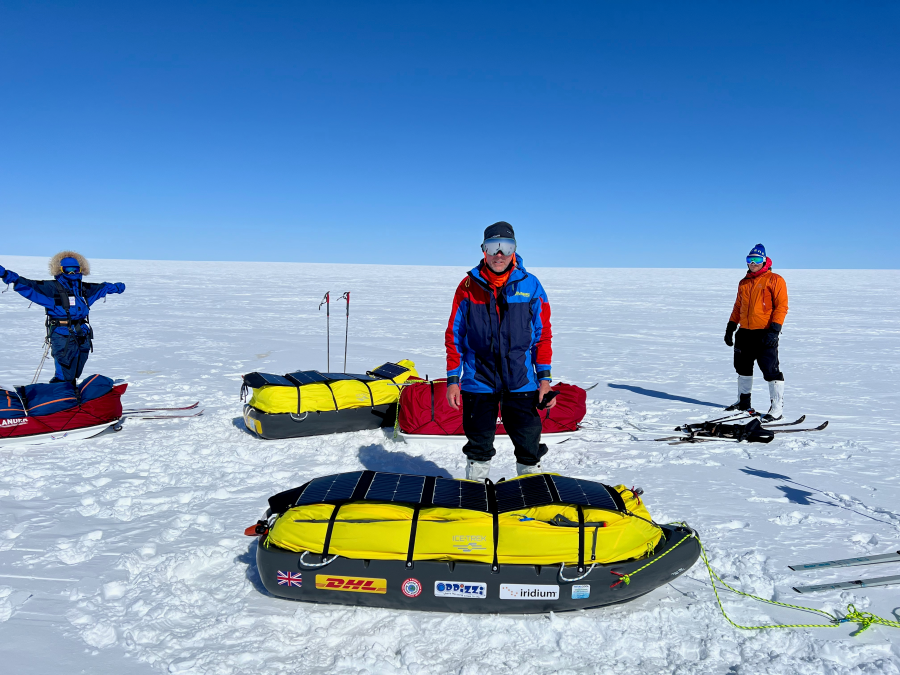
When five adventurers set out pulling 100kg sleds 565km across Greenland’s beautiful, hazardous ice caps, they knew it wasn’t going to be a simple feat. The group, Three Journey’s Round, embarked with a goal to inspire, educate, and promote the idea of living on a better planet through sustainable development.
Adventurer, long-range helicopter pilot, author, and Guinness World Record Holder Peter Wilson helped veteran explorer Mikael Strandberg organize the team’s adventure from Kangerlussuaq to an extraction point called the Grill Hut on the east coast near Isortoq, relying on Iridium Connected™ trackers to map their journey.
“Pulling the sled was the easy part for me; however, living in the -20°C environment was an education,” Wilson remarked on Greenland’s intense weather. “We experienced all conditions from the initial crevasse field, over the top at 2,500m above sea level and down the other side including blue ice, snow, blizzards, howling 80km per hour winds, icy conditions, melting snow, flowing water, and temperatures from 0°C to -24°C with wind chill down to -37°C.”
Sadly, on Expedition Day 2, team leader Strandberg showed severe concussion symptoms after falling in the crevasse field. The remaining members were able to contact medical help using Wilson’s Iridium Extreme® satellite phone. Communicating over the Iridium® network, the mission doctor made his recommendation and a helicopter was sent to the group’s coordinates provided by their Garmin InReach® Mini.
After Strandberg’s emergency evacuation, the remaining members continued and the Greenland icecap further tested their preparation, equipment, and resolve.
Peter Wilson attributes the expedition’s this expedition’s safety to Iridium and Iridium Connected devices. The team used Garmin InReach beacons–connected by Bluetooth® to their phones–for tracking and messaging and Iridium Extremes for communications. These devices helped the team track their progress and provided a lifeline during emergencies.
Team member James Ketchell also used Iridium and Irridium Connected devices as a means to inspire the next generation of adventurers and promote STEM education by hosting virtual field trip calls known as Exploring the World for Kids for K-12 students.
Despite the medical emergency, the team arrived at the Grill Hut safely in just over 29 days.
“I wouldn’t do anything like this without an Iridium satellite phone”
– Peter Wilson, Adventurer, Pilot, Author, Three Journeys Round
“It was so easy for us all to make any necessary calls to family, authorities, Search and Rescue, and in James’ case, his schools obligations answering kids’ questions and the voice pop nightly update to his tracker—[a] very clever service from zerosixzero. The 28 watt-hour batteries seemed to last forever,” Wilson said. “I wouldn’t do anything like this without an Iridium satellite phone.”
Below are some of the many ways Iridium enables reliable connectivity even in the harshest maritime environments, offering numerous benefits for the world’s oceans and those who explore and care for it.
Enhancing Safety and Security
The Iridium network provides a lifeline for mariners, enhancing safety and security at sea. Whether it’s enabling distress signal transmissions, facilitating search and rescue operations, or supporting emergency communication services, Iridium connectivity is instrumental in safeguarding the lives of sailors, fishermen, recreational boaters, and other maritime personnel. For example, the Iridium® Global Maritime Distress & Safety System (GMDSS) enhances safety at sea for mariners, offering a truly global SOS button for emergency situations. Iridium also supports organizations and individuals, including The Outlaw Ocean Project, a non-profit journalism organization that produces investigative stories about human rights, labor, and environmental concerns on the two thirds of the planet covered by water.
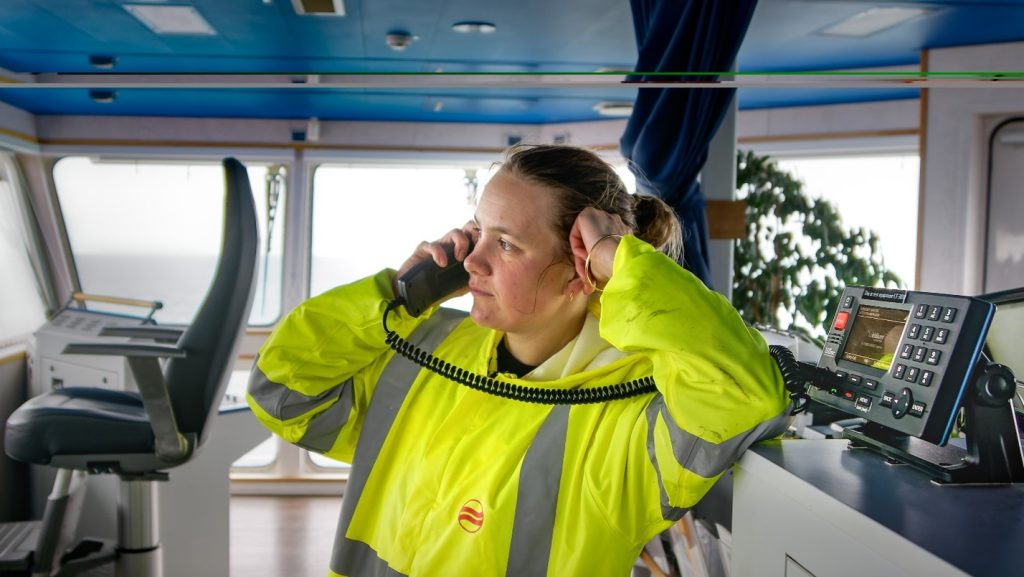
The Lars Thrane LT-3100S, equipped with Iridium GMDSS, on board the Malik Arctica during service trials in the Arctic & Antarctic.
Enabling Scientific Research
Iridium satellite connectivity supports scientific research by enabling real-time data transmission from remote oceanic locations. Scientists and researchers can collect crucial environmental data, monitor marine life, and study various oceanic processes with greater efficiency and accuracy. Iridium Connected™ devices help Uncrewed Surface Vessels (USVs) and Uncrewed Underwater Vehicles (UUVs) provide a safe, cost-effective, and environmentally sound means of gathering essential data from our planet’s oceans. USVs and UUVs are efficient methods for seabed mapping (bathymetry), subsea asset integrity inspection, fish stock analysis, environmental monitoring, and data collection sent over the Iridium Network.
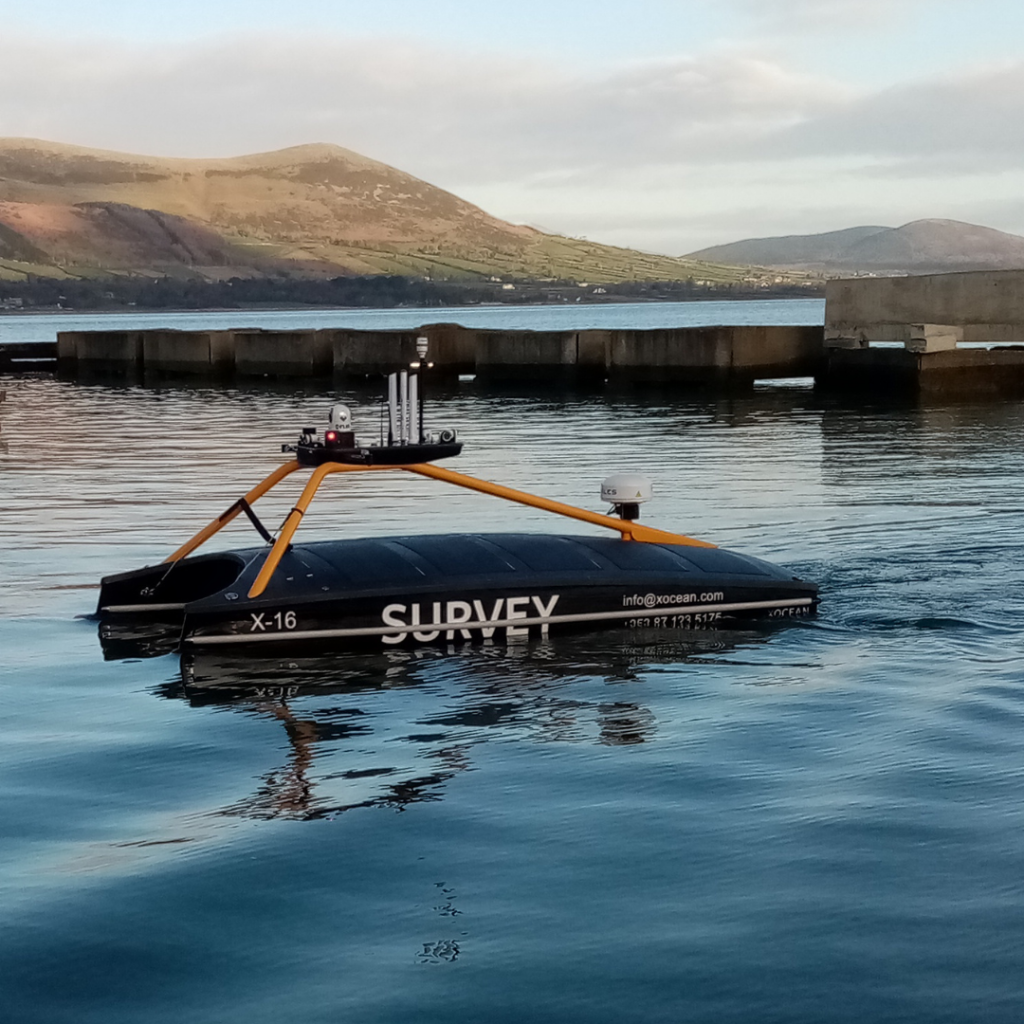
The XOCEAN USV equipped with an Iridium Connected Thales VesseLINK. Photo Credit: XOCEAN.
Promoting Sustainable Fishing Practices
Overfishing and Illegal, Unreported, and Unregulated (IUU) fishing pose significant threats to marine ecosystems. Iridium and Iridium Connected solutions enable the tracking and monitoring of fishing vessels, helping combat IUU fishing and promoting sustainable fishing practices. By providing real-time location data, these solutions empower authorities to enforce regulations effectively and ensure responsible fishing. Iridium provides Vessel Monitoring System (VMS) solutions that provide critical information including fishing quotas and requirements for regulatory authorities to prevent overfishing, catch reporting, and more. An example of this is Iridium partner Viettel’s S-Tracking VMS, which provides up-to-date critical information that supports marine life sustainability in addition to increasing crew member safety. Iridium is also working in close coordination with our partners and regulatory authorities to advance sustainable fishing practices and help ensure marine protected areas remain untouched.
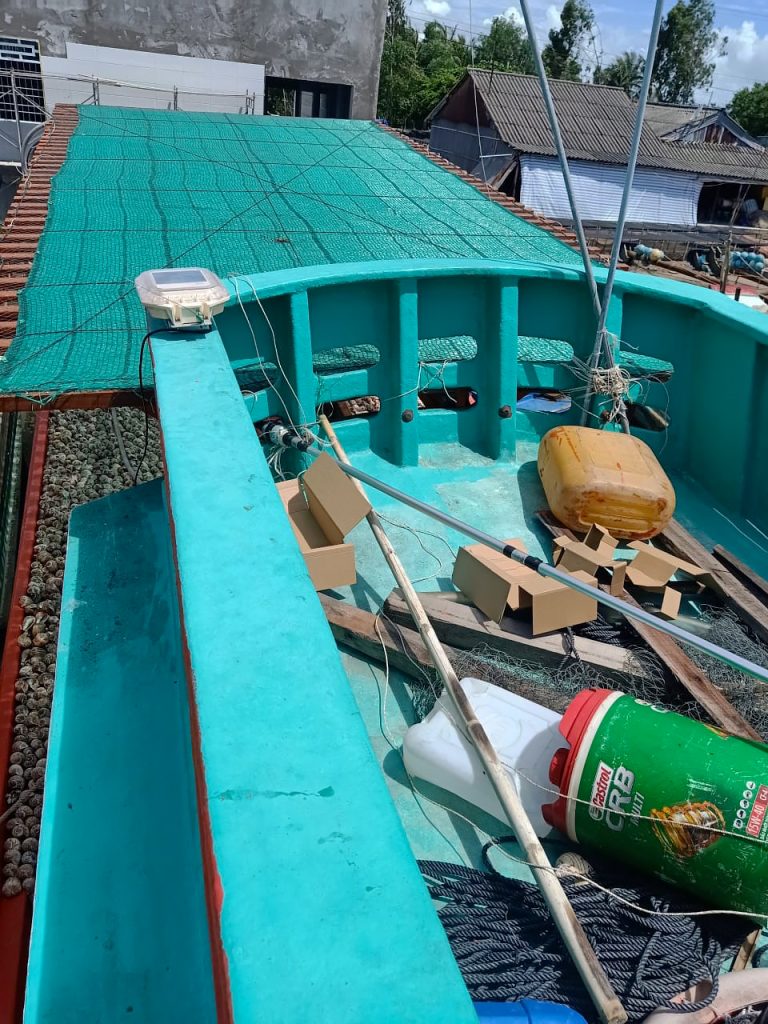
The Iridium Connected Viettel S-Tracking VMS solution on board a Vietnamese fishing vessel. Photo credit: Viettel.
Supporting Marine Conservation Initiatives
Iridium satellite connectivity is invaluable for marine conservation organizations and initiatives worldwide. Conservationists can leverage real-time data transmission to track endangered species, monitor marine protected areas, and develop comprehensive strategies for protecting fragile ecosystems. For example, The Ocean Cleanup is using the Iridium network to support its ambitious goal to rid the world’s oceans of plastic garbage and perform the largest ocean cleanup in history. Iridium connectivity also facilitates communication among researchers, environmental organizations, and policymakers, fostering collaboration and knowledge sharing anywhere in the world.
Facilitating Oceanographic and Weather Monitoring
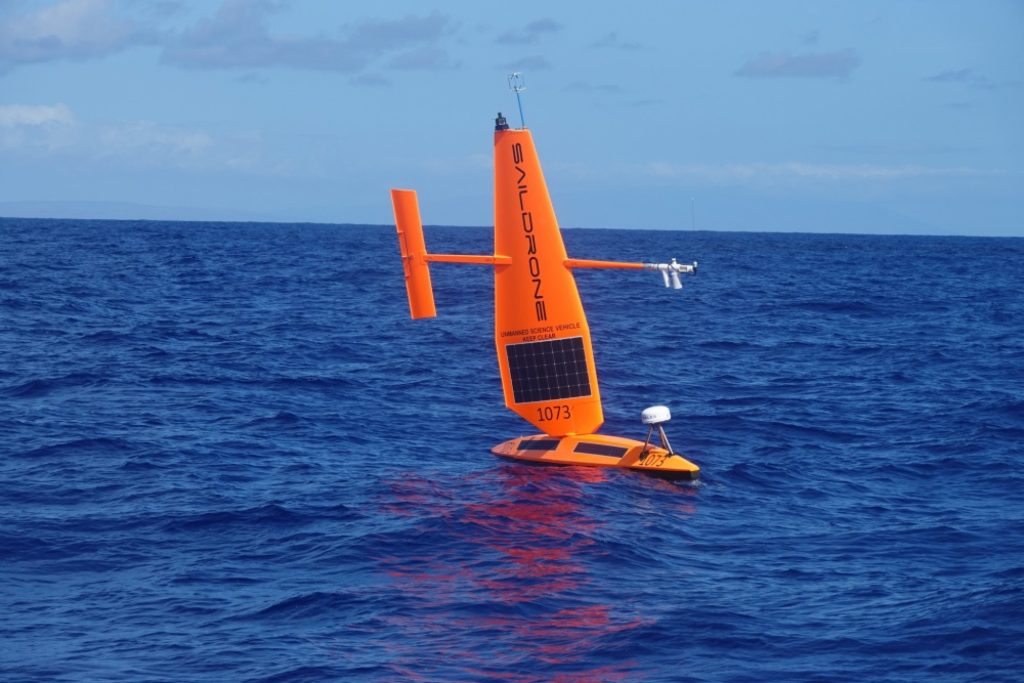
Understanding ocean currents, temperatures, and weather patterns is vital for predicting and mitigating natural disasters, such as hurricanes and tsunamis. Iridium’s satellite network enables oceanographic and weather monitoring systems to gather critical data, contributing to more accurate forecasts and timely warnings. This capability enhances emergency preparedness and helps coastal communities minimize the impact of these natural events. An example of this is Saildrone and its fleet of Iridium Connected USVs, which provided video footage from inside a hurricane. Along with that footage, the Iridium network transmitted wind speed, direction, temperature, and other critical information that will help meteorologists create more predictive models and better understand the impacts of climate change.
The Saildrone USV equipped with an Iridium Connected Thales VesseLINK. Photo credit: Saildrone.
These are just a few examples of how Iridium plays a vital role in supporting the world’s oceans, empowering maritime industries, scientific research, and marine conservation initiatives. With its truly global coverage, reliability, and innovative solutions, Iridium looks forward to expanding efforts to protect and preserve our fragile marine ecosystems. On World Ocean Day and every day, Iridium is committed to ensuring a sustainable future for our oceans and the life they sustain.
Piracy remains a real threat to the maritime community. According to the International Maritime Bureau’s (IMB) most recent piracy report, there were 27 recorded piracy incidents in the first quarter of 2023, with the Gulf of Guinea, Singapore Straits and South America leading the pack in recorded attacks. These modern-day piracy attacks bear no resemblance to the romanticized scenes depicted in Peter Pan and Pirates of the Caribbean of wooden-legged, rum-sipping, swashbuckling buccaneers. Today’s piracy stories are not fantasy, but a harsh and sometimes brutal reality for seafarers. Armed pirates frequently hijack ships and hold crews members to ransom, thefts, and raids, all of which represent a significant risk to ship owners and the lives of mariners. For instance, in 24 of the 27 recorded attacks, perpetrators boarded vessels. The report noted that among these boarding, six crew were kidnapped, two were taken hostage, two were threatened and one was assaulted – proving the threat of violence is very real.
Ensuring a ship has reliable anti-piracy communications is essential to safety at sea for mariners, and satellite communications (SATCOM) plays a critical role.
Here’s Why
When a ship enters a High-Risk Area (HRA), the crew undertakes procedures to both prepare themselves and the vessel for potential pirate attacks. One such method is a secure room that allows the crew to remain safe in the event of boarding. Although no two piracy attacks are the same, a common tactic used by the raiders is to destroy the vessel’s communications antennas, rendering the crew unable to communicate or pass information to coastal authorities. During an attack the crew remain isolated in the safe room, with a single voice line vessel owners and coastal authorities rely on for enacting search and rescue plans.
The Next-Gen Ship Citadel
Vessels operate in many diverse areas around the world, which may fall outside the satellite coverage of many geostationary or even Low Earth Orbit (LEO) networks. The LEO-based Iridium® network provides coverage to all the world’s oceans, meaning a vessel can stay connected wherever it may operate. The Iridium network also operates on L-band frequencies which are more resilient to interference by inclement weather or sea conditions. The antennas used by Iridium terminals are small and lightweight, which allows easy deployment onto any vessel and allows for more discreet placement.
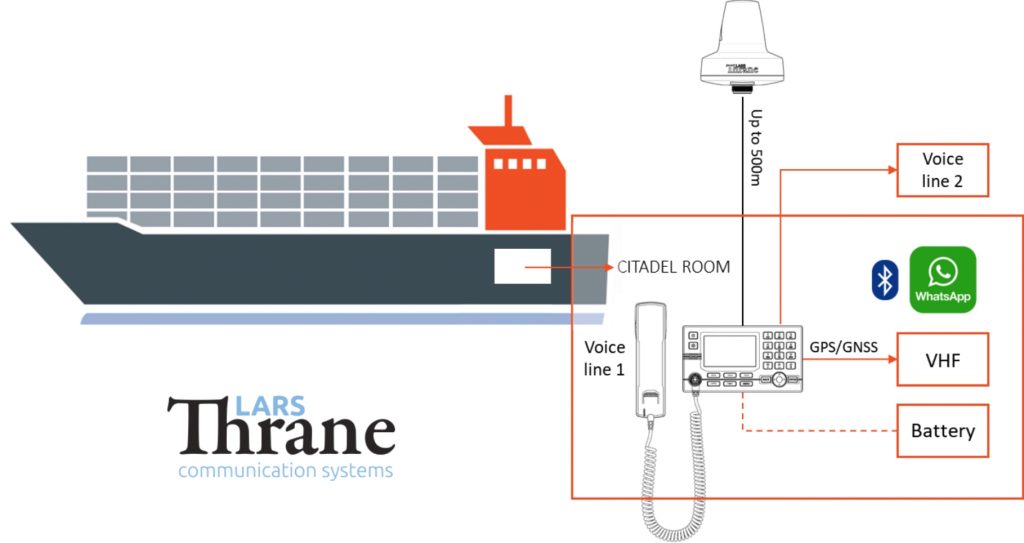
The Lars Thrane satellite communications system is an example of a ship citadel SATCOM solution.
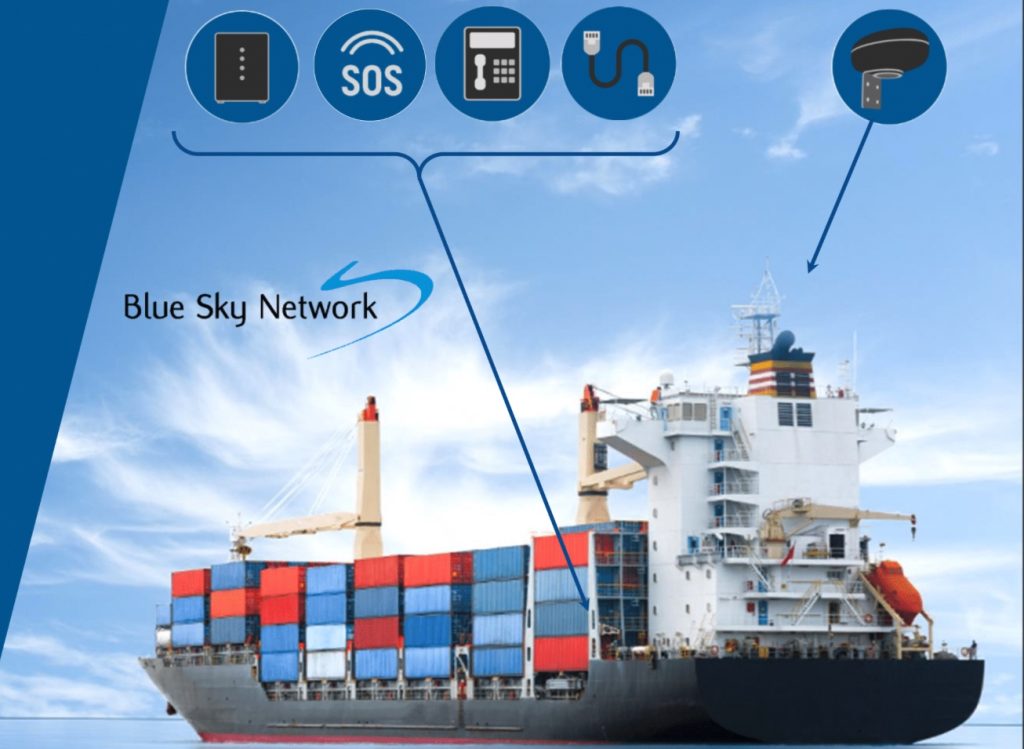
The Blue Sky Network SkyLink Citadel is another example of a ship citadel SATCOM solution.
Iridium Certus® 100 has ushered in a new era of anti-piracy technology with multiple voice lines and IP-based, midband data technology that will dramatically expand the capabilities of a vessel’s citadel communications system. Currently, crew likely have access to limited voice capabilities which can only do so much to help search and rescue efforts.
With Iridium Certus Connected™ terminals like the Blue Sky Network SkyLink Citadel and the Lars Thrane LT-4100 terminal–both with two voice lines, midband data and tracking capabilities–provide crews with a new situational awareness dynamic during piracy attacks. Features such as automatic vessel position tracking, video streaming through onboard security cameras and WhatsApp messaging between crew and authorities can dramatically change the situation and lead to a swifter resolution. Additionally, the antennas for these solutions can be situated over 100m away from the terminals located in the citadel.
As international piracy continues to increase, it is critical that mariners have access to the most secure and capable ship citadel solutions, and they must include SATCOM.
The global Uncrewed Aerial Vehicle (UAV) market is expected to reach $70.91 billion by 2030. This projected growth reflects the huge potential of UAVs beyond hobbyists and government applications. In this edition of exPLANEd, we explain what UAVs are, how and why they are used, review their specific set of communications needs and how Iridium® satellite communications (SATCOM) is helping to make UAV flight possible and successful.
What Are UAVs & Why Are They Used?
Uncrewed Aerial Vehicles (UAVs) are just that: vehicles operating in the air without a crew on board. They are used for missions that require flight to areas too dangerous or not ideal for flying a crewed aircraft. Examples of these areas and use cases include remote inspections (think remote pipelines, rail and power line monitoring), disaster recovery and surveillance efforts, environmental monitoring in uncharted territories and more.
Piloting remote aircraft, especially Beyond Visual Line of Sight (BVLOS), meaning the pilot is responsible for operating the aircraft even when it is no longer in their view, comes with a specific set of communications requirements. UAV pilots must be able to make critical, split-second Command-and-Control (C2) decisions mid-flight–such as rerouting a mission due to unexpected weather patterns and air traffic. They also need access to a constant flow of critical data, including but not limited to navigational, weather and aircraft health information. Most importantly, these pilots need to know that no matter where they are required to fly their aircraft, they will have access to fast, reliable connectivity, and Iridium Connected™ technologies are uniquely qualified to support these needs.
How Iridium Benefits The UAV Market
Global Line of Sight®
Iridium operates the only truly global satellite network. Its crosslinked constellation of Low Earth Orbit (LEO) satellites creates a web of coverage around the entire planet, including locations that lack connectivity, like the Arctic. This is ideal for UAVs because no matter where they fly, a pilot can control and observe the aircraft regardless of how far away the vehicle is. With Iridium, BVLOS C2 is a specialty. Also, because of the network’s location in LEO, it delivers low-latency connectivity that makes near real-time data delivery possible, which is essential for these aircraft.
Highly Reliable Satellite Connectivity
In addition to enabling truly global coverage, Iridium’s connectivity is delivered over weather resilient L-band satellite spectrum, making it ideal for delivering critical communications solutions, such as connectivity for UAVs. For remote pilots, safety is the top priority, and there is no larger threat to flight safety than unpredictable weather patterns. For example, if a sudden storm passes through and a pilot needs to change flight plans–taking the aircraft BVLOS to avoid dangerous conditions–Iridium technology is a must-have.
Highly Accessible and Flexible
Iridium has a vast partner network of over 450 companies around the world, making Iridium technology very accessible. While Iridium technology is perfect as a primary communications system on board a UAV, it can also act as a backup to traditional line-of-sight or cellular technologies, kicking in for BVLOS and C2 needs.
Today, Iridium is connecting UAVs around the world and across multiple industries. For instance, UAV company Swoop Aero integrated Iridium technology into its drones’ C2 systems to deliver critical medical supplies on the island nation of Vanuatu, where access to life-saving treatments is limited due to its lack of infrastructure and remote location. In collaboration with UNICEF and Vanuatu’s Ministry of Health, Swoop Aero created an on-demand vaccine delivery program that quickly brings vaccines to local nurses and healthcare workers in temperature-controlled packaging, ensuring the safe delivery and administration of vaccines to the population. This is just one of many examples of how Iridium is enabling innovative applications for the fast-growing UAV market.