Iridium is the official safety and communications partner for the Rebelle Rally, the first women’s off-road navigation rally raid in the United States. Over the 10-day event in the remote California and Nevada desert, participants compete through hidden checkpoints, distance, and time, navigating through it all with only maps, a compass, and a road book. Although cell phones and GPS are prohibited, connectivity for emergencies and staff logistics remain essential. Learn more about the critical role Iridium partner Icom plays in supporting the Rebelle Rally in this Q&A:
We were more than happy to come back and support such an awesome event for the second year. The Rebelle Rally has such a welcoming, family-oriented atmosphere that draws everyone from contestants, staff, and sponsors back year after year!
An event like the Rebelle Rally has a lot of moving parts. Why is the IC-SAT100 so well suited to support this event?
From the Twin Springs Ranch in rural Nevada to the Glamis Sand Dunes in Southern California and everywhere in between, the IC-SAT100 is able to provide consistent, reliable communications for the Rebelle Rally without any additional infrastructure.
The Rebelle Rally is also a tough competition as it stretches across the Mojave Desert, so any communications device Rally staff use needs to be able to withstand everything the desert throws at it. The IP67 waterproofing and dust-tight protection, makes it the ideal solution for the Rebelle Rally.
In previous competitions, the Rally staff used different satellite and GPS phones with VHF ‘race radios’ installed in staff vehicles. Can you share how the IC-SAT100 differs from those devices and share any feedback you’ve received from staff on the differences they’ve experienced?
The IC-SAT100 differs from traditional satellite and GPS phones as it’s a one-to-many communications device whereas traditional satellite and GPS phones are not. In the past, the Rebelle Rally staff would have to dial out to a specific number and hope someone was there to pick up the call. With the IC-SAT100 and its one-to-many talk group call functionality, safety staff can talk to everyone involved with managing safety for the event at the same time.
The VHF radios that the staff used to use would work well when within range of one another or a repeater. In contrast, the IC-SAT100 utilizes the global Iridium® satellite network, ensuring reliable connectivity anywhere on the planet. With the scope of ground that the Rebelle Rally covers, being able to communicate with safety staff 60, 70, to even 100 miles away allowed for staff to go wherever they wanted, without a worry.
We had Chris and Chad with the safety team, and both let us know how much of a gamechanger the IC-SAT100 has been from previous years’ communications, as anywhere in the Rebelle’s 2,250-kilometer Rally area that they needed to communicate, they were able to.
What would you like readers to know about the IC-SAT100 specifically? Are there any features or unique capabilities that standout in the remote desert environment?
Rebelle Rally staff found the IC-SAT100’s ability to display which direction and how many kilometers away another transmitting IC-SAT100 user is, to be a unique aspect of the device. Wherever the desert took them, they were able to locate one another with the IC-SAT100 devices.
It’s important to also touch again on the IP67 rating of the IC-SAT100. The ability for the device to be able to 100% withstand the dust, sand and whatever else that the desert throws at it, is something that cannot be overlooked.
Can you share more information on how the Icom team trained the Rebelle staff to use the devices and supported with setting up talk groups, emergency overrides, and more?
From top to bottom our Icom Network team was able to provide tremendous support for the Rebelle Rally. Starting with our Mobile Network Administrator Courtney Boddy, who was able to do the unit provisioning, talk group setup, and ensuring that the priority talk group functionality was setup within the PTT-Command Center Portal. To our Network Division Manager Rodney Grim, who attended tech inspection at the West Inn in Las Vegas. Providing valuable best practice training on how to properly use the IC-SAT100 devices, we were able to ensure that everyone on the Rebelle Rally’s staff knew exactly how to use the IC-SAT100 to the best of its and their ability.
Do you have anything else you’d like to share with our readers?
We were happy the Rebelle Rally chose Icom for the second year in a row and hopefully reading about our participation and success in the event will make you choose us, too!
MCLEAN, VA., October 19, 2021 – Iridium Communications Inc. (Nasdaq: IRDM) is proud to share that the Rebelle Rally extended its relationship naming Iridium its official safety and communications partner. The Rebelle Rally staff and competitors relied on a host of Iridium and Iridium Connected® devices to support connectivity needs over the course of the ten-day event.
Now in its sixth year, the Rebelle Rally is the first women’s off-road navigation rally in the United States, and the longest competitive off-road rally in the nation. Covering over 2,250 kilometers across the Nevada and California desert, competitors are not allowed to use GPS or cell phones during the competition, only relying on maps, a compass and a roadbook to find both marked and hidden checkpoints.
When it comes to communications between staff for logistics and staff and competitors for safety, Iridium fills the gap. Course officials rely on the IC-SAT100 push-to-talk (PTT) devices from partner Icom for high-quality voice communications throughout the rally, and competitors are equipped with Iridium 9555 satellite phones provided by Roadpost for emergencies.
The Iridium network routes the data for competitor tracking, which is a key component for scoring and safety, vehicle telemetry, and voice communications. This is done via YB3 trackers utilizing the Iridium network, that are mounted to all competitor and course vehicles and handheld YB3 units used by competitors to signal checkpoints that populate the real-time scoring system. In addition, a Thales MissionLink™ 700 powered by Iridium Certus® provides connectivity for the scoring and competition team when cellular access is unavailable.
“The Rebelle Rally made history as the first women’s off-road navigation rally raid in the United States and continues to be the ultimate competition for driving and navigation,” says Bryan Hartin, executive vice president of sales and marketing, Iridium. “Iridium is proud to be the official safety and communications partner for the Rebelle Rally, ensuring the participants stay safe and connected as they push the limit while competing off the grid.”
Iridium Chief Operations Officer, Suzi McBride competed in the Rebelle Rally last year and stepped up to the challenge once again. “The Rebelle Rally elevates women across the globe, empowering them to push their limits, and is a good reminder that speed isn’t everything without focus on precision and quality,” said Suzi. “It’s been thrilling to be part of this community as a Rebelle participant and to firsthand experience the significance of Iridium’s role as the official safety and communications partner in keeping participants connected during the competition. We all feel confident knowing we have Iridium connectivity watching over us with the support from Icom, Roadpost, and YB Tracking.”
“We have trusted Iridium products since the rally’s inception,” explained Rebelle Rally founder Emily Miller, “because we will not cut corners when it comes to safety, communications and scoring. As the backbone of exceptional products, Iridium ensures we have a wide range of reliable solutions to meet our unique demands.”
Iridium® is the only mobile voice and data satellite communications network that spans the entire globe. Iridium enables connections between people, organizations and assets to and from anywhere, in real time. Together with its ecosystem of partner companies, Iridium delivers an innovative and rich portfolio of reliable solutions for markets that require truly global communications. In 2019, the company completed a generational upgrade of its satellite network and launched its new specialty broadband service, Iridium Certus®. Iridium Communications Inc. is headquartered in McLean, Va., U.S.A., and its common stock trades on the Nasdaq Global Select Market under the ticker symbol IRDM. For more information about Iridium products, services and partner solutions, visit www.iridium.com.
Press Contact:
Jordan Hassin
Iridium Communications Inc. Jordan.Hassin@iridium.com
+1 (703) 287-7421
Investor Contact:
Kenneth Levy
Iridium Communications Inc. Ken.Levy@Iridium.com
+1 (703) 287-7570
Tell us more about EVERYWHERE Communications and your relationship with Iridium.
EVERYWHERE Communications leads the industry in innovative end-to-end solutions utilizing the Iridium® satellite network, Garmin® handheld communicators and EVERYWHERE Intelligent Routing™. EVERYWHERE Intelligent Routing™ is designed for users operating in and out of cellular coverage and leveraging our platform of EVERYWHERE Always Connected solutions.
Can you share some details on some of your products? Are there any features or unique capabilities that stand out?
EVERYWHERE Communications delivers a global suite of product solutions that provides vital communication links to save lives, improving connectivity and productivity for people and assets, and supporting remote worker safety and duty of care. Our ability to deliver global location, messaging, and SOS for total situational awareness on a single pane is specifically unique in the industry. The EVERYWHERE platform is purpose-built for Government and Enterprise organizations that have teams deployed in the field.
Your customers operate in some of the world’s toughest environments. Can you share some examples of how your solutions have supported them?
Our mission is to create safer working environments for remote employees, making EVERYWHERE Communications a vital part of front-line relief and critical moments around the globe. A recent example of this is the critical connectivity EVERYWHERE provided to Wildland Firefighters in the western United States. An EVERYWHERE-equipped Wildland Firefighter shared with us that, “having access to the exact location of resources on a fire is a game-changer, and another step towards safer wildland firefighting.”
Can you explain how the EVERYWHERE Platform works and how it’s been used for COVID-19 contact tracing?
Covid-19 has ravaged the planet and every company wants to ensure their employees minimize the risk of exposure. Contact tracing is an important tool to help with this. Organizations want to monitor their employees’ movements, especially when in small, indoor, and shared spaces. If a positive case comes back, administrators need to know when, where and who was in close contact.
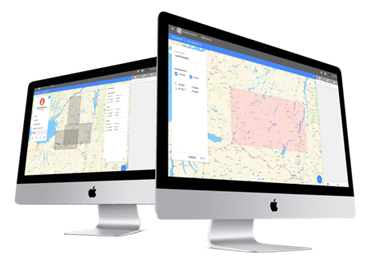
With EVERYWHERE’s key feature Geofence alerts, customers can draw a geofence boundary around their various offices. Every time an employee using the EVERYWHERE App or Garmin inReach enters or exits the Geofence (or office), a notification is triggered. If an employee does indeed test positive for Covid-19, administrators can track the notification flow and identify which of their other employees may need to be tested or quarantined. At EVERYWHERE, we are proud to play a part in controlling the global pandemic and reducing the spread of coronavirus.
Photo: Geofencing used to monitor employees in buildings. Credit: EVERYWHERE
What is EVERYWHERE Intelligent Routing™ and how do your customers utilize it?
EVERYWHERE intelligent Routing™ provides seamless routing of communications between Wi-Fi, cellular, and satellite. Our clients can text or email pictures of an equipment problem, troubleshoot with master mechanics’ who are not onsite, and solve problems quickly and efficiently. An EVERYWHERE customer operating in conflict areas shared, “EVERYWHERE intelligent Routing™ has been huge for us. Having a seamless tracking experience in and out of cell coverage has helped us protect our people in some of the world’s most dynamic environments.”
October 4-11, 2021 is World Space Week – the largest space event on Earth declared by the United Nations (UN). The theme for 2021 is “Women in Space,” inspiring the next generation and celebrating the accomplishments and contributions of women to the space sector and sciences. To celebrate, some of the incredible women at Iridium are sharing their personal stories about how they’ve contributed to the space and satellite industry.
Keely Thompson is a Systems Integration and Test Engineer at Iridium and has been working with Iridium since graduating college. Learn more about Keely in this Q&A and short video!
1. How long have you been working at Iridium?
I’ve been working in Systems Integration and Test on the Iridium® NEXT program since January of 2015 – I can’t believe it’s been almost 7 years! Although I started as a contractor with Boeing, I became an Iridium employee in January 2017.
2. So, this was your first job out of college? How has your career evolved while working within the company?
This has been my only job since graduating with my bachelor’s in Engineering Physics in December 2014 and I couldn’t have dreamed of a better place to land! During the first year or two with Iridium I was mainly focused on verification and validation testing of the satellite hardware and software. Since then, my role has evolved to include all parts of the Iridium system including the satellite control ground system and gateway systems. I’ve also been working with the terminal development groups to test the new Iridium Certus® devices from an end-to-end system perspective. This has been great for seeing how product development works inside Iridium, which is something that was not part of my scope a few years ago.
3. Could you tell us a bit more about your current position?
As an engineer in the Systems Integration and Test team, my focus is making sure all new hardware and software being deployed across the Iridium system works as expected. This means writing and executing test procedures to verify new functionalities and bug fixes as they are implemented. As the Iridium NEXT system has matured, we’ve been working on automating as much testing as possible which is a huge task for a system as complex as ours!
4. What are some of your favorite moments from working at Iridium?
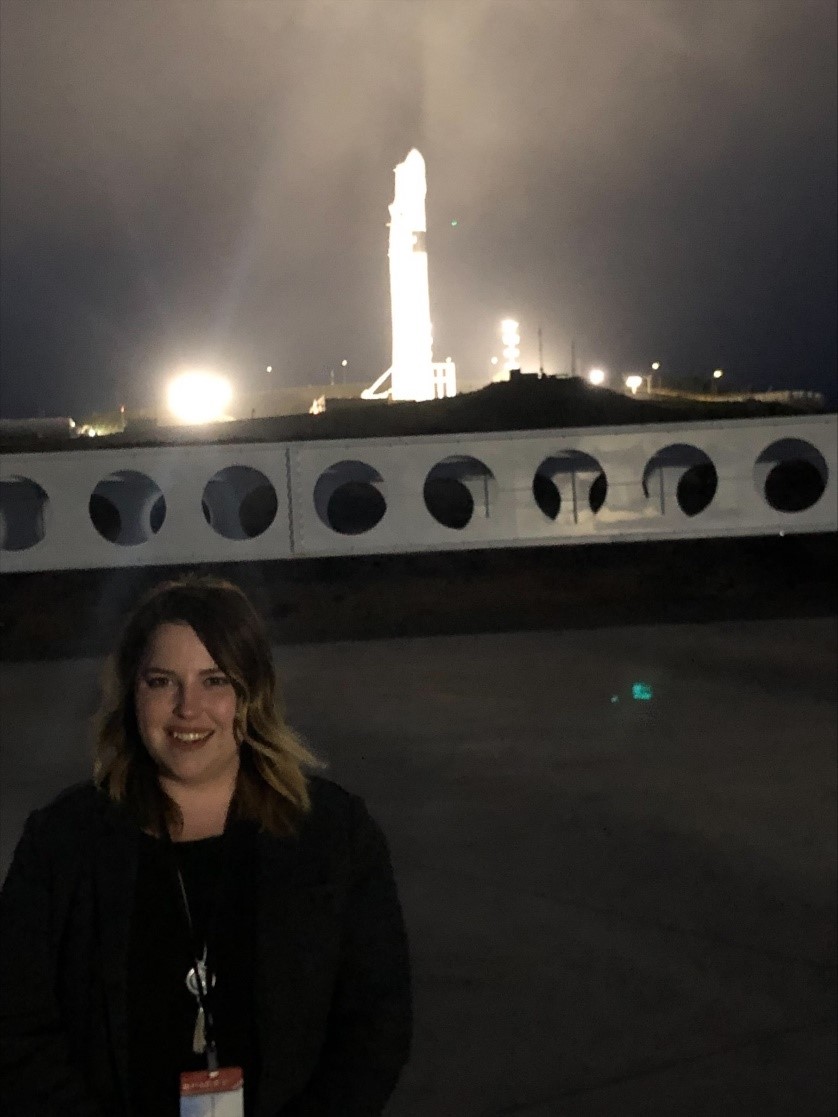
My favorite moment working for Iridium was sitting in the control room during the first launch of Iridium NEXT and seeing the telemetry displays light up with the very first data sent from the new satellites. It was such a big relief to know that all our hard work had paid off! Another great moment was watching the final launch of Iridium NEXT from Vandenburg AFB. I’d always wanted to see a rocket launch in person, so to watch the final launch to complete the new constellation alongside so many of my coworkers who helped make it possible was an amazing experience.
My advice would be to be figure out what you’re passionate about, translate those things into goals, be persistent in pursuing them, and don’t give up! I decided my senior year of undergrad that I wanted to work with satellites which seemed totally out of reach at the time – but my hard work and focus paid off and I can’t imagine a better path than the one I chose with Iridium.
October 4-11, 2021 is World Space Week – the largest space event on Earth declared by the United Nations (UN). The theme for 2021 is “Women in Space,” inspiring the next generation and celebrating the accomplishments and contributions of women to the space sector and sciences. To celebrate, some of the incredible women at Iridium are sharing their personal stories about how they’ve contributed to the space and satellite industry.
When thinking about professions in the space industry, science and engineering are typically first that come to mind. But how does everyone play nice with their spectrum? And what about those ground station landing rights? Learn more about Iridium’s Vice President of International Regulatory, Tatiana Lawrence in this Q&A!
1. Creating a successful business in the space industry requires so many different skills, from managing operations in space to the technology’s impact on the ground. Can you share with our readers a bit about how you support Iridium’s mission?
I am Vice President of International Regulatory at Iridium. In this role, I’m responsible for international licensing and working with United Nations (UN) organizations like the International Telecommunications Union (ITU), the International Maritime Organization (IMO), and the International Civil Aviation Organization (ICAO), and other international agencies, such as The Inter-American Telecommunication Commission (CITEL), which is the Organization of American States (OAS) organization responsible for coordinating telecommunications policy for the Americas.
Iridium® is a global system that operates everywhere in the world. To enable use of our systems, a global operator like Iridium must have necessary authorizations from telecommunications regulators worldwide to permit Iridium to operate and serve end-users in each country. Equally, Iridium must have spectrum allocations and a suitable international regulatory regime to ease the deployment of its services. Ensuring access and a favorable regulatory environment is what I do.
All telecommunications devices use radio frequency spectrum, which is a finite resource. Iridium’s technology is truly unique. We manage to serve the entire world using a minimal amount of radiofrequency spectrum – we use about 10 MHz of spectrum – whereas many of the new mega-constellations battle to access thousands of MHz of radiofrequency spectrum.
A specialized United Nations Agency called the International Telecommunications Union (ITU) regulates the spectrum. My job is to ensure access to appropriate global spectrum allocations so Iridium satellites can access radiofrequency spectrum globally. All usable radiofrequency spectrum is in use and there is no “free” spectrum available for the taking.
Due to spectrum congestion, radio services need to co-exist without causing interference to one another. On the spectrum access side, my job is to make sure the spectrum in use by Iridium does not suffer harmful interference from other users seeking access to our frequencies. In this way, we preserve Iridium operations and quality of service. Equally, I seek spectrum access opportunities for new Iridium services. For example, achieving a spectrum environment enables Iridium to support Global Maritime Distress and Safety System (GMDSS).
2. How did you choose your career field and decide to apply it in the space industry?
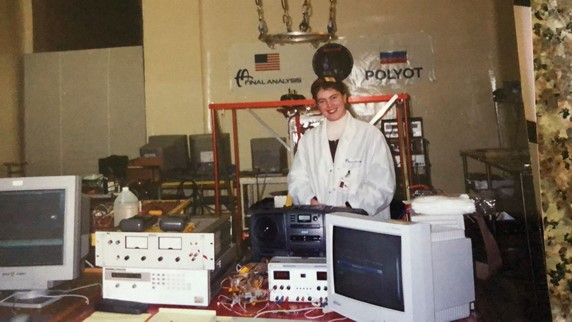
I have always been interested in international work, international organizations, international culture, and history. Back in Russia, I achieved a master’s degree in Engineering. Upon arriving in the United States, my first job happened to be with a startup satellite company that launched its first U.S. satellite on a Russian rocket. I fell in love with satellite technology!
At this point, I took on the UN at its telecommunications arm, the ITU. Initially, it seemed like challenging and very specialized work. But that experience made me realize I dreamed of combining work in a technical field with my interest in international relations and culture. Fast forward through interesting work with other satellite companies and an independent consultancy, and I arrived at Iridium!
3. What is your favorite thing about working in the space industry, and what has been the most significant learning curve?
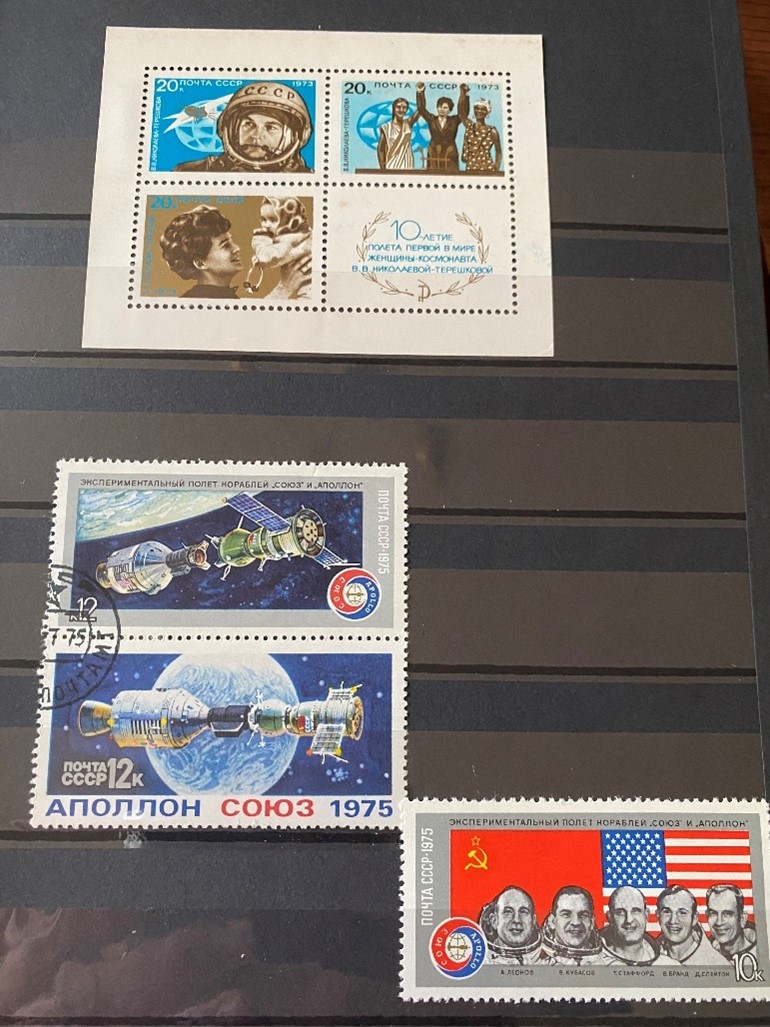
I became fascinated with space since childhood when I read about the Russian cosmonaut Yuri Gagarin. My fascination led to collecting Soviet space-themed postage stamps beginning at age five. When a cosmonaut flew into space, they would issue a new stamp dedicated to that mission. I would beg my father to purchase the stamps, and I still have this collection today.
What I like about working in the space industry today is the constant challenge. We do not have textbooks to learn how to do ITU work or assess wildly varying international regulations. One must know the exact objective, figure out the geopolitical situation between countries, regions, and people, and then strategize a way to find a compromise. There is no playbook and rarely willing coaches. For me, the challenge is the attraction – it gets me up each morning.
4. Have there been any challenges you faced in your career, and how did you overcome them?
Challenges? Many! First, for anyone coming to a new country, there are many challenges. Citizenship is a challenge. Acceptance is a challenge. And the space industry presents new challenges every day.
In the early 2000s, the satellite industry turned from a potentially prosperous and seemingly glorious landscape into a barren field. Coincident with the dot com bubble burst, many emerging satellite companies failed. The first satellite company I worked at failed, and so did my second. Suddenly, with a sudden loss of employment, satellite professionals wanting to remain in the field flooded employers – like the United States Government – with applications. I went back to university, thinking I might pivot to a career in computer science, which was in huge demand at the time. After completing my studies successfully, I realized that a career in computer science might not fit me. Luckily, a few years later, following the shake-out and consolidation in the satellite industry, I was back in the place where I feel I belong.
5. Do you have any advice for someone that may want to follow in your footsteps and work in the space industry?
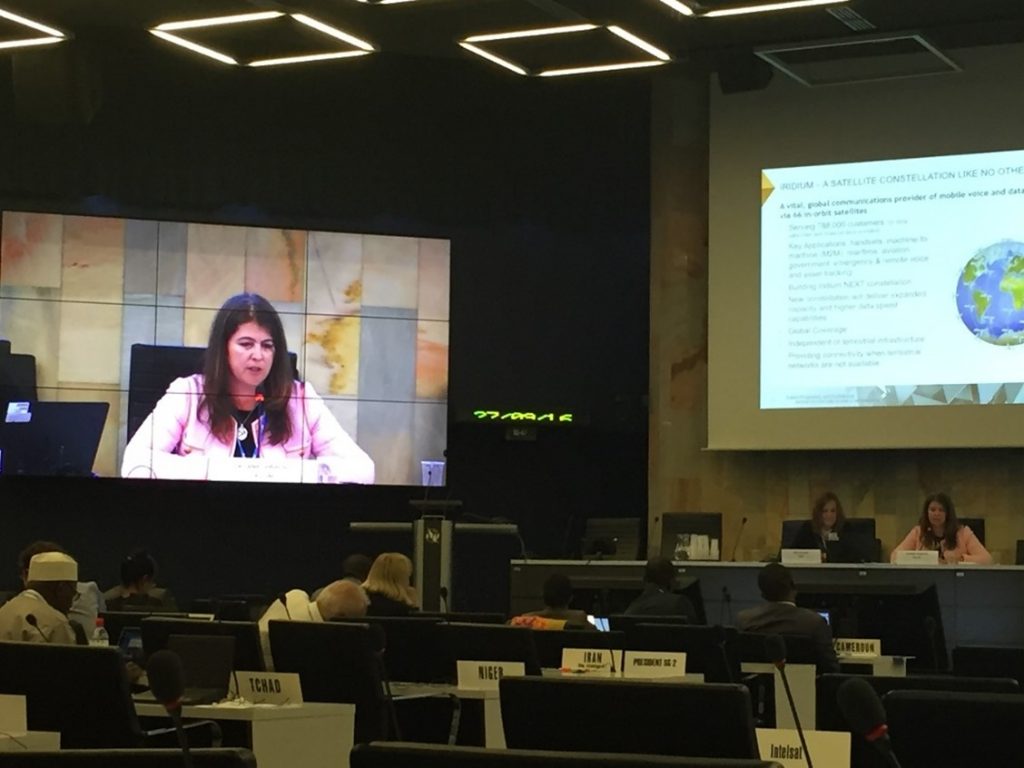
Shortly after I started international regulatory work, I worked at a company to assist it in obtaining a global satellite spectrum and a favorable regulatory environment for its planned satellite constellation. Two weeks into the job, I was sent to the ITU’s World Radiocommunication Conference (WRC) to help its international WRC team obtain 1000 + 1000 MHz of spectrum. At the time, not only was this likely the biggest WRC “ask” in the history of WRCs, but this was an unknown company that came on the scene late and with no ITU studies to support its ask. Essentially the team had to convince the world to vote “yes.”
I had zero training and little guidance on how to accomplish this task. I certainly did not know all the politics and gamesmanship involved, nor did I realize that regular ITU participants spend years building relationships they rely on to achieve objectives. I was so green that I did not even know where meeting rooms in the Geneva conference center were as all references were in French and in acronyms I did not understand. I fell into the deep end of the pool with two choices: sink or swim. Within the four weeks of the WRC, I swam. Quickly.
My advice to anyone who wants to follow in my footsteps or approach any career that seems daunting is not to be afraid to be thrown into the deep end. Learn everything you can through your research or by asking and learning from those more experienced.
If you have a passion for what you do, keep paddling and fighting, and the road will show the way.
You are currently browsing the IFP blog archives for October, 2021.