Q&A with Audrey Puderbaugh, Principal Engineer, Space and Ground Services

  1. Can you tell us more about your STEM education and career path? What motivated or inspired you to become an engineer?

    I have loved everything having to do with space since elementary school. When I was in the 4th grade, I decided I wanted to become an astronaut. I grew up in the age of Top Gun, so I loved airplanes and jets too. I decided sometime in high school that I wanted to become an aerospace engineer, so I went to the University of Kansas and pursued my degree there.


  2. How long have you been working at Iridium and what led you to a career here?

    My first job after I finished my degree was at Iridium. I have been working on Iridium for about 23 years now. I started in Mission Planning and Orbital Analysis (MPOA) when the final launches to build out the Block 1 constellation were taking place and they needed the extra help. I had the opportunity to move to the Space Engineering team about 17 years ago to work as an attitude determination and control engineer, and I have been doing that job ever since.


  3. You’re a very active volunteer in your community. Can you tell us more about this work?

    Most of the volunteering I am currently involved in is focused on Scouting and STEM education.  But my Scout volunteering is usually centered around STEM outreach too. I have been helping with Bring Your Child to Work Day (BYCTWD) at Iridium’s Satellite Network Operations Center (SNOC) going on a decade now. When I found out my older son liked my husband’s BYCTWD better because he got to release a whole tube of Mentos into a 2L of Coke there, I took on the role of helping to lead coordinating the STEM activities at Iridium. I think space is way cooler, and I wanted to make sure Iridium’s experience was just as fun. At that point, I realized the core truth of all volunteer opportunities – if I wanted STEM to be important and interesting to young people, I could and should do something about it and not wait for someone else to do it.  

    I think I have always been drawn towards STEM education though. One summer in college, I was a space camp counselor at the Kansas Cosmosphere and Space Center. I loved it when they let me teach the class about aerodynamics. I also had the opportunity to spend a semester teaching simple machines and how to design a Mars mission to a class of 4th and 5th graders. I discovered then I enjoyed planning and teaching these activities a lot. So, my college experiences and then BYCTWD has segued to presenting at Career Days, coordinating STEM activities with Scouts, and now I get to coordinate the Iridium STEM volunteers at Ashburn Elementary School here in Northern Virginia. 

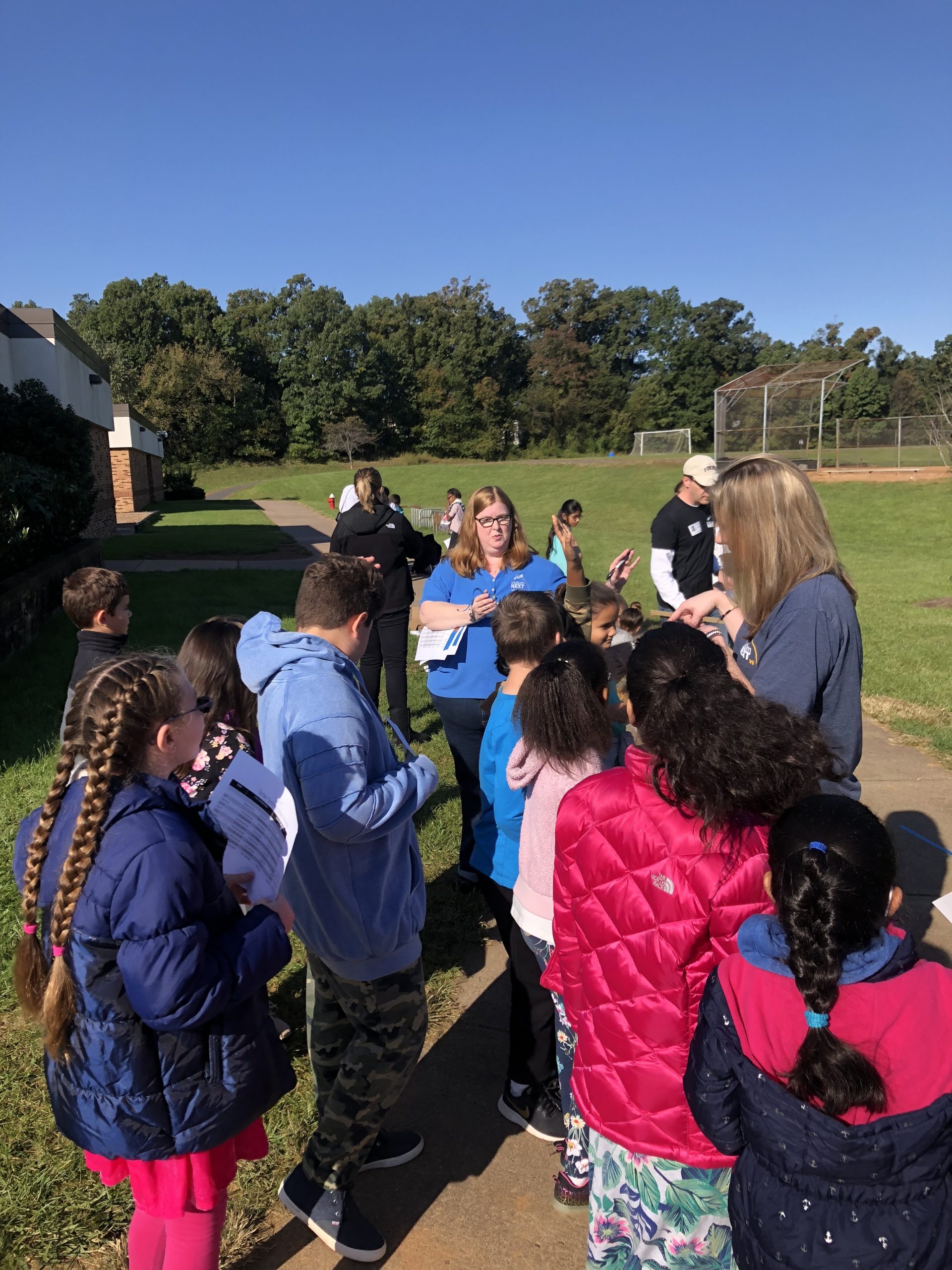
    Several years ago, Walt Everetts (Iridium Vice President of Satellite Operations and Ground Development) approached us with an opportunity to partner with Loudoun County Public Schools to help develop and teach STEM topics to students. We put together a wonderful group of volunteers from the SNOC and have been assisting Ashburn Elementary with whatever supplementary STEM education they need for the last three years.  We help them run their makerspace in the library, help the 2nd and 4th grade teams with STEM lessons, present at their career fair, and more. I am so proud of how our group has adapted to continue to help during online school this past year too. Our in-person lessons moved to Google meets and also videos that we recruited some of the Marketing Team to help us out with. I am looking forward to the possibility of having in-person lessons again next year. It is always fun to see how excited the students get when we are there. My favorite part is getting thank you notes from the students during teacher appreciation week. They make me smile every time I read them.
  4. You have accomplished so much in your career so far. Have you faced any challenges along the way and how did you overcome them?

    I would say there are two main challenges I have faced over the years – and both are good challenges to have. First off, the job we do is challenging. Operations is a constantly changing environment and there is always a new puzzle to solve. It never gets old being an engineer at Iridium. We get to find solutions to issues satellite design engineers never even dreamt of. If you can think of a problem on a spacecraft, it is quite possible we have worked to solve it. When we were training on how the new satellites work, we asked a million questions knowing the issues we already encountered keeping Block 1 satellites operating and providing service for nearly 20 years. I am looking forward to the new challenges we will face as we continue to operate our satellites.

    The second challenge is maintaining a healthy work-life balance. What is a work-life balance, right?! As most people experience – when they can call and text you 24×7, they will. My kids have grown up knowing that mom may have to leave their game or step out of a performance for work. I even get Mother’s Day cards with satellites on them sometimes. I have just had to learn over a long period of time to step back sometimes and let one or the other (work or home) take priority and go with it. I am definitely not always good at that – like the time I was trying to support an anomaly from the closet of our hotel room at Disney World…but I try! Regret over favoring one over the other just makes both situations more stressful. Luckily, I have always felt like my managers have been supportive when the priority has become home.


  5. Congratulations on being recently being elected Outreach Working Group Co-Chair for Space & Satellite Professionals International’s Women in Space Engagement (SSPI-WISE)! Could you tell us more about the position and how you came across the organization and this role?

    I really must give my colleague Coral Faradjian (Iridium Director, Contracts) a shout out for my involvement with SSPI-WISE. We were paired as one-on-one networking partners in Iridium’s internal program, Iridium Women Connect (IWC) last fall and she suggested I attend their January meeting. The group had just formed in December 2020, was figuring out their mission, and getting organized. One of the working groups they were forming was STEM Outreach. Since STEM is near and dear to my heart, I volunteered to be a part of that group. As we were trying to organize and find our vision for the working group, I found myself starting to coordinate more and more of the meetings along with one of our other co-chairs. When nominations opened for elections, I decided I wanted to continue to help guide the group. 

    We are creating a strategic plan to pursue three areas of interest: to promote educational activities and opportunities, to strengthen partnerships with both educational and other space organizations, and to establish a scholarship fund. I’ve been able to meet with my other two co-chairs and our working group a couple of times since the election. We have a dedicated group of volunteers with amazing ideas. I am excited to work with them!
  6. SSPI-WISE is a group that welcomes all women members from the space & satellite industry. How has it been meeting and collaborating with other women working in the industry outside of Iridium?

    I have not had the opportunity to be involved with an industry organization for a long time. It has been really inspiring to be able to network with other women in our industry – to hear their stories and advice. I love the support and encouragement that SSPI-WISE seeks to give women at all levels of their careers. I am just beginning to get to know the other members of SSPI-WISE, but they are already challenging me to step out of my comfort zone and to be better at networking, since that’s not one of my strong suits. This group is a great companion to the work that the IWC group has started within our company. I highly recommend anyone seeking further opportunities to connect to and learn from other women in the space industry should consider participating in a meeting or event sponsored by SSPI-WISE.


  7. Being a woman in STEM, you’re helping to continue paving the way for young women and girls everywhere. Do you have any advice for those who may want to follow in your footsteps or pursue careers in STEM?

    It is really exciting for me to be able to focus on encouraging young women and girls who are interested in STEM careers. I have sons so I have encouraged all children I have worked with in recent years to pursue careers in STEM. But I do have a special place in my heart for supporting young women in their exploration of STEM fields.

    I would encourage young women to try something new even if it seems difficult. You will be successful and learn something valuable about yourself whether you complete the task or not.  Also, keep trying different things until you find what you love. Engineering, for example, has all kinds of different types of jobs.  A person who loves to design may hate testing or operations and vice versa. You never know what you may love until you try it. I came out of college like every engineer I knew, thinking I would design and build something. But I was given the opportunity to try satellite operations and found out that I absolutely love it.  


To learn more about SSPI-WISE, visit: https://www.sspi.org/cpages/sspi-wise-women-in-space-engagement
Thales – Operation Arctic Lynx Partner Spotlight

1. What attracted you to participate in Operation Arctic Lynx?  

The magnitude of the operation, with over 20 organizations joining to participate in very ambitious and challenging remote communications operations, made it very attractive for us to participate. As an Iridium partner and value-added manufacturer, we’re always happy to support and participate in these types of projects. We know our equipment is truly reliable, even in challenging weather or terrain, and we could not let the opportunity pass to showcase it in a variety of exercises in the Arctic environment.


2. Can you tell us more about the products you are demonstrating on this expedition and what they’re typically used for?

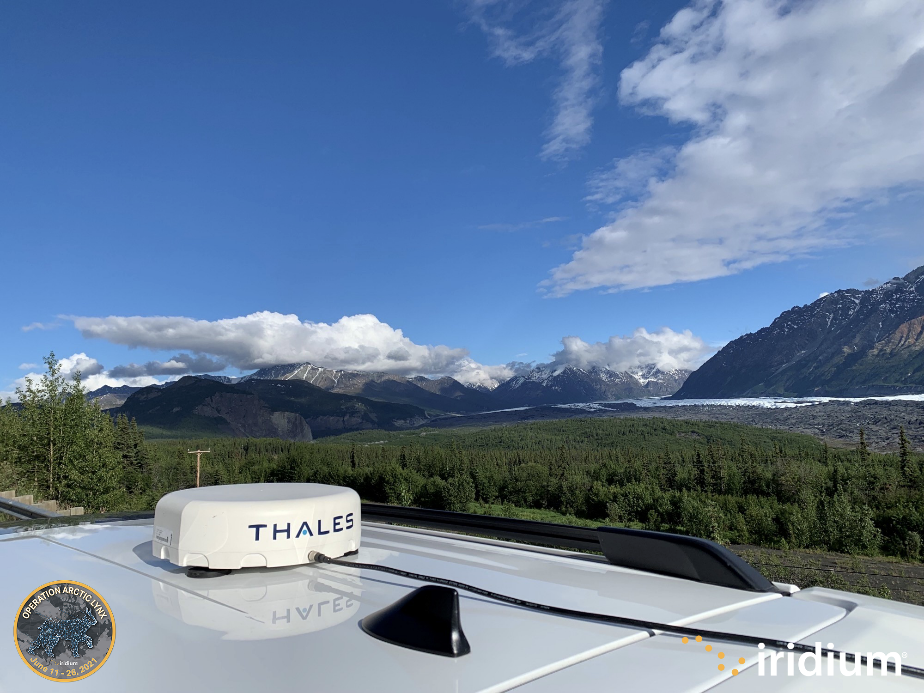
Thales MissionLINK™ powered by Iridium Certus® is the only land-mobile solution that currently runs on the Iridium® network. The market has enthusiastically adopted our solution, which became available worldwide in 2019 and is currently used in a variety of use cases and markets ranging from military and government operations, public safety, emergency response, utilities (such as oil and gas), transportation (trains and off-road vehicles), research in remote areas and many more. MissionLINK is robust and incredibly easy to use, providing truly global communication to customers anywhere in the world.


Photo: The Thales MissionLINK providing comms-on-the-move during OAL


3. Can you explain a bit about how your technology works and what communications threads you have been most eager to experience?

Our equipment is quite simple to operate, mainly because it comes with everything the user needs in the box. You just plug it in and are ready to go. It is also widely compatible with other comms equipment and has a very intuitive and user-friendly interface. MissionLINK is currently used in a variety of environments and weather conditions, and with an operating temperature of -40C, we know that the Arctic is a location where our equipment is reliable but it is always exciting to see it thrive. On-the-move communications are crucial for all military, public safety, and emergency response users. Due to the number of challenges presented during these threads, our team is always eager to see how MissionLINK performs and if there is any room for improvement or enhancements for the future. 


4. What would you like readers to know about OAL and your product specifically? Are there any features or unique capabilities that standout in the Arctic environment?

We’d have to say that the combination of the ruggedness of our equipment, even in the harshest environments, along with our low-latency reliable comms are the most important characteristics that make Thales MissionLINK the best land-mobile satcom solution. We have always been proud of the quality of our satcom family of products but seeing how MissionLINK performed during OAL is further confirmation of it.


To learn more about Thales, visit: https://www.thalesgroup.com/en

To learn more about Operation Arctic Lynx, visit: www.operationarcticlynx.com 

Q&A with Manuel Pardi – Pequod’s Voyage to Antarctica

Over 30 years ago, captain Hernán Álvarez Forn built the Pequod sailboat and became the first to sail from Argentina to Antarctica. After restoring the old and forgotten boat, Manuel Pardi recreated Peqoud’s voyage to Antarctica. Learn more about Manuel and Peqoud’s voyage in this Q&A.

Iridium: Congratulations on completing a successful sailing voyage from Argentina to Antarctica and back! What inspired you to go on this journey? 

Manuel: Thank you very much! Many things inspired me – first was my passion for sailing. I postponed my youth dreams of sailing the seas that were inspired by books that I read by Slocum, Moitessier, Vito Dumas, Melville, and others. I’ve always had a strong desire to explore the wonders of the seas, but even more than all that was the challenging, wild and pristine destination of Antarctica. I was first inspired by the possibility of starting a new adventure there – the pilgrimage by sea and land from Antarctica to Santiago de Compostela, Spain called “El  Camino Blanco de Santiago,” which means the White Way of Saint James.

Your expedition was especially unique. Can you please tell us the story behind why you decided to recreate the Pequod sailboat’s 1987 expedition, the first to sail from Argentina to Antarctica?

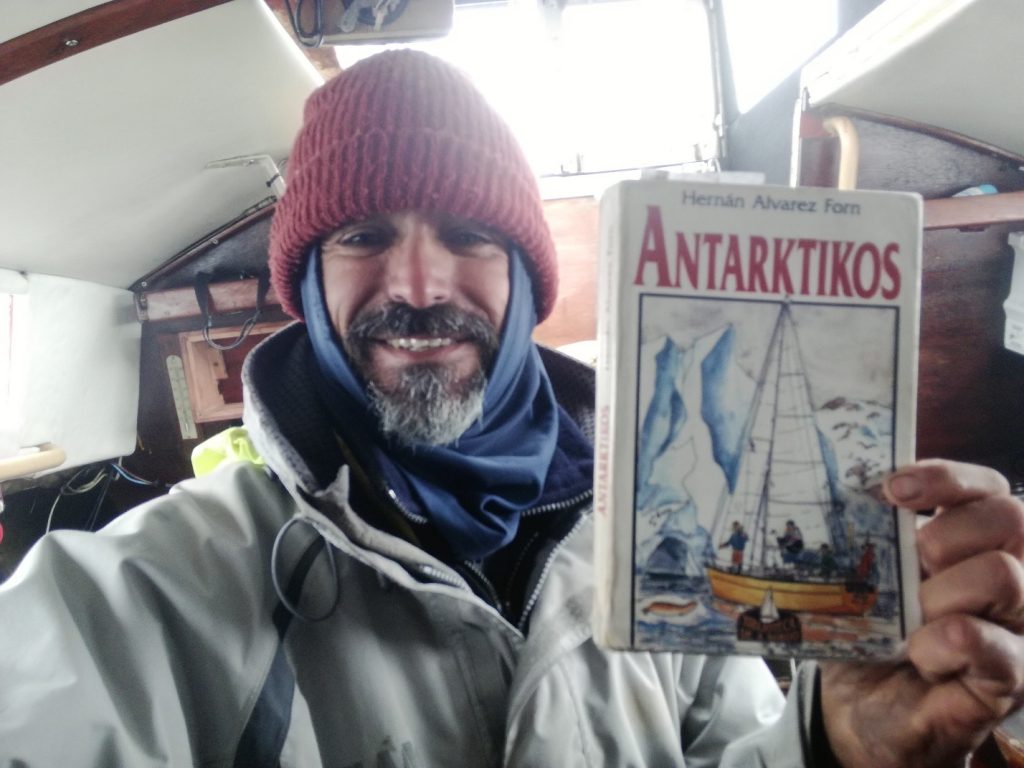
I had all these ideas spinning in my head when I found the book “Antarktikos” in my club’s library, where Hernán Alvarez Forn tells the story of the Pequod sailboat’s 1987 expedition to Antarctica. While I was reading the book, I was also shopping for a sailboat (my first sailboat) and I came across a sale ad for Pequod in the internet. Before I even finished reading the book, I had become the new Captain of the Pequod with the firm intention of recreating the adventure I was reading about.


Can you tell us more about the condition of the Pequod when you found it and your process for restoring it?

Pequod was in very bad condition. It had openings in the hull and several water leaks on the deck. It needed repairs everywhere – replacement of the hull’s sea water intakes, engine, sails, rigging, rudder, mattresses, paint, and a lot of equipment were required to bring her back to her first-class ocean sailboat past. The process to restore required a detailed list with all the things that needed to be done. The jobs that I could do by myself, I did, and friends and crewmembers helped me with other tasks. For some jobs that required specific technical knowledge, such as replacing the sea intakes, patch the water courses or replace the rigging. I hired different professionals. One of these professionals was Pequod’s original builder, Francisco Gigena.  

You are actually a lawyer by trade. What made you decide this was the right time in your life to sail to Antarctica?

Summer is a slower time for lawyers in Argentina, and I knew I was going to be connected throughout the trip by Iridium GO!® so that my clients could contact me if needed and I could still solve urgent matters. On the other hand, there are moments in life when your children have grown up and are living their own lives. Plus, you see yourself working hard every day at a desk connected to the computer, negotiating contracts, going from one hearing to another and despite loving my job, I realized that my zest for life requires sometimes doing things out of the ordinary. This was a time for me to take risks and push my limits. So, for me, sailing was obviously something I needed to do at that point and time.

Did you have any doubts about how successful the trip would be or face any challenges along the journey?
Yes, a lot of doubts. The pandemic and the lockdown set by the Argentine Government during 2020 imposed a huge threat to the project. I had to change plans many times. For more than 7 months I wasn’t able to do any work on board or sea test anything. When the lockdown was finally over, I had only two months’ left, from November to December 2020, to remove the old diesel engine and replace it with a new electric drive, batteries, communications, solar and wind generators and charge regulators. It was crazy having to finish all these renovations if I wanted to sail out in the summer of 2021. Then, the next challenge was to test and learn how to use all the new stuff on the way south.  

Sailing wasn’t easy either. We had big storms, calms, a lot of things broken…. It was simply overwhelming. For example, a jig pin and shackle that holds the forestay came loose and the genoa failed, then both the genoa sail and forestay were flapping all over, hanging from the mast. That was very scary and could have been the end of the trip to say the least. Also, the boom broke in two parts twice at sea, and we capsized on our way back. There were a lot of troubles, but we never gave in.  Happily, we have been able to successfully solve each, and every problem encountered.

How did you feel when you finally arrived at Deception Island?

Euphoric. And with the certainty at that point, we already knew each other very well – Pequod and me. 

Did you learn anything new about yourself or in general from this experience?

Yes, I learned that when I really want something, if I meditate deeply on how to do it, having enough patience and the right focus on my resources, there is nothing I cannot do. On the other hand, being in very harsh conditions for so long made me see how many wonderful people I have in my life, and I definitely learned to appreciate and love them even more.

Sailing across the vast ocean and arriving on the most remote continent on Earth can probably get pretty lonely. Can you explain the impact that having the Iridium GO! device had on your experience?

The impact of having the Iridium GO! was huge. When I was 20 years old, I sailed from San Diego California to Cartagena, Colombia crossing the Panama Canal. On that trip I had no contact with my family other than by letters or telephone when I arrived at ports. How different it was for my family, especially my mother, on this trip having the Iridium GO!. I remember very well calling her on her birthday from the Island at the End of the World (Isla de los Estados). It was exciting to be able to do that, and I have no words to describe the moral support that it meant for me and Pequod’s crew to know that we were in contact with our loved ones or about any urgent issue at work at any time of the day, anywhere. Furthermore, I was able to give an at-sea radio interview to share our trip to the world through social networks. Being able to do all this infused a great moral support that encouraged me to keep going.

You also used PredictWind on your journey, can you share a bit about its role in your expedition? 

PredictWind’s forecasts were absolutely necessary and helpful for daily decision-making and navigation planning. Having different forecast models and ocean currents data that can be easily downloaded and interpreted are without a doubt, essential tools for safe navigation.

How was your experience filming the documentary? When can we expect to see parts of your journey on film? 

At first, I was a bit nervous. I had never done anything like it before, but the director explained that I should forget about the camera and just do what I have to do. It was ok for me, and once I tried it I started to feel more comfortable. This year the documentary will be published.

It is probably hard to top Pequod’s Voyage to Antarctica, but do you have any future sailing trips planned?

Yes! Next, I am planning to finish the “El Camino Blanco de Santiago,” a zero-carbon emissions land and sea pilgrimage from Deception Island, Antarctica to Santiago de Compostela, Spain; almost 6,000 nautical miles yet to go. One great challenge will be to cross the doldrums, since in order not to get caught there, mechanical propulsion must be used for many miles and may exceed the batteries’ total capacity. On the other hand, I need time to work on my profession, but the world changed so much due to the pandemic that today my work depends on staying connected, so I can consider making longer sea voyages with technology that allows me to do it.

To learn more about Pequod, visit: http://pequod.com.ar/ 

  • 0 View Cart
  • 0
    0