Operation Arctic Lynx (OAL) is a partnership-driven field demonstration of Iridium® and Iridium Connected® technology over a two-plus week period, primarily focused above 60 degrees north latitude and stretching as far as 82 degrees north latitude. Iridium is the only satellite communications network that provides reliable, truly global coverage, including the polar regions.
Learn more about Iridium partner Icom’s participation:
- Tell our readers a bit about Icom and your relationship with Iridium and what attracted you to participate in Operation Arctic Lynx?
Icom Inc.’s roots are in designing, engineering, and manufacturing highly advanced, compact solid-state radio equipment for use in the amateur (ham) radio industry. The company’s product line has since expanded to include communications equipment and products based in the marine, avionics, land mobile and wide-band receiver industries. Icom’s IC-SAT100 operates exclusively on Iridium Push-To-Talk services and is compatible with the full portfolio of Iridium and Iridium Connected PTT products for seamless, global push-to-talk capabilities. Our team was invited to participate in OAL by Iridium, and it seemed like a great opportunity to further our relationship with Iridium and Iridium customers and support Iridium on this expedition.
- Can you tell us more about the products you are demonstrating on this expedition and what they’re typically used for?
Both the IC-SAT100 and the IC-SAT100M are being demonstrated during OAL. Icom’s IC-SAT100 allows users around the world to communicate with a group of PTT radios at the push of a button. To do this, the IC-SAT100 utilizes Iridium satellite network covering the earth including both poles providing wide area global communication anywhere on the planet. Icom’s IC-SAT100M is a PTT satellite radio designed for fixed mount operations. Unlike handheld satellite radios, users with the IC-SAT100M do not need to stay outside for a clear view of the sky for a stable communication connection. This global satellite mobile radio’s design easily provides coverage from vehicle to in-building use. The IC-SAT100M is backed by the Iridium satellite network, covering the earth including both poles for a true wide area global communication solution. Using the global PTT on the SAT100/SAT100M with MIL and CIV TAK allows us to see the radios deployed as well as talk to each other.
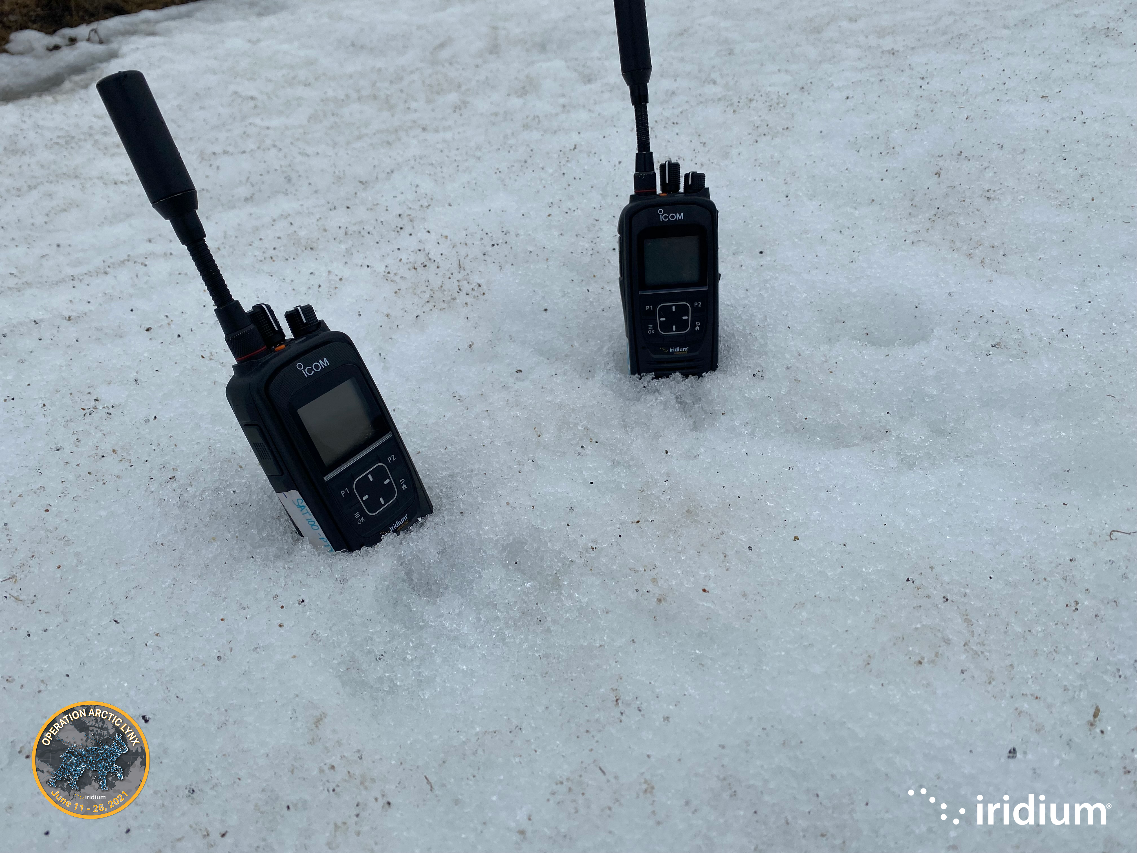
The military grade and IP67 waterproof IC-SAT100 provides reliable connectivity anywhere on the planet, operating exclusively on Iridium Push-To-Talk services
- Can you explain a bit about how your technology works and what communications threads you have been most eager to experience?
The SAT100 and SAT100M allow you to talk, text, and show Position Location Information (PLI) to any location world-wide. Every time a user PTTs the radio it will provide a user PLI on the same talk group on a mapping software. The user can control the ARO of the radio being used through the Iridium software provided at the time of purchase.
- What would you like readers to know about OAL and your product specifically? Are there any features or unique capabilities that standout in the Arctic environment?
We’ll reiterate that the truly global connectivity enabled by the Iridium network is a huge stand out. When talking to customers, it’s apparent that other competitors’ radios will not do this. During the OAL demonstrations, the radios performed flawlessly in all locations.
- Do you have any additional thoughts to share?
We know we keep thanking the folks at Iridium for putting this together, but everyone involved did an amazing job, and we can’t thank you all enough for having us along and using Icom.
To learn more about Icom, visit: www.icomamerica.com/en/
After several days on the icy Arctic Ocean, and the northern most point of land in the United States (Point Barrow at 71 degrees north latitude), the OAL team made the 2-hour flight from Utqiagvik to Anchorage, followed by a scenic 6-hour drive to Fairbanks through heavy rain, fog and the occasional moose, polar bear and black bear sightings.
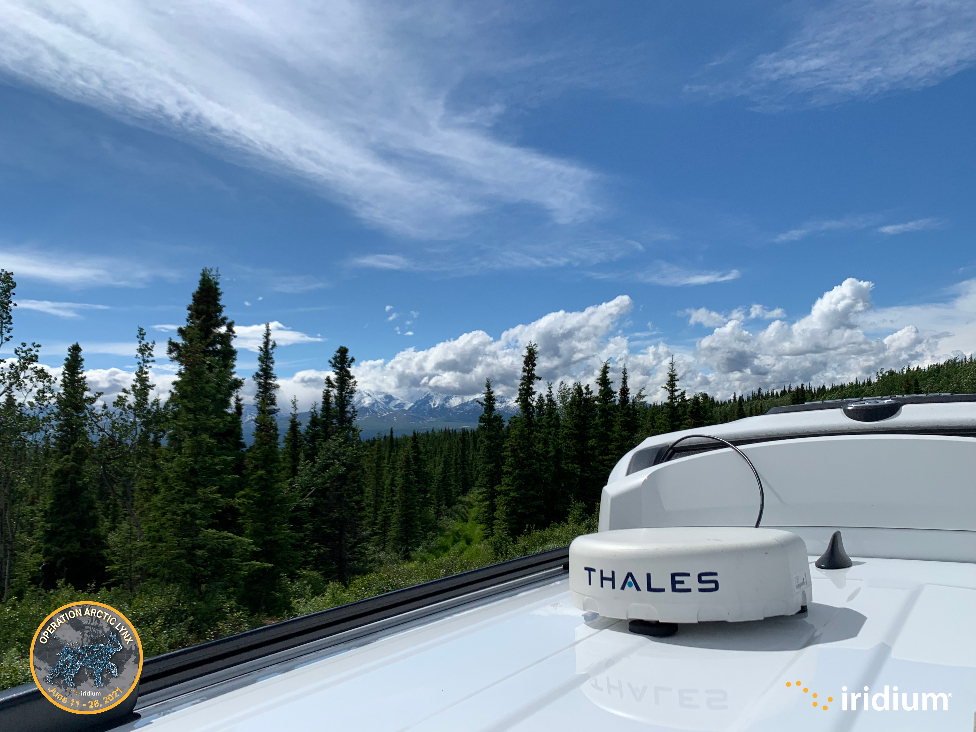
After getting settled, the team headed “onto the ice” to begin communications threads from 71 degrees north latitude to locations all over the world. This included HD 1080p real-time video sessions between Point Barrow (71 degrees N Lat), CFS Alert (82 degrees N Lat), Fort Bragg (35 degrees N Lat), Tyler, Texas (32 degrees N Lat), and Chandler, Arizona (33 degrees N Lat.). The clarity of picture and voice over Iridium Certus® using the Thales MissionLINK™ 700 terminal was an impressive example of the capabilities enabled by the upgraded Iridium® satellite constellation.
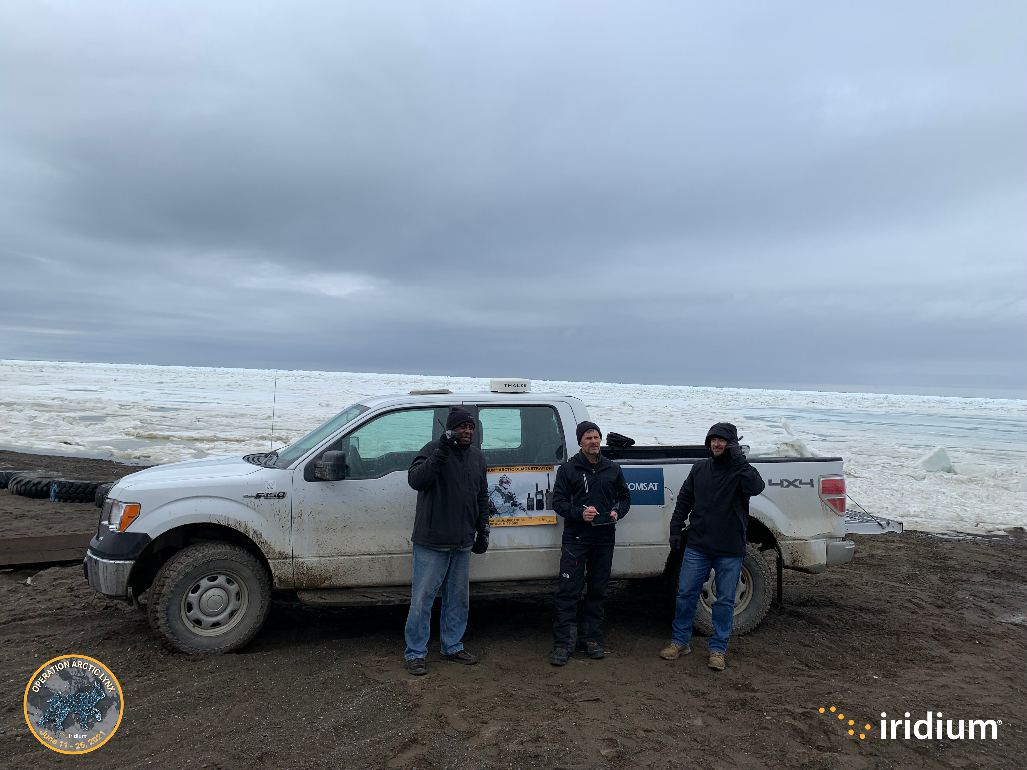
This is where being an L-band spectrum-based network is so important. When weather conditions go from clear, to fog, to light rain, to downpour, or a combination of them all, Iridium’s L-band connectivity continues to shine through. It’s well understood that Ka/Ku band networks are ideal for big-data broadband pipes, but it is also just as well understood by the industry that inclement weather causes problems and losses of connectivity. This is why it is usually paired with an L-band companion as a failover system.
Being able to prove out such a high-quality of L-band connectivity in some of the most remote and challenging environments once again reinforced the unique attributes of the Iridium network and all its features including truly global coverage, weather-resilient connectivity, highly mobile and weather-tested equipment, and more.
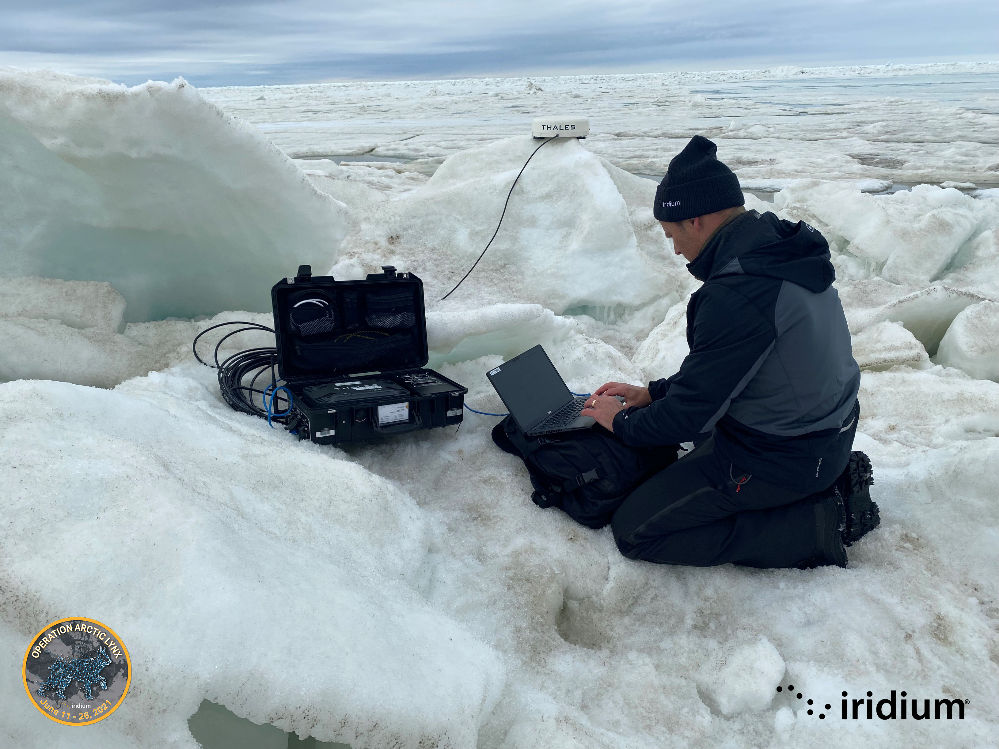
A wide variety of Iridium and Iridium Connected® devices are a part of OAL, including Iridium partner collaborative adaptations. For example, the Thales MissionLINK 700 terminal has been turned into both an airborne “jump kit” by Comsat, and a portable all-in-one communications kit by 4K Solutions. The two solutions provide the same capability, but are packaged for different customer use-cases.
In addition to pushing threads through Iridium Certus, Iridium narrowband capabilities were further exercised using Iridium Extreme® 9575 satellite phones, AssetLink’s AssetPack tracking device, ICOM’s IC-SAT100 PTT handset, NAL’s Shout communicator from Trailblazer and personal smartphones connecting via WiFi to Iridium Certus. The McQ Ranger Sat was also deployed to test its remote sensor capabilities in the frigid terrain.
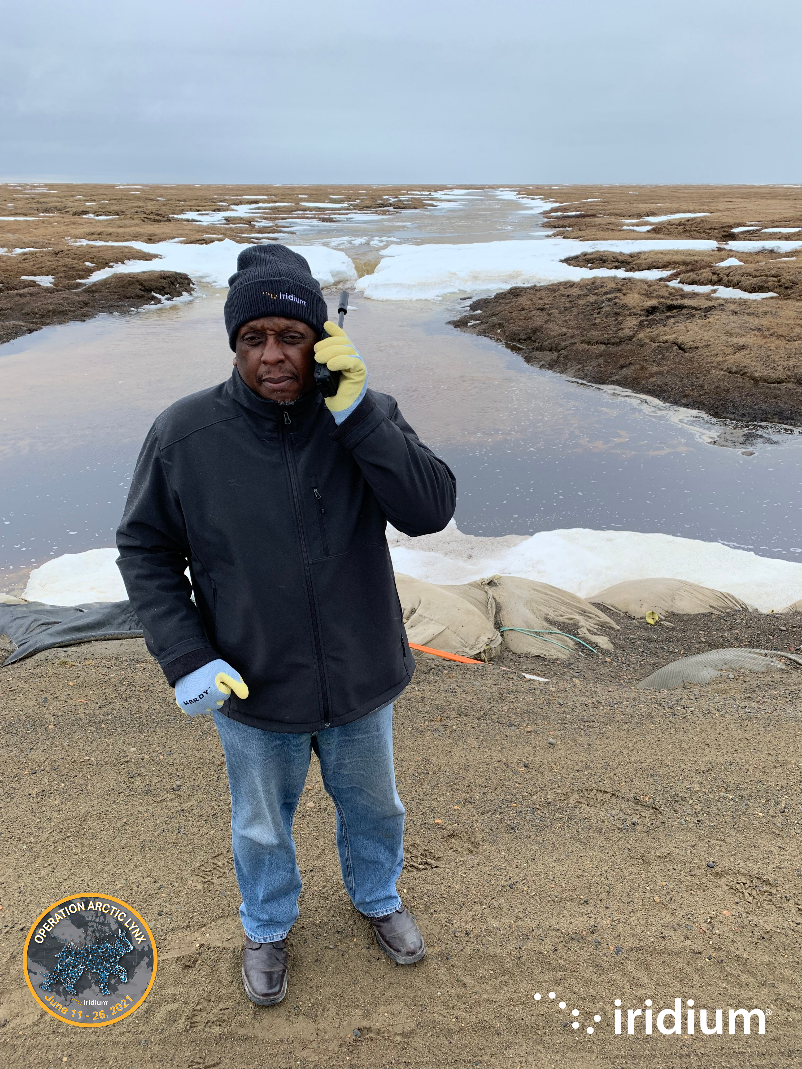
Over the course of a week, the team ran countless voice and data threads. Below is an included snapshot of a few of the activities that took place, including in Utqiagvik, Point Barrow, Fairbanks (Fort Wainwright), Anchorage (JBER) and the associated locations both north and south of each of these locations.
Among the most impressive threads was a 70mph comms-on-the-move real-time consistent Iridium Certus connectivity session during the drive through Alaska’s mountainous terrain between Anchorage and Fairbanks. Select imagery and video has also been included for added insight to the events that took place. Additional imagery and videos can be found in the multimedia section of the OAL webpage.
Real-Time Threads Established
Utqiagvik to
- Oslo, Norway – Imagery over Iridium Certus using AnsuR Asign application
- Melbourne, FL – Full motion video over Iridium Certus and received in Colorado Springs, CO using AnsuR Asmira application
- Arizona, Virginia, Maryland, Connecticut, Texas, Indonesia – Iridium 9575 PSTN calls
- Colorado Springs, CO – Smartphones via MissionLINK wifi to execute Microsoft TEAMS and Facetime audio/video over Iridium Certus
- Manassas, VA – Facetime via smartphone over Iridium Certus
- Chandler, AZ – SAT100 PTT connectivity
- Various locations – Email/texts over smartphones wifi’d to MissionLINK
- Arizona, Virginia, Texas, Connecticut – MissionLINK POTS
Point Barrow to
- Nunavut, Canada – Full motion video over Iridium Certus via Melbourne, Florida server and received by Canadian Forces Station – Alert and Peoria, Arizona using AnsuR Asmira application
- Oslo, Norway – Imagery over Iridium Certus using AnsuR Asign application
- Melbourne, FL – Full motion video over Iridium Certus received in Peoria, Arizona using AnsuR Asmira application
- Melbourne, FL – On-the-Move HD full motion video over Iridium Certus received and recorded via LTE in Tyler, Texas
- Melbourne, FL – On-the-Move HD full motion video sent over GSCK Certus and received and recorded over Iridium Certus Jump Kit (intra-Utqiagvik event)
- Colorado Springs, CO – Facetime via smartphone over Iridium Certus
- Manassas, VA – Facetime via smartphone over Iridium Certus
- Kent Island, MD – Facetime via smartphone over Iridium Certus
- Fort Belvoir, VA – Facetime via smartphone over Iridium Certus
- Virginia Beach, VA – Facetime via smartphone over Iridium Certus
- Tempe, AZ – Facetime via smartphone over Iridium Certus
- Peoria, AZ – SAT100 PTT connectivity
- Indonesia, Fort Bragg, multiple Virginia locations, and Maryland – Iridium Extreme 9575 PSTN calls
- Virginia – Iridium Extreme 9575 to Iridium Extreme 9575 call
- Various locations – Email/texts over smartphones wifi’d to MissionLINK 700’s
- Kent Island, MD – Iridium Extreme 9575 to PSTN call
- Madison, CT – Iridium Extreme 9575 to PSTN call
- Virginia, Maryland and Texas – Facetime via smartphone over Iridium Certus
- Arlington, VA – Facetime via smartphone over Iridium Certus
- Virginia, Maryland, Arizona and Connecticut – POTS voice over Iridium Certus Jump Kit
- Fort Hood, TX – Icom SAT100 PTT connectivity
- Connecticut and Maryland – Iridium Extreme 9575 PSTN calls
- Fredericksburg, VA – McQ Ranger to McQ Owl
- Team Alaska McQ Ranger Confirmed on OAL COP
- Fredericksburg, VA – Successfully downloaded the McQ Mission Pack files allowing in OWL image visibility over Iridium Certus
Driving Parks Highway: Wasilla to Fairbanks (2000-0200)
- OTM: NB autodialer
- OTM: AssetPack tracking COP
- OTM: HD full motion video over GoPro of the drive – pulled down HD in Arizona via house broadband
- OTM: HD full motion video sending and receiving both from same terminal
- OTM: AssetPack geofence referenced in logs (Wasilla/Healy)
- OTM: Multiple Iridium Extreme 9575 calls between the two cars
- OTM: Iridium Extreme 9575 call to PSTN Arizona
- OTM: Iridium Extreme 9575 call to my OTM smart phone (LTE)
- OTM: Smartphone over Iridium Certus Microsoft TEAMS with Arizona
- OTM: Watched S1, E1 of Manifest, 15 minutes
To learn more about Operation Arctic Lynx, visit: www.operationarcticlynx.com and stay tuned for the week 2 update next week!
4K Solutions®: Operation Arctic Lynx (OAL) is a partnership-driven field demonstration of Iridium® and Iridium Connected® technology over a two-plus week period, primarily focused above 60 degrees north latitude and stretching as far as 82 degrees north latitude. Iridium is the only satellite communications network that provides reliable, truly global coverage, including the polar regions.
Learn more about 4K Solutions® OAL participation:
- Tell our readers a bit about 4K Solutions and your relationship with Iridium.
4K Solutions® is in the rapidly deployable, expeditionary communications business. Our customers’ offices can be anywhere on the planet and need network connectivity. Giving a customer internet services in places such as downtown Houston is a “lay up,” but folks call us because they are in a jam and need a hand solving the “how can we do that” in areas outside of terrestrial coverage. Iridium’s completely global satellite coverage, especially in the Arctic regions, is especially beneficial and allows users to leverage our Global Satellite Communications Kit (GSCK™) that anyone can operate anywhere!
- Can you tell us more about the products you are demonstrating on this expedition and what they’re typically used for?
The GSCK™ is an expertly designed lightweight, hand-carried, battery-powered solution that leverages the MissionLINK™ terminal by Thales powered by Iridium Certus®. This communications kit allows our customers to easily utilize the Thales MissionLINK terminals no matter where they’re deployed. The OAL team has been demonstrating the utility of the GSCK™ out on the ice, driving on-the-move and if necessary, on vessels.
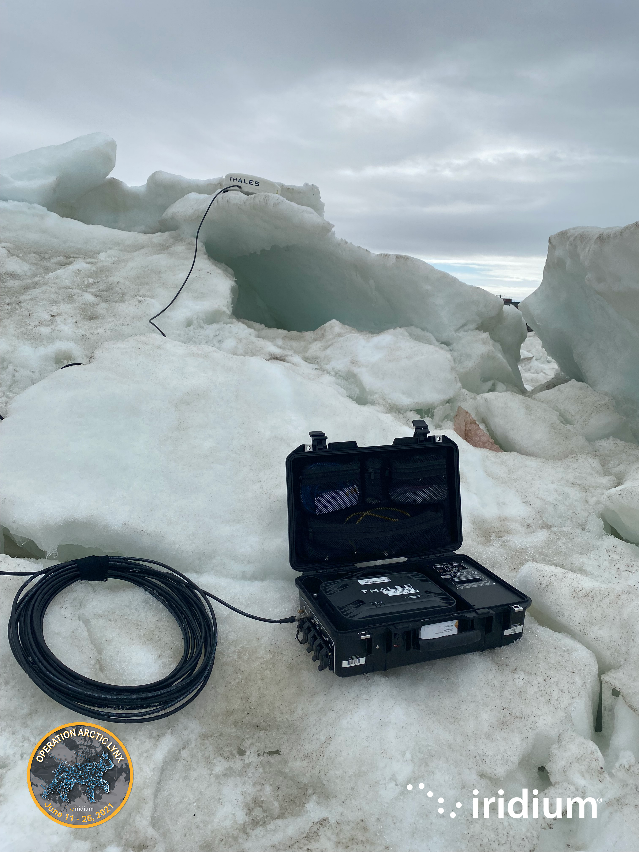
The Global Satellite Communications Kit—GSCK™ by Iridium partner 4K Solutions
- Can you explain a bit about how your technology works and what communications threads you have been most eager to experience?
4K Solutions® are experts in “kitting” Commercial Off the Shelf (COTS) technologies. As such, we were able to integrate the Thales MissionLINK with Iridium Certus global connectivity in the same manner as we have done for thousands of our 4G/LTE Mobile Broadband Kits – MBK™. The GSCK™ is an easy, dependable and rapidly deployable satellite communications package that is ideal for research activities ranging from the Arctic ice to tsunami disaster sites.
- What would you like readers to know about OAL and your product specifically? Are there any features or unique capabilities that standout in the Arctic Environment?
“SHOW ME!” We live by this creed at 4K Solutions. Our customer demo’s are 99% live! Customers want to see the solution do what we say it will. OAL is giving real-world street cred to potential and existing customers detailing how robust the Iridium satellite network is, where and how it works, and what products and solutions can work in those austere locations. The GSCK™ has done that – if can work extremely well in the Arctic circle, it can work anywhere!
- Do you have any additional thoughts to share?
4K Solutions truly appreciates Jay Chapman and the rest of the Iridium, COMSAT, Thales, and Satcom Direct teams for all being great partners and allowing us to be a part of this!
To learn more about 4K solutions, visit: www.4ksolutions.com
Operation Arctic Lynx (OAL) is a partnership-driven field demonstration of Iridium® and Iridium Connected® technology over a two-plus week period, primarily focused above 60 degrees north latitude and stretching as far as 82 degrees north latitude. Iridium is the only satellite communications network that provides reliable, truly global coverage, including the polar regions.
Learn more about Iridium partner MetOcean’s OAL participation:
- What attracted MetOcean to participate in Operation Arctic Lynx?
As the Arctic opens up longer and longer each year, clear, reliable communications from the far north are going to become essential. This was an excellent chance to find clients using Iridium Certus® and other Iridium Connected® devices who can help us demonstrate what we can do.
- Can you tell us more about the products you are demonstrating on this expedition and what they’re typically used for?
We are demonstrating Thales MissionLINK™ and VesseLINK™ products. They are used for backup and secondary IP devices and backup voice communication devices, including as far north as Canadian Forces Station (CFS) Alert, the most northern continuously inhabited place in the world. The VesseLINK devices onboard the Canadian Coast Guard vessels are also used for primary communications in the CCG’s Crew Moral Programs.
- Can you explain a bit about how your technology works and what communications threads you have been most eager to experience?
Thales terminals powered by Iridium Certus can be used for Voice or IP from extremely remote locations, and for OAL they are being used for both. We are most interested in seeing how well the IP connections perform from such high latitudes, as well as showing the quality and ease of use of the Voice lines provided by both products.
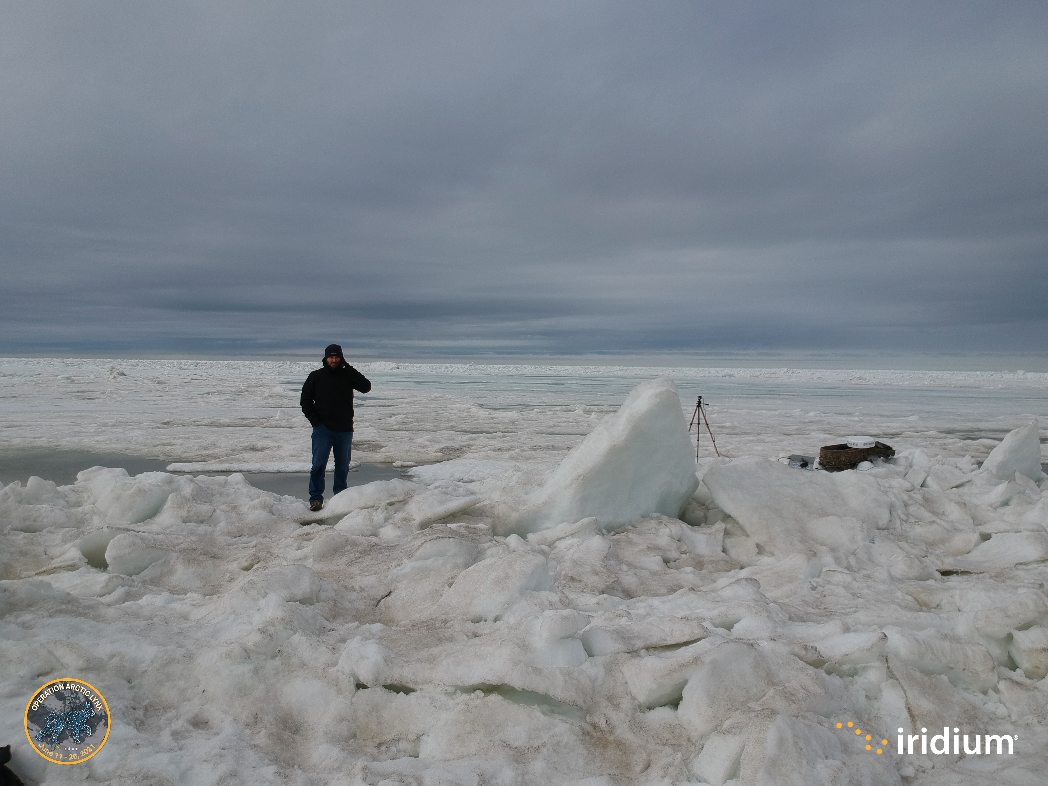
HD 1080p real-time video sessions and voice calls were sent between Point Barrow (71 degrees N Lat), CFS Alert (82 degrees N Lat)
- What would you like readers to know about OAL and your product specifically? Are there any features or unique capabilities that standout in the Arctic environment?
The Arctic is an area with increasing interest globally but does not have reliable terrestrial connectivity. Satellite communications is critical when things happen, and video is essential in many situations, like surveillance, telemedicine, search and rescue and much more. Lives can be saved by better visual situational awareness.
- Do you have any additional thoughts to share?
I believe that emphasis should be placed on the ease of use. The Thales MissionLINK and VesseLINK terminals have no complicated gimbaled antenna to set up, no moving parts to break in the extreme cold or from ice buildup. Once set up, the terminals are simple to use. And the fact that the Iridium® network enables them to work just as well at 80 degrees latitude as they will at the equator or in the middle of the USA or Canada is a major advantage to all users.
To learn more about MetOcean, visit: www.metocean.com
Trailblazer: Operation Arctic Lynx (OAL) is a partnership-driven field demonstration of Iridium® and Iridium Connected® technology over a two-plus week period, primarily focused above 60 degrees north latitude and stretching as far as 82 degrees north latitude. Iridium is the only satellite communications network that provides reliable, truly global coverage, including the polar regions.
Learn more about Iridium partner Trailblazer Innovations’ OAL participation:
- Tell us more about Trailblazer and what attracted you to participate in Operation Arctic Lynx.
Trailblazer’s focus is on providing warfighters, first responders, and other focused users with cradle-to-grave solutions that provide tailored capabilities to meet operational requirements. We work for many Department of Defense (DoD) agencies that operate throughout the Arctic region. For the most part these organizations rely heavily on Iridium systems we deploy and support. We are constantly doing testing and providing reports to the higher headquarters (HHQ) who are not based in the Arctic to demonstrate and prove the capabilities. By working in support of Operation Arctic Lynx, we are adding to the data showing how well Iridium® works and can support Arctic missions.
- Can you tell us more about the products you are demonstrating on this expedition and what they’re typically used for?
We utilize commercial systems that we modify to meet DoD and subordinate users requirements. Once modified, we provide cradle-to-grave support to over 450 DoD units and organizations. Our products are used globally to provide situational awareness, secure (unclassified) messaging, emergency alerting, and life safety.
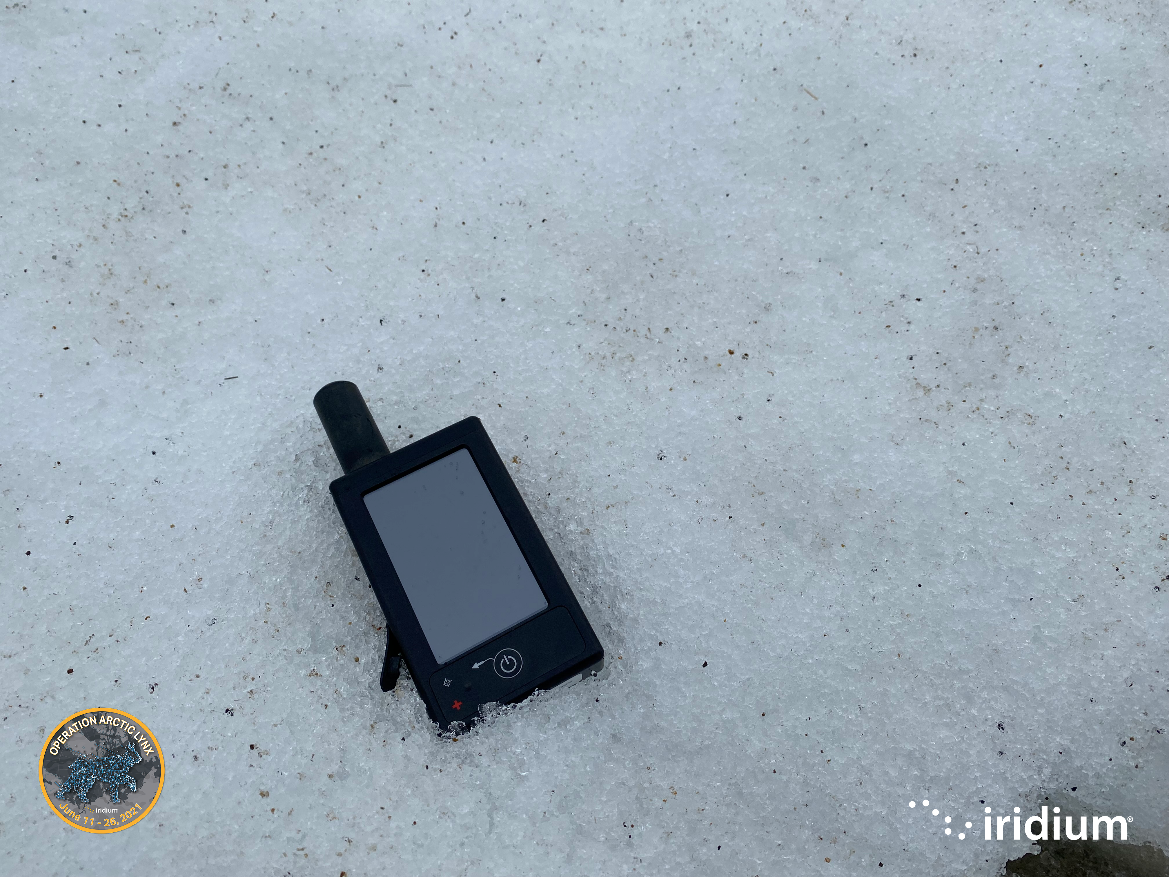
NAL’s Shout communicator from Trailblazer with Operating Temperature from -40ºC (-40ºF) to +85ºC (185ºF)
- Can you explain a bit about how your technology works and some use cases?
Trailblazer Innovations provides Iridium Short Burst Data® systems provisioned and activated for DoD networks; these systems [are/can be] configured and integrated into DoD Common Operational Pictures to support global command and control, situational awareness and emergency alerting. General use cases range from tracking and locating, search and rescue, downed pilot, hurricane survivor recovery, natural disaster recovery, kidnapped/captured personnel, force protection, command and control, domestic operations, security operations, operational support, life safety and combat ID/deconfliction.
- What would you like readers to know about OAL and your product specifically? Are there any features or unique capabilities that standout in the Arctic environment?
As a device-agnostic provider, the systems we deploy are used daily throughout the region. They function very well and provide search and rescue, life safety, and global communications. All users need to follow combatant command procurement guidance. If users need anything they can contact us directly, 24/7-365 for hardware systems and support.
To learn more about Trailblazer, visit: www.trailblazer-innovations.com
AnsuR: Operation Arctic Lynx (OAL) is a partnership-driven field demonstration of Iridium® and Iridium Connected® technology over a two-plus week period, primarily focused above 60 degrees north latitude and stretching as far as 82 degrees north latitude. Iridium is the only satellite communications network that provides reliable, truly global coverage, including the polar regions.
Learn more about AnsuR’s OAL participation:
- Tell us more about AnsuR and what attracted you to participate in Operation Arctic Lynx.
AnsuR researches, designs and sells innovative software solutions which optimize bandwidth use when communicating photo and video. Participating in Operation Arctic Lynx was an amazing opportunity for us, especially since we are getting so much positive feedback on the usefulness of our solution. As a Norwegian company, Arctic solutions are quite relevant for us too.
- Can you tell us more about the products you are demonstrating on this expedition and what they’re typically used for?
Our products allow users to communicate important visual data, photos and video (both clips and live streaming) with very low bandwidth – up to 99% less than some other methods. They are typically used for sending mission-critical photos and video via lower-bandwidth satellite communication networks, like Iridium®, and also work well with higher bandwidth.
Video footage sent over the Iridium Certus enabling comms on the move; video footage using the AnsuR ASMIRA application.
- Can you explain a bit about how your technology works and what communications threads you have been most eager to experience?
Our technology is built around a slightly different idea than what is normally used – we let users focus the bandwidth on the content that is most relevant and interesting for the mission. This can be done via interactive communication, letting users pull what is most needed in the resolution required for photos and video clips. For video streaming, we have optimized the compression for the highest possible quality with minimum bitrate and developed proprietary streaming protocols that minimize overhead. This seems to result in better video quality with less need for capacity than other solutions and has been called a game changer.
- What would you like readers to know about OAL and your product specifically? Are there any features or unique capabilities that standout in the Arctic environment?
The Arctic is an area with increasing interest globally but does not have reliable terrestrial connectivity. Satellite communications is critical when things happen, and video is essential in many situations, like surveillance, telemedicine, search and rescue and much more. Lives can be saved by better visual situational awareness.
- Do you have any additional thoughts to share?
In this exercise we are demonstrating new capabilities, which is a good feeling. The full potential will be realized when the capabilities are put to test in live operations. This exercise has opened the door for us to amazing opportunities with Iridium and our partners, and I am hopeful we can leverage all of this potential.
To learn more about AnsuR, visit: www.ansur.no
Operation Arctic Lynx (OAL) is a partnership-driven field demonstration of Iridium® and Iridium Connected® technology over a two-plus week period, primarily focused above 60 degrees north latitude and stretching as far as 82 degrees north latitude. Iridium is the only satellite communications network that provides reliable, truly global coverage, including the polar regions.
Learn more about Iridium partner McQ’s OAL participation:
- Tell our readers a bit about McQ and your relationship with Iridium.
McQ has been working with Iridium for over 20 years as a reliable communication means of getting our sensor information back to operators around the world. McQ sensors are used in very remote areas for security of assets, borders and perimeters that tend to have security concerns for Military and Commercial Operations like Oil & Gas, Maritime, and Construction sites. With the upgraded Iridium constellation, McQ has taken advantage of the satellites’ bilateral communications and are using the Iridium Certus™ 9770 transceiver for McQ CONNECT™, the Iridium 9603 transceiver for McQ RANGER®sat and the Iridium Core 9523 for McQ OWL®sat.
- Can you tell us more about the products you are demonstrating on this expedition and what they’re typically used for?
McQ RANGER® sat detects people and vehicles, tracks targets and triggers McQ OWL™ sat for imagery of the target of interest. This unattended ground sensor can be hand emplaced or airdropped into critical areas of concern. McQ OWL™sat detects, classifies and tracks people and vehicles with a micro-doppler internal radar and quickly turns on an internal camera to provide video of the target. McQ CONNECT™ provides connectivity to include voice, video, data with 22 kbps uplink and 88 kbps downlink. High quality video is sent over McQ CONNECT™ with McQ vWatch® video compression management software; compresses video at least 10 to 1 to provide high quality video.
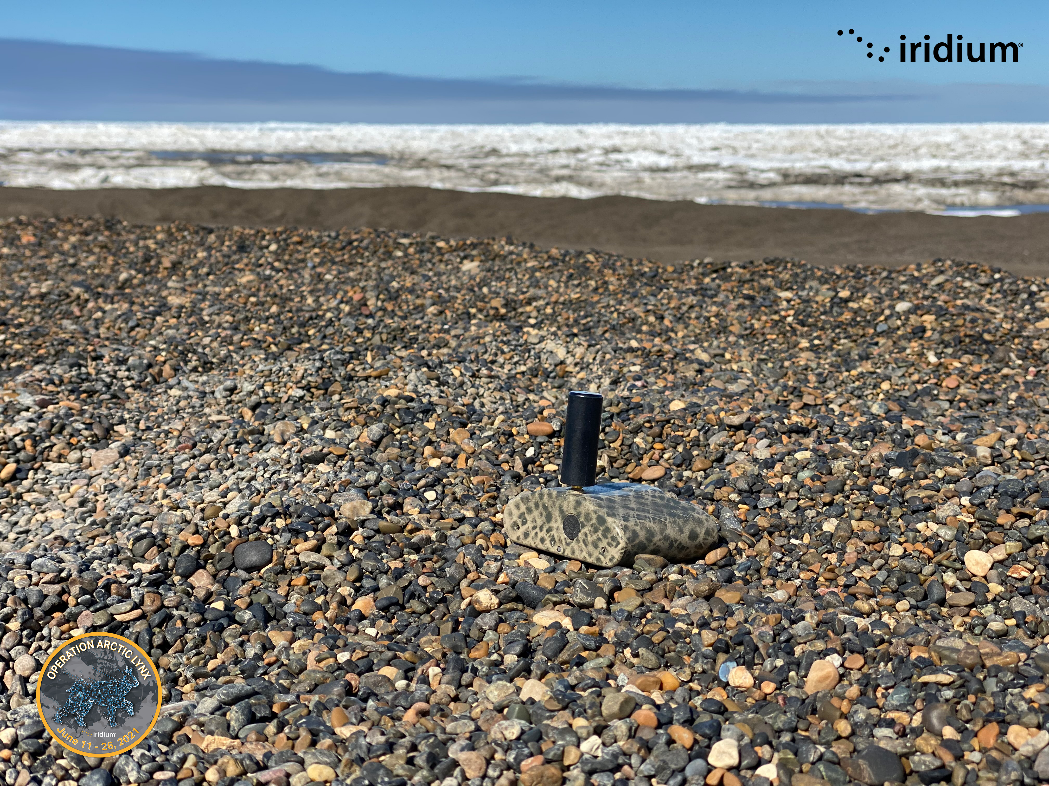
Photo: The McQ RANGER™ in Point Barrow, AK, the northern most point in the U.S.
- Can you explain a bit about how your technology works and what communications threads you have been most eager to experience?
McQ strives to compress the data and video to be able to send over the Iridium constellation for security requirements anywhere in the world with reliable and secure two-way communications.
- What would you like readers to know about OAL and your product specifically? Are there any features or unique capabilities that standout in the Arctic environment?
McQ sensor systems are built to withstand the temperature extremes ranging from hot, cold and wet conditions. We strive to provide very rugged equipment to meet security requirements necessary to protect assets with bilateral communications with command and control from anywhere in the world.
To learn more about McQ, visit: www.mcqinc.com
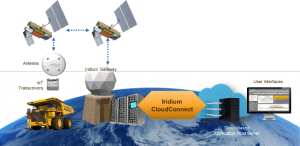 Welcome back to Cloud 66! In case you missed our first or second posts in the series, we introduced the Iridium CloudConnect Short Burst Data (SBD) on Amazon Web Services (AWS) Quick Start and gave an overview of how this resource helps developers and their teams implement the service. We also took you on a deep dive on the ways developers can use Iridium CloudConnect for their cloud-based back-end applications.
If you followed our Cloud 66 blogs so far, you know that Iridium CloudConnect enables message exchange in standard file format and JavaScript Option Notation (JSON), for both mobile operated (MO) and mobile terminated (MT) messages, simplifying the way developers can send and manage their IoT data.
This time around, we’re excited to share that Iridium is an official launch partner for the newly released AWS CloudFormation Modules on the CloudFormation Public Registry. This is an additional method for you to get your Iridium CloudConnect Satellite IoT set up within your own cloud-based infrastructure. During your stack (collection of AWS resources) setup, it simplifies configuration to generate SQS queues to support Iridium CloudConnect in your own AWS instance in any AWS region. AWS introduced a public and searchable registry containing non-AWS resource types (provisioning logic) maintained by Iridium, that will simplify how customers are able to discover and consume non-AWS resources from the registry. With this new module, Iridium customers can now leverage various AWS managed experiences from within CloudFormation.
Up until now, you could get started with Iridium CloudConnect by setting up the stack manually through your AWS console using the CloudFormation Template included with our own Developer Guide available for existing Iridium Partners on www.iridium.com/IFP or through the Iridium CloudConnect SBD on AWS Quick Start. With AWS CloudFormation Modules, you have building blocks that can be reused across multiple CloudFormation templates, just as if they were a native CloudFormation resource, which are all available in the CloudFormation registry. CloudFormation Modules incorporates the CloudFormation service to ensure all stack resources are created or setup as appropriate, allowing you to spend less time managing those resources and more time focusing on your applications that run in AWS.
The CloudFormation Modules offering aligns with Iridium’s own goal with CloudConnect to enable faster development and quicker time to market. The Iridium CloudConnect CloudFormation Module offered in AWS incorporates the template that describes all the AWS resources that you need and takes care of provisioning and configuring those resources for you.
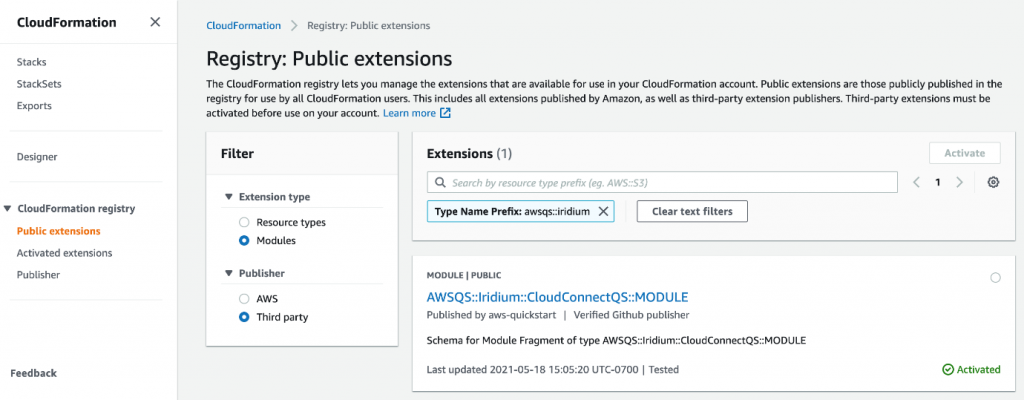
Figure 2: CloudFormation Modules on AWS Console
Iridium Short Burst Data® (SBD®) customers that plan to ingest SBD using Iridium CloudConnect can follow these steps to get to the CloudFormation Module:
- Navigate to the CloudFormation registry > “Public Extensions Console” from within your AWS Console.
- Search for the Iridium Module
- Activate the Extension
- Navigate to the Activated Extensions link in the registry
- Switch to the Modules Tab
- Click on the Iridium Module (that you enabled in the previous step)
- Switch to the Example Template tab
- Click the “Copy Template” button to copy the module resource to use in your template. You will use this template in your stack creation.
- In the template, set the appropriate value for IridiumRoleARN and SQS queue names:
-
- Amazon Resource Number (ARN) of the role IridiumRoleARN: arn:aws:iam::701939957987:role/CloudConnect-IST
- Mobile-originated QueueName: Name of the mobile-originated queue in SQS. For example ICCMO.fifo
- Mobile-terminated queue name: Name of the mobile-terminated queue in SQS. For example ICCMT.fifo
- Mobile-terminated confirmation queue name: Name of the mobile-terminated confirmation queue in SQS. For example ICCMTConfirmation.fifo
- Mobile-terminated error queue name: Name of the mobile-terminated error queue in SQS. For example ICCMTErrors.fifo
- To allow Iridium CloudConnect to interact with your SQS queues, Iridium needs the URLs of the queues listed above. Iridium also needs the ARN for the cross-account security role (SQSCrossAccountRole). Provide this to Iridium to complete the trust relationship.
- Point your Iridium IoT SBD devices to the Iridium provisioning URL and port Iridium provides you with.
Thank you for taking the time to tune into our On Cloud 66 blog series! We hope you’ve found this information helpful and continue to be inspired to join us in the cloud. In our next blog, we will focus on considerations for parsing MO and MT messages from SQS queues, and suggestions for integration with solutions such as AWS IoT Core, MQ Telemetry Transport (MQTT) messages, AWS Kinesis, and AWS Firehose.
For more information about Iridium CloudConnect, please visit https://www.iridium.com/services/iridium-cloudconnect/.
If you or your cloud and backend server specialists need help implementing Iridium CloudConnect, make sure to check out the Iridium CloudConnect SBD on Amazon Web Services (AWS) Quick Start guide for additional information.