What is satellite PTT?
Typically, when people think of Push-To-Talk (PTT) technology, standard “walkie talkies” and high frequency (HF) radios or Land Mobile Radios (LMR) come to mind. Whether its emergency responders relying on LMR devices to quickly communicate across teams during an emergency, or humanitarian organizations using Very High Frequency (VHF) to support global philanthropic missions, PTT devices are useful tools for a variety of situations.
Traditional PTT devices tend to rely on terrestrial infrastructure to connect, creating limitations for how far they can reach without significant financial investment. For teams managing network connectivity for remote operations, they are often faced with the challenge of building out a land-based radio network which comes with large environmental and financial costs that can significantly stall progress. This has led network operators to pursue satellite technology as an alternative form of connectivity.

How does satellite PTT work?
Just like land-based two-way radios, satellite PTT enables group communications at the push of a button. However, rather than relying on ground-based communications infrastructure to connect, these devices are connected via satellites in space, extending their reach beyond the limits of tower-based infrastructure. For instance, Iridium’s portfolio of satellite PTT devices, including the Iridium Extreme® PTT and Icom IC-SAT100, deliver group communications over the Iridium network. The constellation is comprised of 66 crosslinked, Low Earth Orbit (LEO) satellites that blanket the earth with reliable and low latency satellite coverage that enables a PTT experience similar to LMR, HF, and VHF systems. Its L-band spectrum signal is weather-resilient, ensuring connectivity no matter the condition, making it an ideal solution for teams working in harsh locations.
What are its advantages?
Iridium PTT products and services are unique in that they can be deployed anywhere on the planet, enabling mission-critical, group communications across continents, including the world’s most remote regions. This is especially important for users who travel to remote areas and need team-based communications on demand, or for those who need to extend regional operations to areas where installing a traditional land-based network would be cost prohibitive. In the spirit of cost savings, unlike most satellite services that are billed per minute or per megabyte (MB), Iridium’s PTT service is offered with a flat monthly access fee and various talk group size options providing predictable billing without unplanned fees that can impact operational budgets.
 |
 |
 |
| Secure Comms |
Flat Monthly Cost |
On-the-fly Talkgroup Creation |
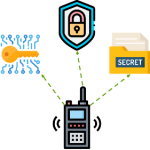
In addition to its global reach and budget conscious plans, Iridium PTT can be instantly implemented, connecting groups in up to 10 different regions, helping team-based organizations, like emergency responders, operate quickly, effectively and with more success. For situations that require on-the-fly updates, administrators can easily make changes with the PTT Command Center, even from different continents, enabling a level of coordination previously not possible with traditional tower-based networks. Additionally, the service can provide a back-up mode of communication in the event of natural disasters and is a useful tool all local governments and emergency responders should consider having on standby and ready to use at a moment’s notice. It is also a highly secure service, with end-to-end AES-256 encryption, making it an ideal option for militaries and government organizations in need of reliable and secure global group communications capabilities, offering protection from eavesdroppers and adversaries, operational security and safety.
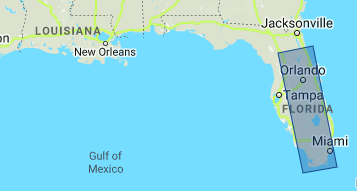 Figure 1 Iridium PTT Command Center – Talkgroup Example
As you can see, with a global communications infrastructure in the sky, satellite PTT has enhanced overall group communications, making it the top connectivity choice for remote operations in lieu of traditional radio systems. The incorporation of satellite technology into the PTT landscape has removed coverage limitations, offering a rapidly deployable solution that provides all-weather, reliable group communications when and where customers need it, without compromise.
Want to learn about satellite PTT interoperability? Check out this post.
For puns, Iridium news, puns, partner news, dad jokes, industry trends, and also puns, follow us on Facebook, LinkedIn, and Twitter.
The Liberian Registry has earned international respect for its dedication to flagging the world’s safest and most secure vessels. The Registry has experienced significant growth throughout its history and is recognized as the world’s fastest growing major open registry, with 12% of the world’s ocean-going fleet and over 4,500 vessels, making it the second largest Flag.
The Liberian Flag recently approved Iridium GMDSS to be used in all of Sea Area A4 for Liberian vessels, ensuring safety at sea where the alternative satellite GMDSS system does not work. Iridium partner Applied Satellite Technology (AST), a leading provider of maritime satellite communications solutions, has become the first authorized Iridium Global Maritime Distress and Safety System (GMDSS) service provider for Liberian flagged vessels, bringing choice and truly global safety to these vessels.
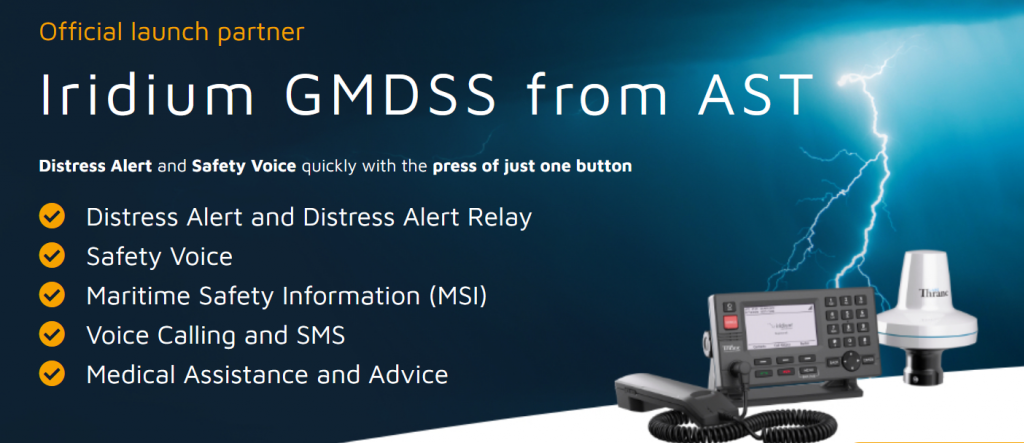
With the adoption of Iridium GMDSS, Liberian flagged vessels now have access to the world’s first truly global maritime emergency and distress service, ensuring access to safety communications no matter where they sail. The ability to utilize Iridium GMDSS is particularly valuable for Liberian flag non-SOLAS vessels such as fishing vessels, recreational boats, and leisure yachts. Iridium GMDSS uniquely combines Distress Alert, Safety Voice, and Maritime Safety Information (MSI) in one terminal. With cost-effective, small-form-factor hardware, Iridium has made GMDSS now more accessible to smaller vessels that may not have otherwise been able to afford the equipment.
“The Liberian Registry offers the highest-quality standards for innovative services and safety, making Iridium GMDSS a natural fit,” says Bryan Hartin, executive vice president of sales and marketing at Iridium. “As one of the first companies in the industry to provide Iridium’s truly global satellite GMDSS service to mariners, AST continues to be a leader in enhancing safety at sea.”
To learn more about Iridium GMDSS, please visit www.iridium.com/GMDSS
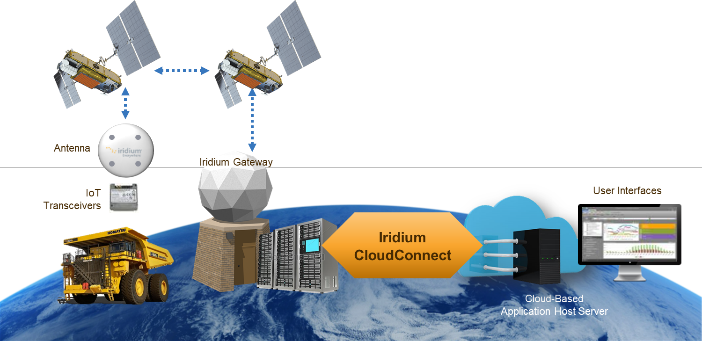 Welcome back to Cloud 66! We missed you. In case you missed our first post, we introduced the Iridium CloudConnect Short Burst Data® (SBD®) on Amazon Web Services (AWS) Quick Start, and gave an overview of how this resource helps developers and their teams implement the service. For this edition, we wanted to get even more technical, and to take you on a deep dive of the different ways developers can use Iridium CloudConnect for their cloud-based back-end applications. So, without further ado, let’s dive in.
Now, for a quick history lesson. As you no doubt know by now, cloud-based solutions are becoming the de-facto way for businesses to deliver IT applications and services. The Iridium CloudConnect service allows organizations building or using IoT capabilities through AWS to extend their reach to the entire planet through Iridium’s global satellite network.
These two services, Iridium CloudConnect and AWS, intersect at two fast-growing areas of technology. An early player in the cloud-hosting space and especially IoT, Amazon now leads this market sector. Iridium CloudConnect and AWS together provide a powerful tool for developers looking for a single communications platform to manage connected devices. It allows existing AWS customers to expand the reach of their IoT solutions with the global coverage and connectivity of the Iridium network, while continuing to use industry standard protocols and practices. Iridium customers now have access to IoT data in their AWS solution without added development efforts and impacts.
Iridium CloudConnect enables message exchange in standard file format, JavaScript Option Notation (JSON), for both Mobile Originated (MO) and Mobile Terminated (MT) messages, simplifying the way developers can send and manage their IoT data. Additionally, the Iridium CloudConnect service includes cloud configuration to generate Simple Queue Service (SQS) queues to support Iridium CloudConnect in your own AWS environment in any AWS region.
One huge benefit of using Iridium CloudConnect is the flexibility it offers. As detailed above, the service allows developers to host their data in whichever way works best for their business, while taking the translation component off the developer’s plate. To help paint a clearer picture of how Iridium CloudConnect simplifies the data management process while also promoting innovation and experimentation, we have mapped out a set of five potential data scenarios to illustrate how a potential architecture looked before Iridium CloudConnect, and how Iridium CloudConnect may work within your own development construct.
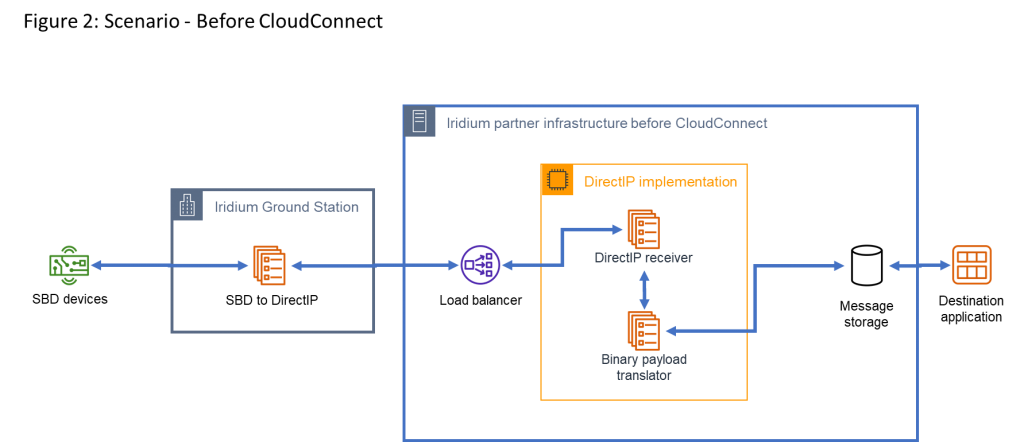
Figure 2: Scenario – Before Iridium CloudConnect – If you use Iridium DirectIP today, your solution probably looks like this architecture. As you work toward an AWS hosted solution, you could refactor your Iridium DirectIP solution, or you could use the convenience and architecture of Iridium CloudConnect and implement your solution with the SQS queue sets that are provided during the deployment of Iridium CloudConnect.
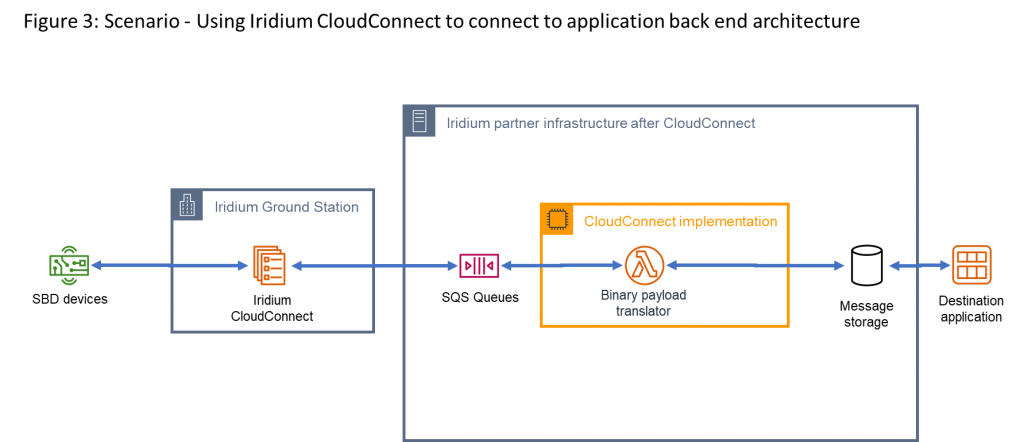
Figure 3: Scenario – Using Iridium CloudConnect backend solution notional architecture – This scenario illustrates what the architecture might look like. As you can see, one can remove the load balancer, and the instances connected to the load balancer – major time saver! You would update your binary payload translator to translate to/from SQS. Optionally, you can also convert your binary payload translator to a serverless function.
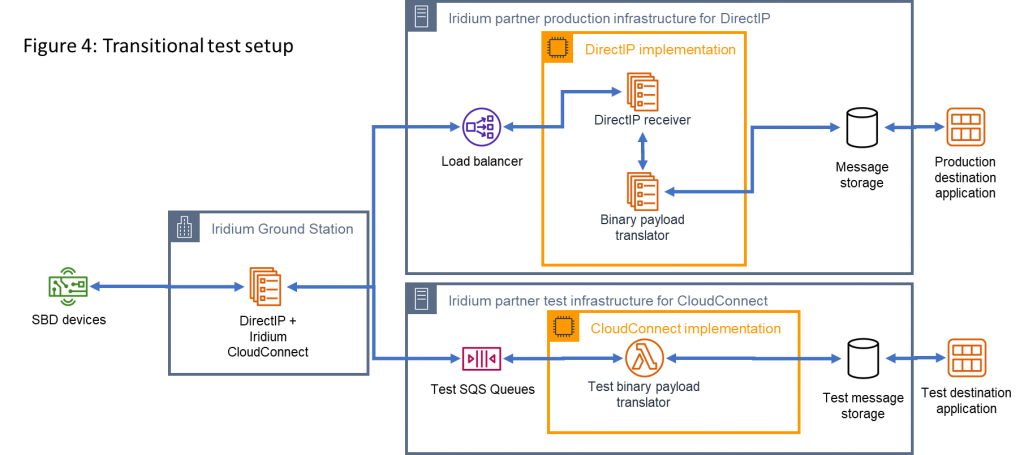
Figure 4: Scenario – Transitional test setup – As you work through your development, you may opt to set up your old and new system in parallel for developing or testing purposes. Iridium can route production messages to the existing implementation and send a second copy to the Iridium CloudConnect implementation to avoid having to do a hard migration. This approach also provides you with a means to compare apples to apples for delivery time, application efficiency, etc.
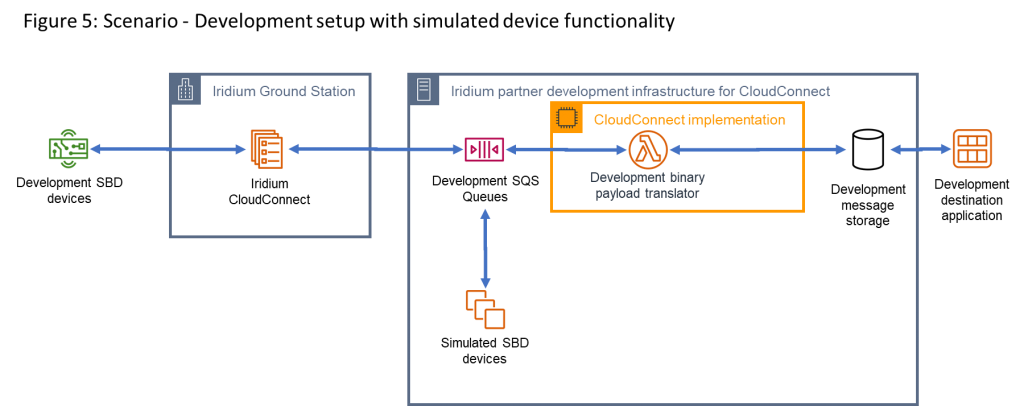
Figure 5: Scenario – Development setup with simulated device functionality – Partners can use development SBD devices and create simulated devices as shown above. These devices can drop the JSON SBD messages directly into the SQS queues as you develop your server-side application, eliminating the need to have actual devices send actual traffic over the air.
Thank you for taking the time to tune into our On Cloud 66 series! We hope you’ve found this information helpful and are inspired to join us in the cloud. In our next blog, we will focus on additional considerations for parsing MO and MT messages from SQS queues, and suggestions for integration with solutions such as AWS IoT Core, MQ Telemetry Transport (MQTT) messages, AWS Kinesis, and AWS Firehose.
If you, a team member or cloud and backend server specialists need help implementing Iridium CloudConnect, make sure to check out the Iridium CloudConnect SBD on Amazon Web Services (AWS) Quick Start guide for additional information and assistance.
For more information about Iridium CloudConnect, please visit https://www.iridium.com/services/iridium-cloudconnect/.