Iridium GO!® in Antarctica
As an Iridium Project Manager at the Satellite Network Operations Center (SNOC), Sam Wright understands critical communications and how important it is to connect with loved ones, especially when you’re 9,000 miles away. When he and his wife took a trip to Antarctica during the southern hemisphere’s summer solstice last December, it would have been nearly impossible for them to find a connection that allowed them to check in on their newborn son or send his parents pictures.
Although the icy continent has become a popular tourist destination and scientific hub, it is still very much an off-the-grid destination with no cell phone coverage. In the polar regions, Iridium is the only reliable commercial communications network available. The Iridium® network covers the entire planet from Low Earth Orbit and provides low-latency, weather resilient services unlike any other satellite provider, which is particularly important in remote regions with extreme weather. Just this past year, Adventurer Geoff Wilson, Colin O’Brady’s Impossible Row, and even the President of Estonia have used Iridium to stay connected on their journey’s through the southernmost continent.
Sam brought an Iridium GO! to Antarctica to stay connected and in touch with his family. Using the Iridium GO!, he was able to send text messages, make phone calls, and send some of the incredible pictures he captured. Sam shared with us more about his trip, along with some of the awe-inspiring images in this Q&A.
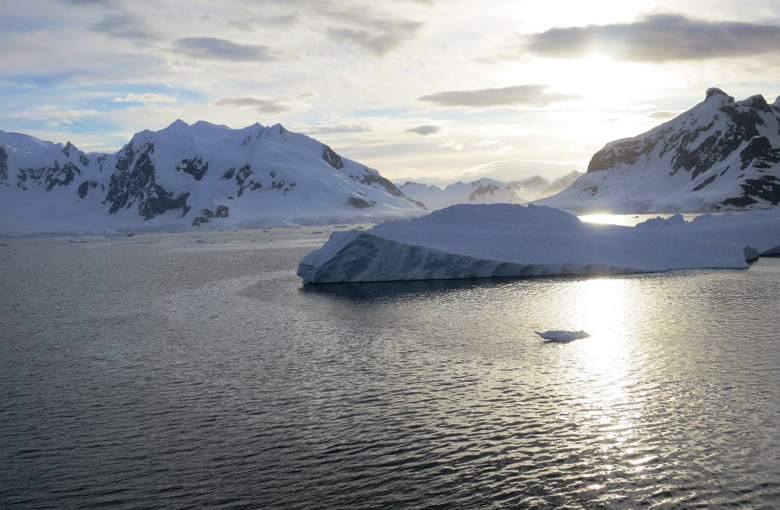 Photo: Sam Wright, Iridium
Q: Tell us about your trip to Antarctica. What made you want to go on this trip?
A: Going on this trip was quite surreal. I have been traveling for my entire life, and up until this trip, I had been to all of the continents except Antarctica. This was high on my bucket list, and after a lot of planning, my wife and I were finally able to make it happen. Since we couldn’t take our baby along, we had to logistically make sure everything aligned. We ended up flying from Virginia to Nevada to drop our baby off with my parents, then we flew from Nevada to Patagonia and caught the boat from there to start our journey to Antarctica.
Q: What was Antarctica like? Tell us some highlights?
A: We traveled from Dec 18-29 and spent 11 of those days on the boat, sailing through the vast icebergs and serene landscapes. The weather was right around freezing, but since we visited during the summer solstice, it was light for 22 hours a day. When we weren’t on the boat, we went snowshoeing, ice climbing, kayaking and camping. We saw so many whales and penguins, but other than wildlife activity, the environment was so still, which almost made it feel like another planet.
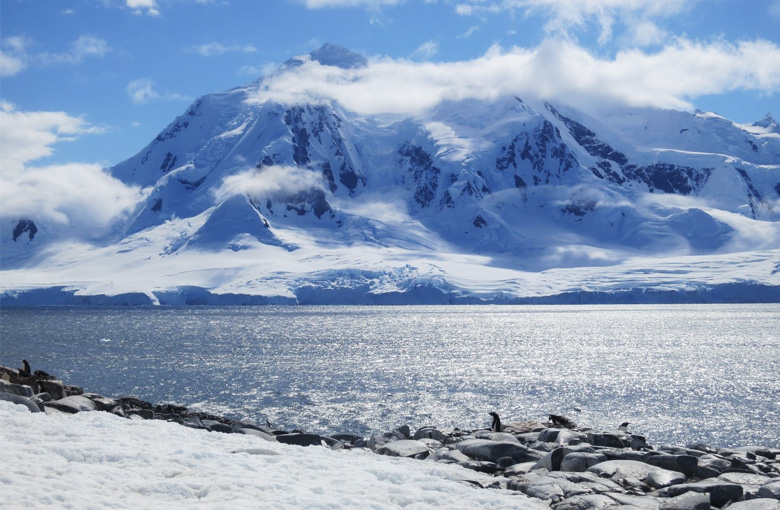 Photo: Sam Wright, Iridium
Q: You brought an Iridium GO! on your trip. What made you choose this device and how did you like it?
A: Since we were traveling away from our newborn, it was incredibly important for us to be able to keep in touch with family while we are away. Knowing our cell phones weren’t going to work, bringing an Iridium device was a priority on our packing list. I chose the Iridium GO! so that I could connect my smartphone and easily make phone calls, send texts, and share pictures in near real time. With the Iridium GO! we had the ease of both being connected, as well as being able to disconnect when we wanted to. We were able to put the device outside and make calls inside, and even set up the Iridium GO! in the window of the lounge to use the device with ease. This left us feeling connected knowing we could check in with my family.
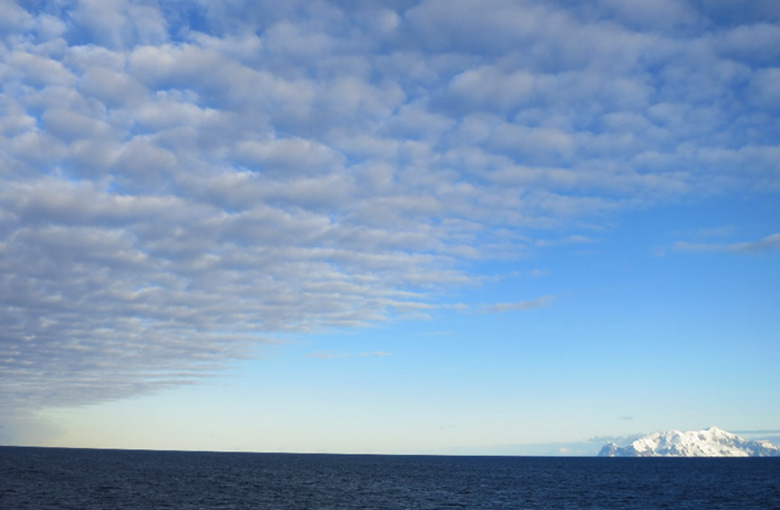 Photo: Sam Wright, Iridium
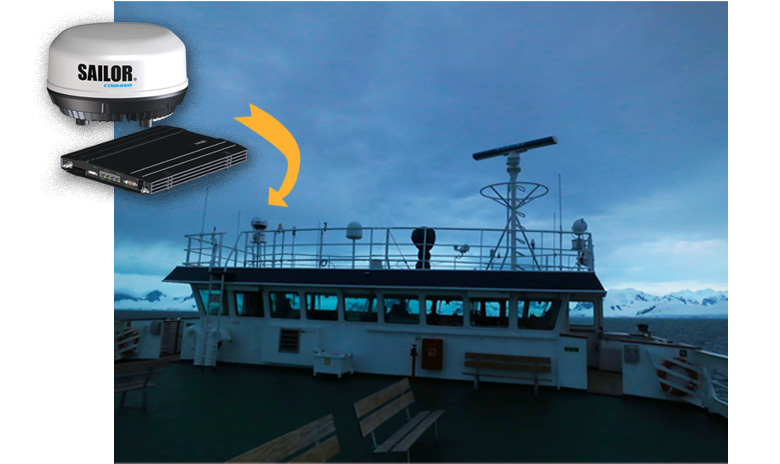 Photo: Sam Wright, Iridium (The ship uses an Iridium Certus powered Cobham SAILOR 4300. )
Q: Did you notice anyone else using Iridium technology on your trip?
A: Most of the guides I saw had Iridium products and phones, including some of the Garmin devices. I also noticed that there was an Iridium Certus® terminal on the ship, keeping the crew safe and connected. Passengers weren’t able to use the crew’s communications, so those who didn’t bring along satellite communications of their own were disconnected during their trip. Although vacations are a good excuse to disconnect, it’s nice to know you can get in touch, especially during the holidays.
Q: Speaking of which, we heard the Iridium GO! was quite popular among your fellow travelers. Can you tell us what they thought?
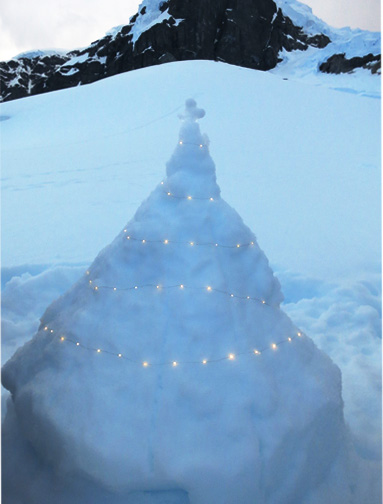
A: It was a small group of us on the boat and since we were traveling together during the holidays, we became very close. On Christmas Day, my wife and I went around to all our fellow passengers and offered to let them use the Iridium GO! to call their friends and family. Over a dozen passengers used the Iridium GO! and were impressed by the quality of the service. All of their families were excited to hear from them and were excited to be receiving a phone call from Antarctica. Connecting with loved ones is the best gift of all!