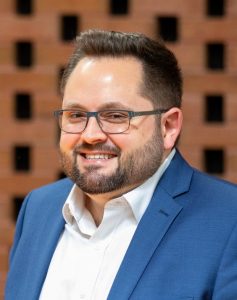
Q&A with Hearts in the Ice Founders Sunniva Sorby and Hilde Falun Strom
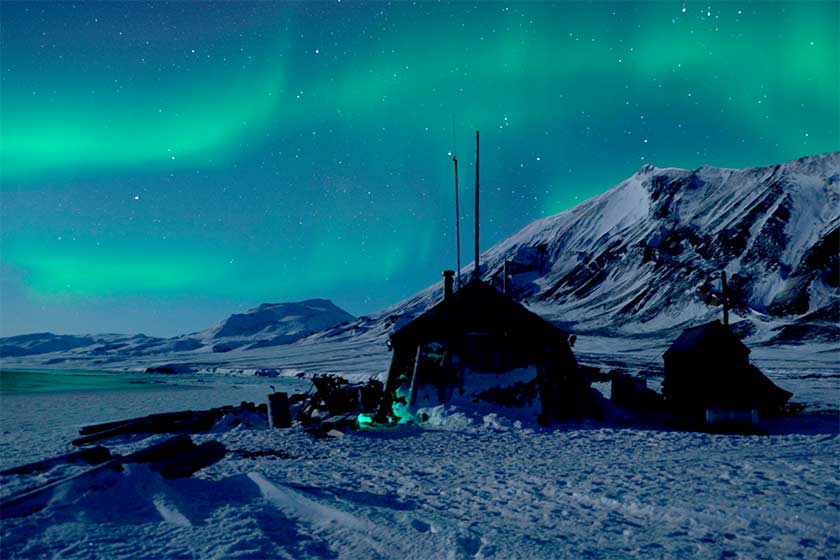
Sunniva Sorby and Hilde Falun Strom are explorers, adventurers, polar ambassadors and citizen scientists with over 20 years’ experience each in the polar regions. In 2017 they started Hearts in the Ice, a platform for social engagement around climate change. Iridium is keeping Sunniva and Hilde connected as they spend 9 months at the trappers cabin “Bamsebu” located in Svalbard, Norway collecting weather, wildlife observations and scientific data for the Norwegian Polar Institute, Scripps Institution of Oceanography, UNIS, NASA and BCIT- Canada. They have endured 3 months of complete darkness called the “Polar Night” which officially ends on Jan 30th.
Iridium: Tell us about yourselves.
Sunniva: I was born in Norway and raised in Canada. I was part of the first team of women to ski to the South Pole in 1993 and have been pushing the boundaries of my physical and psychological limitations ever since. I have traveled to Antarctica over 100 times as a lecturer, naturalist and guide.
Hilde: I was born in Norway and have been living in Svalbard for 25 years, which has been a playground for many of my expeditions and adventures. I have netted over 60k km (which equals a trip around the globe) on a snowmobile and have had more than 200 polar bear encounters.
What is the Hearts in the Ice Project about?
Sunniva and Hilde: Hearts in the Ice is a platform for global dialogue and inspiring social engagement around the issues of climate change, with a special focus on the polar regions. We came up with the name Hearts in the Ice for our project because it speaks directly to our shared love of the Arctic and Antarctic.
How did you both become citizen scientists?
It was through our employers that we learned of the term “citizen science.” Both of us work for polar operators (Sunniva, Polar Latitudes and Hilde, Hurtigruten) and are on a 9-month official leave of absence for the Hearts in the Ice project. Both operators have onboard citizen science programs, with Polar Latitudes being the first operator in the Antarctic to start a formal onboarding program for their guests. Through these programs, we witnessed average citizens express a deep excitement and curiosity about science and the impacts of climate change.
When we were introduced to research that was being done to collect data underwater, on land and in the sky, we connected with scientists and their projects. It became evident to us and the scientists that we could contribute extremely valuable data over 9 months to enhance our collective understanding around the rapid changes in the Arctic.
What is the most difficult part about overwintering in Bamsebu?
We are very remote, with our nearest neighbor 140 kilometers away. We are “in the dark,” quite literally, spending 90 days in the pitch black, except when the moon and northern lights are shining. We are living in a 20 square meter trappers cabin with no running water or electricity, which makes daily life a challenge. Everything we need for 9 months, including food, equipment and clothing, must fit either inside our tiny space or outside in bear proof containers. We need to be very efficient, organized and constantly alert for safety reasons.
We are very vulnerable here due to the polar bear danger, weather, and remoteness, should anything go wrong. Polar bears are abundant in this area and they hunt. Since we cannot go far from the hut during the polar night, our outside space is minimal. With this isolation comes a lack of distraction that can play with your mind, so we are always conscious of our interactions with each other. We focus on making sure our exchanges are positive and we remain aware of our thoughts, keeping them optimistic.
What has been the most interesting experience so far?
We had a surprise polar bear encounter at midnight! We needed to go outside to the bathroom, which is a small outhouse connected to the hut, and there he was! He was a young bear, but massive, and with a split second of eye contact, he ran off. While polar bears are majestic, enormous and beautiful, we understand they are predators and if deemed a threat, we are their prey.
November to February is the long polar night season, and the northern lights have been powerful forces of nature. For us, this has been a time for self-reflection. In this environment, there is a stark realization that the weather dictates what we can and cannot do. It is interesting to realize how powerful and potentially fragile we are under these circumstances.
At what point in the preparation stages of planning your initiative did you realize that an Iridium® device could be useful?
Stage 1. The first partner we reached out to was Iridium. Our entire project, its scope, our intentions, the social impact and engagement all stand on the platform of Iridium. We are so grateful to the Iridium network for keeping us connected!
What are the Iridium devices you are using, and how are you using them?
We have three devices that remain our lifelines. We use a Thales MCD Mission Link, an Iridium GO!® and Iridium Extreme®. Connectivity is also key to our survival and safety. Should something happen to one of us, there is no one near us for over a hundred miles. We need our Iridium satellite phone in the event of an emergency, in which case a helicopter from the nearest town of Longyearbyen would pay us a visit.
Iridium connectivity also allows us to engage experts and students globally while we are in Bamsebu. Every month we host two live satellite calls with schools around the globe with Exploring by the Seat of Your Pants. We use these calls to educate and empower individuals globally to be junior citizen scientists and good stewards of our natural world. None of this would be possible without our Iridium devices.
Another unique way Iridium supported us was when we were “Rocket Citizen Scientists” for NASA in early December. NASA is studying the CUSP aurora, and we are in the prime location to see the CUSP northern lights at 78° north. We received text messages from NASA with a 7 minute warning when they were going to launch the rocket. Without our Iridium Extreme satellite phone, we would never have been able to contribute to this phenomenon that NASA is researching.
Our Iridium phones and devices are also the only ways we can stay connected with family, friends and partners while we are remote for 9 months.
What do you think it would have been like in one of the world’s most extreme environments without a dependable communications solution?
Our social platform would have been entirely different. Without connectivity we would have little, if any, engagement with schools around the world. It would have also affected the valuable work we are doing with our science partners, including the Norwegian Polar Institute, UNIS, Scripps Institute of Oceanography and NASA. Receiving and delivering information from those partners is another cornerstone of our Climate Change Platform.
Having dependable communications also gives us access to resources for problem solving equipment breakdowns and coordinating with cargo vessels for our only chance to resupply at 3 am on dark cold polar winter mornings. It also would have been extremely difficult without reliable communications to know how near and dear family and friends are.
What do you want the world to know about changes in the polar regions?
Changes are happening in the polar regions! They are happening now and more rapidly and extreme than most people may believe. They are irreversible, yet we still have the possibility to reduce the escalation of change. Temperature changes are impacting everything, including snow level, increases in avalanches, and lack of ice, which affects life both below and above the ice. There is a domino effect with the changes, and the impact is enormous and life threatening. We want the world to know that we all need to pay attention. We are all needed to make some contribution or make some small change, regardless of where you live since everything is connected. Mother Nature needs her daughters, and we have answered her call.
From your experiences, what do you think are the most effective steps in changing these issues?
According to research and scientists, it is very difficult to change the impact that climate change has already had on our landscapes, resources, people and wildlife around the world. The Hearts in the Ice team believes that we need to inspire people to make a change in their daily lives. Not many people are motivated to change habits if they feel forced. We believe that encouraging people to care about the planet and the natural world will breed respect and love for what we stand to lose. We can all make a difference, and every one of us matters right now.
What are your plans after your 9-month project is over?
It’s hard to imagine life post-Bamsebu, since existence here is all about being 100% present in the environment we’re living in. We will finish our historic overwintering project in May 2020 and plan to build off the successful platform and global network we have created. We’ll continue our work under the umbrella of “Embrace the Planet Project” to encourage all citizen scientists to engage in data collection and observation. Additionally, we will go on a speaking tour to share our data insights and observations. We are also finishing up a book project. Both of us will also sort out what’s next with our employers following our leaves of absence.
What haven’t we asked that you would like readers to know?
We would love for you to connect and get in touch with us! You can sign up for our blog via our website heartsintheice.com. Send us a note at hiti.bamsebu@gmail.com to tell us how climate change has impacted your community and/or what changes you hope to make to be part of the movement to deescalate the changes we are presently faced with.