The surface of our planet is approximately 70 percent water, with vast swathes of blue covering the Earth. The oceans seem akin to a blue desert, and even the largest vessel appears tiny and insignificant. As we celebrate World Ocean Day, Iridium Director of Maritime Dan Rooney looks at the various way’s Iridium supports connectivity on and across the world’s oceans.
Environmental
Humankind’s environmental impacts affect even the most remote areas of the oceans, with plastic debris widely found floating and unfortunately inside marine life. Scientific studies and remedial clean-up operations, both staffed and autonomous require dependable communications that are available globally. VSAT coverage is available in part, but large areas of the Pacific Ocean remain cut off from Ku-Band connectivity. For example, the ‘Great Pacific Garbage Patch’ occurs in a region without VSAT connectivity. Last November, Iridium announced participation in The Ocean Cleanup as the preferred provider of satellite communications, along with our partner The AST Group. In addition to this major partnership, Iridium supplies connectivity to several oceanic scientific initiatives, including many for national governments and major research programs, delivering data in a cost-effective manner from the most remote ocean spots on Earth, including the poles!
Safety & Security
When mariners are at sea, safety is a top priority. The Global Maritime Distress and Safety System (GMDSS) was established more than 20 years ago to help ensure safety for those at sea by requiring specific types of on-board radio communications equipment, both satellite and terrestrial, to send and receive distress and safety information. For decades, only one company was allowed to provide satellite GMDSS service, which consequently limited coverage, capability, and choice for captains and crew at sea.
In 2018, that changed when the International Maritime Organization (IMO) adopted a “Statement of Recognition” declaring that the Iridium® network met the requirements necessary to provide GMDSS services. Since receiving IMO recognition last year, Iridium continues to work closely with GMDSS regulators and potential users of the service, expecting a service launch date in January 2020. With Iridium, mariners will for the first time in history have a choice in GMDSS equipment and a service provider which has the ability to cover 100 percent of the world’s oceans, helping protect mariners no matter where they sail.
Click here to learn more about the process of bringing Iridium GMDSS to the maritime industry in a recent Q&A with our contracted Director of Maritime Safety & Security, Kyle Hurst.
Business as Usual
Commercial vessel trade has expanded well beyond traditional shipping lanes. The requirement for commercial and regulatory reporting for the maritime segment increases year on year, underlining the importance on global communications. Not having connectivity where a vessel is operating could impact ‘business as usual’. Not submitting mandatory reports in a timely manner could lead to fines or issues with a port state inspection. In the worst-case scenario, reporting an emergency or incident on board may be delayed, leading to environmental damage or even loss of life. Iridium has delivered pole-to-pole connectivity for shipping for years, keeping the maritime trade operational no matter where the ‘floating office’ is located.
The world’s oceans are the lifeblood of the Earth. It is everyone’s duty to ensure that we respect the oceans and the life contained within. Not just for us, but for our children and future generations. Iridium is committed to enabling this vision, to keep our oceans clean for what’s underneath and safe for humans on its surface.
 Guest Blogger: Dan Rooney | Dan is a thought leader challenging the “norms” of maritime communication and crew welfare, with a long and varied background in the international maritime communications industry. He oversees Iridium’s maritime business development in the Europe, the Middle East and Africa region.
Guest Blogger: Tatiana Lawrence, VP of International Regulatory & Iridium-ITU Liaison

When disaster strikes, infrastructure is often damaged and traditional telecommunications can be unavailable. Iridium plays a critical role in immediate disaster response and emergency communications because it can be quickly deployed to any rural or remote area, and disaster relief teams do not have to rely on the terrestrial infrastructures, which are susceptible to outages due to damage.
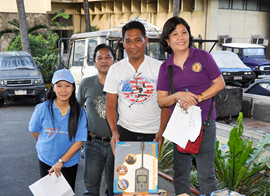
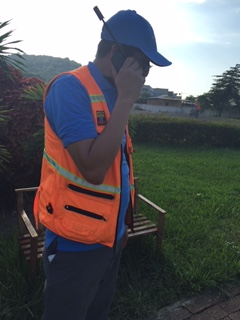
Iridium has a long-standing partnership with the International Telecommunications Union (ITU) to help provide emergency telecommunications during emergency relief efforts. Over 10 years ago, Iridium donated 70 phones, which the ITU emergency response team deploys around the globe to the places devastated by disasters within 48 hours to help restore vital telecommunication links. The ITU emergency telecommunications team also coordinates relief and rescue operations with local government officials and humanitarian organizations working on the ground, and often, establishes communication centers where disaster victims can get in touch with their families and loved ones.
Through this program, Iridium phones have been deployed all over the world over the last 10 years. Read more about how the donated Iridium phones have helped people all over the world after disasters and emergencies.
Ugandan Floods (2008)
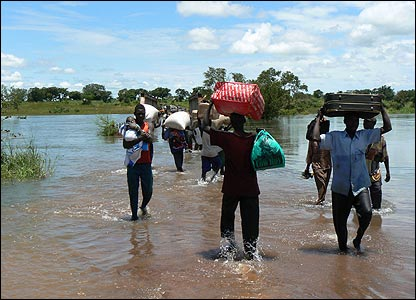
In 2008, after a request made by Uganda Communications Commission, the ITU deployed 25 Iridium satellite phones to help restore vital communication links in the aftermath of severe floods that affected the eastern and northern regions of Uganda. Several districts were ravaged by torrential rains and flash floods that swept through the country, taking lives, marooning over 140,000 people and destroying road and communication links.
Kyrgyz Republic Earthquake (2008)
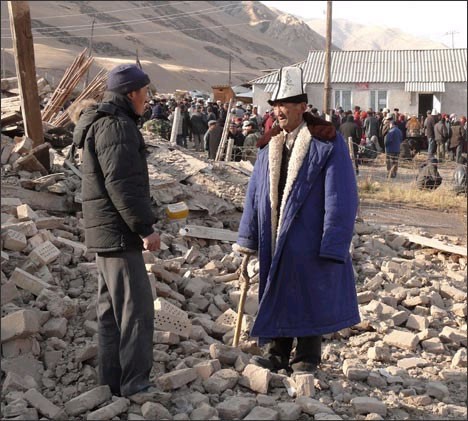
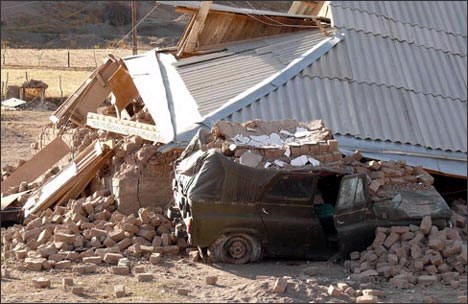
In 2008, the ITU deployed satellite telephones to the Kyrgyz Republic to help restore vital communication links in the region. The 6.6 magnitude earthquake killed and injured many residents, especially in the high-altitude village of Nura, also destroying buildings and infrastructure. The satellite phones were used for coordinating disaster relief operations in the devastated region. In the absence of power infrastructure, the Iridium equipment used solar panels to charge.
Indonesian Earthquakes (2009)
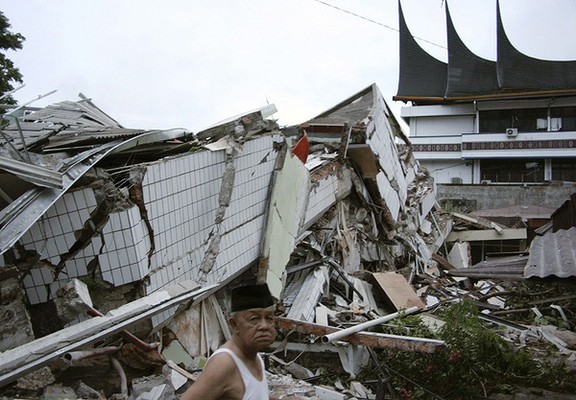
In 2009, in Indonesia, following two powerful earthquakes 7.6 and 6.8 that struck near the city of Padang in the west Sumatra province, ITU deployed satellite terminals to aid in relief and rescue efforts. More than 1,000 people lost their lives and many others were trapped in the rubble. The satellite phones were key to coordinate relief and rescue efforts by the government authorities and other humanitarian aid agencies.
Pakistani Floods (2010)
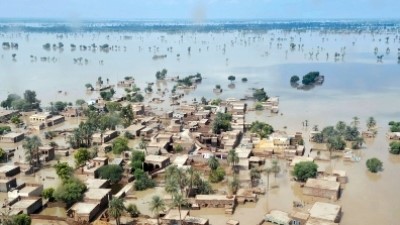
In 2010, in Pakistan, the ITU deployed Iridium satellite communications equipment following severe floods that ravaged the country. The Iridium phones were key to contacting the most inundated areas. Key infrastructure was destroyed, more than 15 million people were displaced, and hundreds of people lost their lives. Vast tracts of fertile agricultural land was inundated by the flooding, leaving the country with massive economic losses.
Filipino Typhoon Haiyan (2013)
The ITU deployed satellite telecommunications equipment to the Philippines in 2013 to be used for humanitarian relief activities after the devastating Typhoon Haiyan – one of the most powerful typhoons ever recorded. The most affected area was the Visayas region of central Philippines. The cyclone affected more than 16 million people, and claimed over 7 thousand lives. The ITU deployed Iridium satellite phones, and other equipment, to help restore telecommunication links critical for search and rescue operations, as well as for government response coordination.
Sierra Leonne Ebola Virus Outbreak (2014)
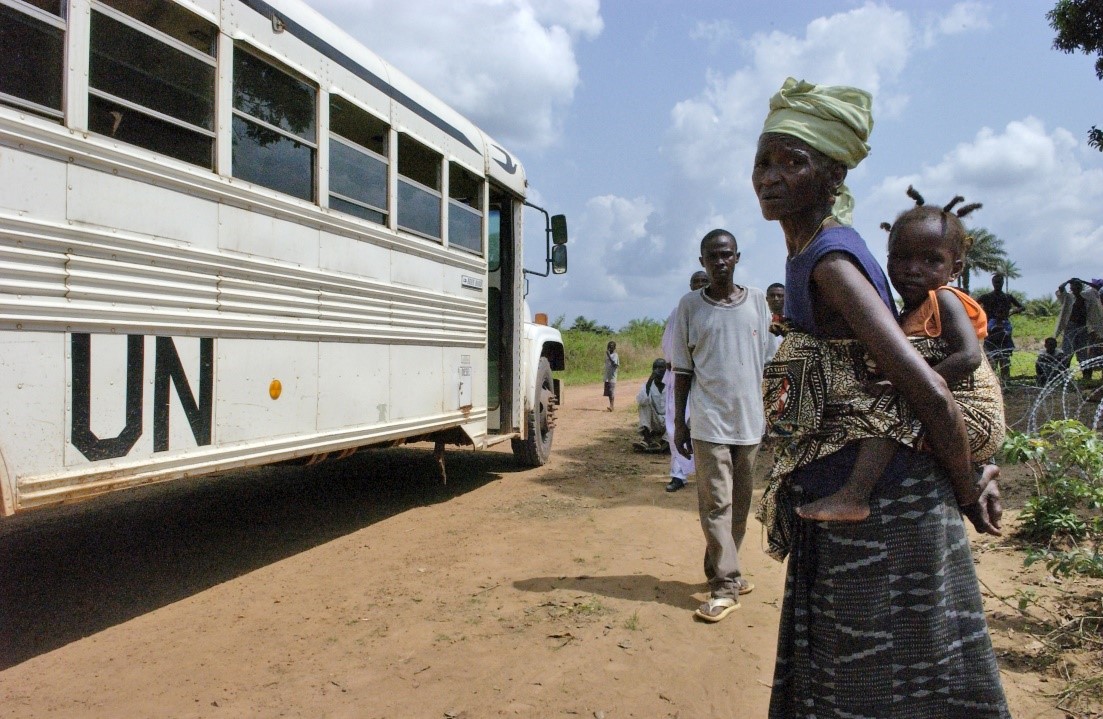
After a massive Ebola outbreak in Sierra Leonne in 2014 – one of the most severe outbreaks in the region – the ITU deployed Iridium satellite phones to be used for relief activities in the areas severely affected by the outbreak. The satellite phones were used by humanitarian agencies providing vital response efforts on the ground aimed at saving lives.
Haitian Hurricane Mathew (2016)
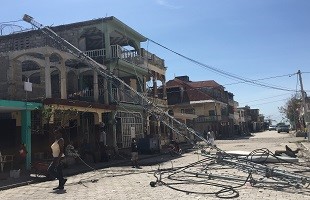
Hurricane Matthew, which struck Haiti in 2016 as a Category 4 storm, caused devastation throughout the country. The ITU deployed emergency telecommunication equipment, including some of the donated Iridium satellite phones, in response to the storm, which affected power and communication networks, as well as transport roads, water, and healthcare infrastructure. The government of Haiti used the Iridium equipment to support relief and coordination efforts, as well as in assisting many communities that were totally affected.
Ecuadorian Earthquake (2016)
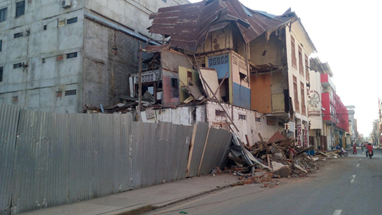
Emergency telecommunications equipment was deployed to Ecuador after the devastation caused by the 7.8 earthquake that struck the country on April 26, 2016. The ITU’s donated Iridium satellite phones were delivered directly to the Manabi Province, the area most affected on the coast of Ecuador. The strong quake caused a lot of destruction to infrastructure, including telecommunication networks, power lines, and roads.
Zimbabwe Floods (2017)
In 2017 , in Zimbabwe, the ITU deployed Iridium phones following the request made by the Ministry of Information Communication Technology, Postal, and Courier Services, after the devastation caused by severe floods. Many homesteads and schools were destroyed and many lives were lost during this emergency. The equipment was used to coordinate recovery and rehabilitation activities including providing communication to the most affected communities in the country.
| Country |
Disaster |
Year |
| Uganda |
Floods |
2008 |
| Kyrgyz Republic |
Earthquake |
2008 |
| Indonesia |
Earthquake |
2009 |
| Tonga |
Sinking of ship Princess Ashika |
2009 |
| Haiti |
Earthquake |
2010 |
| Pakistan |
Floods |
2010 |
| Cape Verde |
Volcano activity |
2011 |
| Malawi |
Floods |
2011 |
| Philippines |
Cyclone Haiyan |
2013 |
| Sierra Leone |
Ebola Virus outbreak |
2014 |
| Nepal |
Earthquake |
2015 |
| Ecuador |
Earthquake |
2016 |
| Haiti |
Cyclone Matthew |
2016 |
| Caribbean Islands |
Cyclone Rita and Maria |
2017 |
| Papua New Guinea |
Earthquake |
2018 |
Every second counts in the first phases of a disaster response. As communities around the globe continue to face emergencies and disasters, Iridium, along with the ITU, continues to support critical communications needs following disasters.