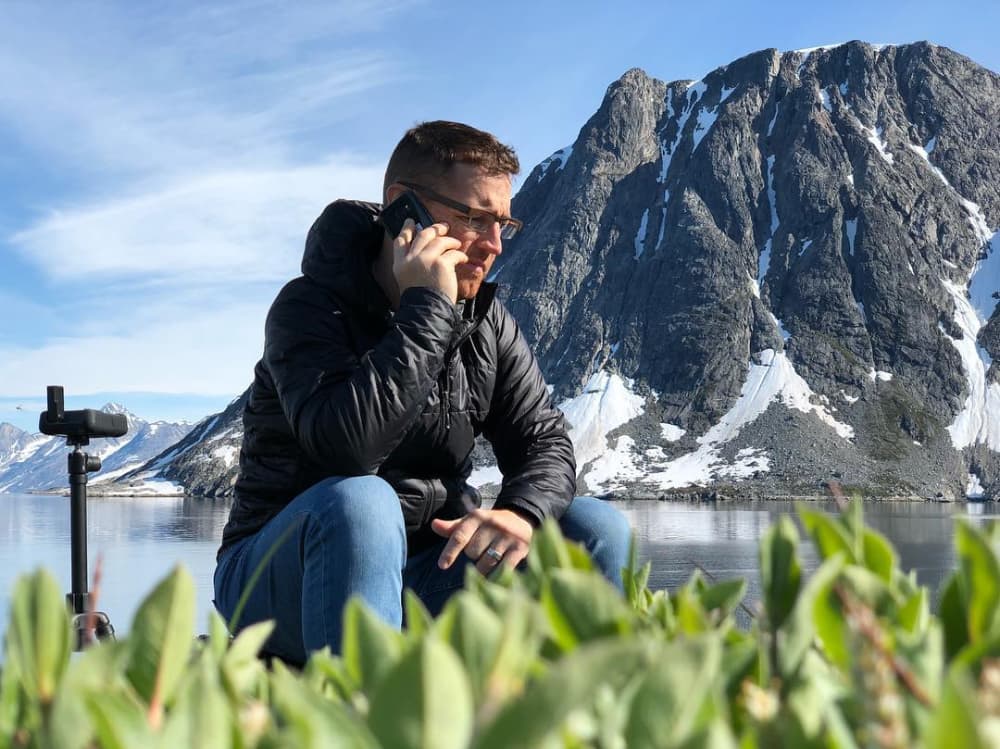
Last week, many of us set the clocks forward an hour. Whether we’re springing forward or falling back, celebrating daylight saving time is a great reminder to complete other important tasks, like checking your smoke detector batteries or testing your satellite phone!
We are so accustomed to buying gadgets, taking them out of the box, turning them on, and seeing them leap into action without having to read anything! But, we pout when these highly-complex devices don’t work precisely as we wish right out of a drawer after being tucked away for years. It turns out they need an inserted battery… or a subscription plan…
Luckily, it is easy to get your Iridium® satellite phone ready for use when you need it – you just have to test it once a month!
You may be a first responder gearing up for hurricane season, or you may have an Iridium phone as part of your family’s emergency kit. Test Your Satellite Phone (TYSP) is a free service designed for customers like you who may not use their satellite phone regularly.
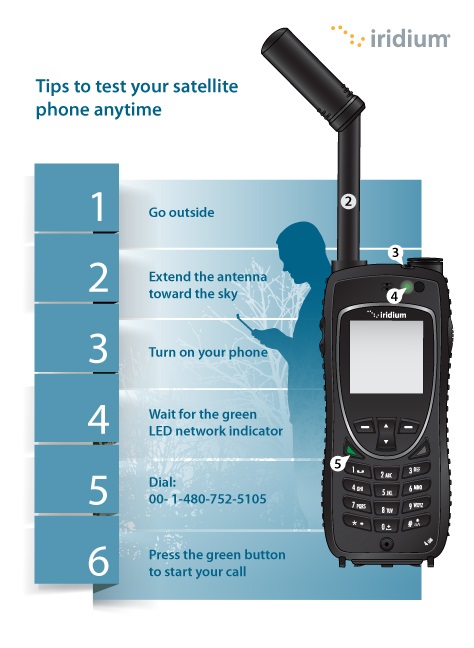
Now, review these six simple steps to test your Iridium device. It is easy and free!
Don’t forget, once you make a test call and you are ready to store your phone, take the battery out! When you leave the battery in a phone (even when it’s powered off), it will discharge more rapidly than if you leave it detached.
In addition to the steps above, we have prepared tutorials on YouTube showing how to quickly test your Iridium satellite device. For more tips, visit Test Your Satellite Phone.
Whether you are heading to your next adventure or you are simply making sure you and your family are prepared to communicate during a storm, Iridium is there for you.
To celebrate International Women’s Day 2019, we sat down with our new Chief Operations Officer Suzi McBride to discuss her career and what it’s like being a woman in a STEM field.
About McBride:
McBride has more than 25 years of experience, including building and launching the original Iridium satellite constellation while at Motorola’s Satellite Communications Group as a senior engineer in the 1990s. During her first tenure at Iridium, lasting over nine years, McBride served as Vice President of Program Management and Launch Services, playing a key leadership role in developing the Iridium NEXT system, leading launch strategy, engineering and hosted payload programs.
McBride returned to Iridium as the COO in February 2019 to lead operations of the Iridium network, including the satellite constellation and associated ground gateways and terminals. She also oversees all technology innovation on Iridium’s new network, including the development and manufacturing of subscriber equipment, new services and applications. Prior to rejoining Iridium, McBride spent the past two-and-a-half years at OneWeb, where she served as COO and Senior Vice President.
McBride received her MBA from the University of Tennessee in the Executive Aerospace and Defense program, and her dual undergraduate degrees are from Columbia University in Industrial Engineering and Claremont McKenna College in Management Engineering. McBride also holds a master’s degree in Program Management from George Washington University and is Project Management Institute certified.
Global Exploration and Recovery LLC (GEaR) is a nonprofit based in Alaska dedicated to the location and recovery of service members who lost their lives in the world’s harshest environments. Comprised of an international group of scientists and wilderness professionals, the team braves some of the toughest conditions in their missions, so they rely on equipment – like Iridium® products – for their safety and survival. Read below about GEaRs work and how Iridium helped keep them connected!
Guest Blogger: Francis Marley, Vice President of Global Exploration and Recovery
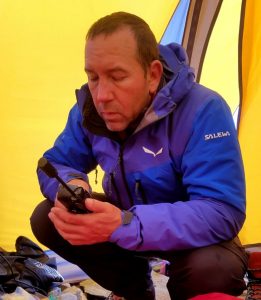
Our yellow tent shuddered under the strain of fending off 70 mph gusts as the relentless piteraq winds of Greenland surged down the icecap towards the sea. The temperature dropped below freezing and continued to drop, but inside the battered tent my colleagues and I were relaxed. We knew what was coming and we knew we had it easy. Not everyone out here had been so lucky.
In 1942 a U.S. Coast Guard amphibious biplane crashed into a glacier during an early winter storm not far from our tent. The pilot was attempting a bold rescue of the crew of a B-17 bomber that had crashed a few days earlier on the ice. The biplane, affectionately known as a Duck, vanished in the shifting snows of the arctic along with the three men on board: Lieutenant John Pritchard and radioman Benjamin Bottoms, both of the U.S. Coast Guard, and Corporal Loren Howarth of the U.S. Army Air Corps – the radio operator of the B-17. The crew that remained with the downed B-17 survived a brutal Greenland winter camped under the plane’s wing in an astonishing tale of human fortitude described in Mitchell Zuckoff’s NY Times bestseller, Frozen in Time.
The purpose of our frigid expedition to Greenland was to find the missing Duck and help bring home the bodies of the aviators to their families. My partners and I operate Global Exploration and Recovery LLC (GEaR), a nonprofit dedicated to the location and recovery of service members who lost their lives in the world’s harshest environments. Comprised of an international group of scientists and wilderness professionals, our team is prepared for the conditions and appreciates the magnitude of the task ahead of us. There is no margin for error in this unforgiving environment and we rely on our equipment for our safety and survival.
Over the last several years our team has been working to solve the mystery of the missing Duck. In this barren corner of eastern Greenland travel is hazardous and we are totally isolated on the icecap. GEaR is proud to partner with Iridium to meet our communications needs in these demanding conditions. In 2018 we brought an Iridium GO!® device to handle our critical communications. This lightweight, powerful tool kept us connected and allowed us to receive regular weather forecasts and gave us the ability to text and talk using our smartphones. Having these capabilities was essential to our safety and to share updates from our expedition with our followers around the world. Iridium technology will be going back out with us later this year as we return to the ice to investigate our findings and move closer to discovering the missing men.
 Guest Blogger: Francis Marley, Vice President of Global Exploration and Recovery