The launch of Iridium CertusSM comes at an exciting time for the mobile communications world. As satellite communications continue to evolve and improve, so do terrestrial options – most famously, 5G.
Undoubtedly, you’ve heard the hype surrounding 5G over the past few months. 5G is being designed to handle the increasing demand for connectivity, the volume of which prior network infrastructures were not built to support. To do this, wireless carriers will need to build entirely new network infrastructures, including new routers, as well as new devices – however, many carriers are beginning this evolution by attaching 5G components to LTE networks to improve functionality while the true 5G networks are developed.
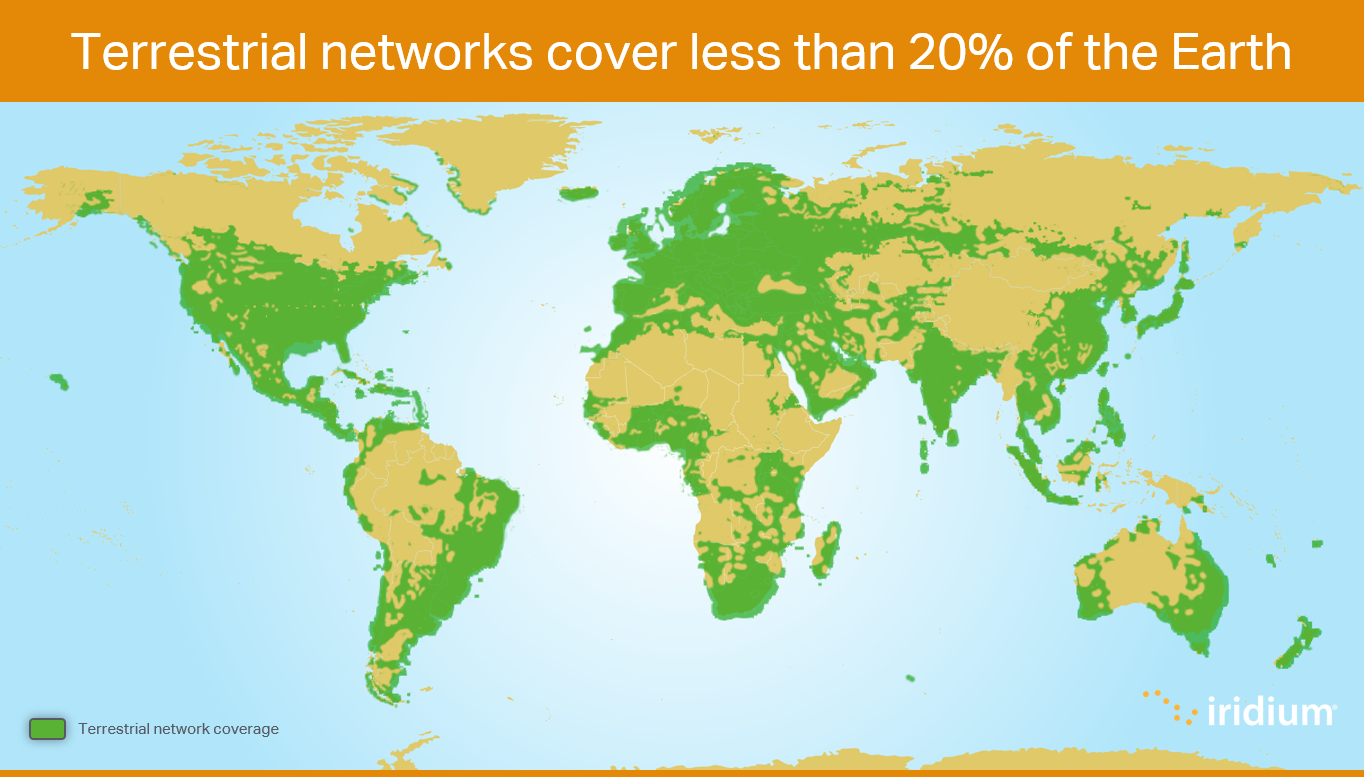
As a mobile communications provider, we are very excited about the introduction of 5G to the marketplace, as it will address a variety of consumer needs and up the game in telecommunications. However, as a terrestrial network, 5G will still be impacted by the limitations of land-based infrastructures – which currently cover less than 20 percent of the world.
Iridium Certus is an excellent companion system to existing cellular or other ground-based communications systems, whether they be 3G, 4G, 5G – or something entirely different! When paired with a terrestrial network, Iridium Certus delivers an ideal hybrid solution.
For individuals or fleets that work mostly in remote locations, or those who travel between urban and rural areas – for example, long-haul truckers, locomotives, search and rescue teams – a hybrid broadband solution can ensure critical communications are never disrupted as they travel in and out of cellular coverage.
Iridium Certus allows users to extend their mobile networks for high-quality communications on the move. Our current Iridium Certus land terminal, MissionLINKTM by Thales, already has a built-in 4G failover, which will also support 5G failover as it becomes available. Iridium Certus also integrates with Internet, cellular, Land Mobile Radio, and other location-based applications.
As we enter the next generation of wireless communications with 5G, Iridium Certus hybrid solutions will become an important part of any connectivity solution.
Earlier this month, long-time Iridium Flare watcher Paul Kearney wrote to us about his love for the beautiful phenomenon. He shared a heartwarming story of how an Iridium Flare brought him and his wife together when they first started dating!
Good day Iridium,
I’ve read with a sense of considerable melancholia – and more than a wistful twinge – the story of the end of the first-generation Block 1 Iridium satellites. Thank you for sharing so many details of the new constellation, as well as the deorbits of the 66 “old guard” satellites.
I have been a dedicated Iridium Flare watcher for over 15 years, and have had the good luck to observe them from such diverse areas as Norway, Belgium, Turkey, many areas of the U.S., and of course my home country, Canada.
The marvelous lady who agreed to be my wife was new to the Iridium Flare world when we were dating. She lived several hundred kilometers from me at the time, so I thought I’d show her what these things were all about! We actually set up a “Flare date” whereby I calculated the time and location of a flare in her area and then got up early with her (she in Ontario and I in New Brunswick, Canada) and she reported her sight of the flare to me. Hey – it’s a bit unorthodox for some, but it worked for us! The great circle distance between the two spots that we viewed the Flare together was just shy of 912 kilometers, and if I recall correctly, she had a -7 magnitude, while mine was considerably less bright.
Since then, we’ve watched dozens of Iridium Flares together, and we always remember that first special one!
It is the end of an era for you, but not for us: we’ll continue sharing the night sky together, hopefully for many years to come. But, we’ll miss your Flares. Good luck as the new generation comes into service! #flarewell
Earlier this month, Southwest Airlines completed their first test flight to Hawaii ahead of their eagerly anticipated service to Hawaii. This flight was part of the Federal Aviation Administration’s (FAA) Extended Range Twin-engine Operational Performance Standards (ETOPS) authorization process to allow Southwest to operate Hawaiian routes for the first time in its history.
Part of the FAA’s ETOPS authorization process is ensuring that the aircraft can communicate with air-traffic controllers on the ground even when traveling over an extended range. In order to help fulfill ETOPS, Southwest is utilizing our partner L2 Aviation’s Iridium Satcom Supplemental Type Certificate (STC).
The STC delivers a comprehensive communications system that provides the Flight Crew with global voice communications, as well as a dedicated channel to support Aircraft Communications Addressing and Reporting System (ACARS), Future Air Navigation System (FANs) messaging, Automatic Dependent Surveillance Contract (ADS-C), and Controller Pilot Data Link Communication (CPDLC).
Southwest is not the only airline choosing Iridium for their satellite communications needs. There are more than 100 carriers including American Airlines, Delta, United, JetBlue, and Air Canada trusting Iridium to keep their cockpits and crews connected anywhere in the world.
Commercial planes aren’t the only aircraft with Iridium onboard, though. Iridium aviation solutions, delivered by our over 30 aviation partners, keep business jets, general aviation planes, rotorcraft, and UAVs connected too.
The dependability of the Iridium network, which was recently upgraded through a $3 billion, multi-year investment, enables truly global and reliable connectivity for voice, data, and safety services. Through our partners, we have a wealth of Iridium Connected® products and equipage capability that can meet aircraft operational needs and requirements.
Click here to learn more about Iridium aviation solutions.
Iridium® NEXT has been a historic mission here at Iridium, and in the space industry as a whole! Our team was able to completely replace the original Iridium constellation with all new, upgraded satellites, enabling new, faster services like Iridium CertusSM – all without disrupting service for our existing users!
A few days ago, we completed the transition of 100 percent of our services to the new satellites. As we celebrate this exciting milestone, let’s take a look back at the stats that shaped the largest tech refresh in space history!
Iridium NEXT: By the Numbers
Approximately $3 Billioninvested in the Iridium NEXT satellite replacement program since it was announced in 2007
81 satellites built by Thales Alenia Space, with 66 in the active constellation, 9 in-orbit spares, and 6 ground spares
8 successful Iridium NEXT launches with SpaceX in less than 2 years. Each launch sent 10 satellites into space – except Launch 6, which sent 5 during a historic rideshare mission with NASA
22 Iridium NEXT mission partners involved in bringing the upgraded constellation to life
Each satellite is crosslinked to up to 4 others – 2 in the same orbital plane and 1 in each adjacent plane, enabling continuous connections at a lower latency
2 hosted payloads on each satellite, enabling the aviation and maritime industries to take advantage of real-time, truly global surveillance systems
The Iridium NEXT launch mission wasn’t all we were up to in the past few years, though! While we finished launching 75 new satellites into space (66 in the active constellation and 9 in-orbit spares), in 2018 we also…
Broke a 20–year monopoly on GMDSS, becoming the 2ndever recognized provider for GMDSS satellite services to the maritime community
Introduced Iridium CloudConnect, which will enable Amazon Web Services IoT to be available to the 80%+ of the planet currently lacking communications coverage
Partnered with ICOM to begin development on the world’s 1st truly global push-to-talk only (PTT) radio handheld
Became the preferred provider of satellite communications for The Ocean Cleanup, an ambitious project to rid the world’s oceans of plastic garbage and perform the largest ocean cleanup in history – starting with 50% of the Great Pacific Garbage Patch every 5 years
In January, we announced the commercial service introduction of Iridium Certus, the world’s first truly global broadband service enabled by the $3 billion Iridium® NEXT satellite replacement program. With a portfolio of ever-expanding voice and data services, Iridium Certus allows enterprises, governments, and individuals to connect with greater value and greater reach than any other mobile wireless network.
Over the past few weeks, some of the key people involved in developing Iridium Certus have discussed the service’s origins and enabling hardware. This week, the team will discuss the importance of our value-added Partners in the development and launch of Iridium Certus!
Earlier this month, we announced the commercial service introduction of Iridium Certus, the world’s first truly global broadband service enabled by the $3 billion Iridium® NEXT satellite replacement program. Now commercially available, Iridium Certus is a unique platform designed for the development of specialty applications and is the world’s only truly global broadband service, offering on-the-move internet and high-quality voice access. The service enables mobile office functionality for deployed teams and two-way remote communication for assets, autonomous vehicles, trains, aircraft and ships at sea.
Late last year, National Geographic journalist Mateusz Waligóra decided to brave the elements and attempt to become the first person in the world to walk alone through the Mongolian portion of the Gobi Desert. After successfully completing his mission, Mateusz shared with us his account of the trek and how he used Iridium to keep him connected!
In 2018 I went to Mongolia to be the first person in the world to walk alone the Mongolian part of the Gobi desert. I left Bulgan Gol in the province of Khovd on the western border with China to reach the village of Sainshand in the province of Dornogovi on the eastern border with China after 58 days and 1785 kilometers of walk.
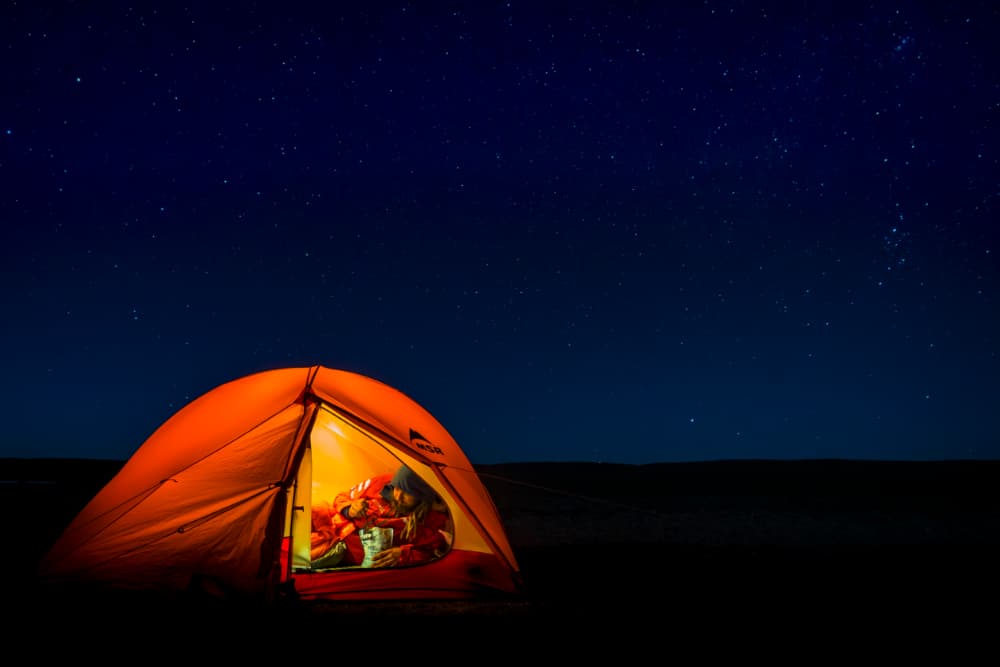
Due to the huge isolation (the Gobi Desert is one of the fewest inhabited places on earth), the only way of contact with civilization was the satellite connection. In small villages passed along the way you can use the coverage of local cellular networks, however, their signal is very weak and you can not rely on it.
The tasks that my satellite communications had to allow me are:
Immediate call for help if needed
Conversations with family
Contact with the press spokesman and representatives of the media (radio and television)
Sending photographs documenting the course of the trip.
In addition, the communication means had to be fully powered by 2 solar panels (Goal Zero Nomad 28 Plus) and 2 powerbanks (Goal Zero Sherpa 50 and Sherpa 100). I decided to bring a set with me:
Iridium 9505 with an additional battery and charger
Iridium GO! with spare battery
2 SIM cards, one of which was active and the other one had an emergency function
Using the Iridium 9505 phone The phone was used by me for conversations (I gave up text messages, it’s much easier to send via the Iridium GO! modem). The expedition had a great interest of the media, therefore I made 20+ interviews with the spokesperson for the expedition, 10+ talks with the largest radio station in Poland (Radio Zet), who was the media patron of the expedition and 3 talks with reporters of the largest Polish TV station ( TVN). The phone battery turned out to be very capacious, I was charging it on a regular basis with the power bank – I never had to use a spare battery. The range of the Iridium network during the whole trip was very strong, although sometimes the connection was interrupted when I tried to establish a connection from the inside of the tent. The satellite telephone number had the emergency services of my insurance agency – Global Rescue.
Using the Iridium GO! The modem was used in conjunction with the Samsung Galaxy S9 Plus. His main task was to send photographs and longer text messages by e-mail, which is allowed by the Iridium Mail application. The possibility of making a phone call was supposed to be an emergency function if the Iridium 9505 phone was damaged.
Initial modem tests at home left a lot to be desired – graphic files were uploaded very long and their quality was very poor. In the Gobi desert, however, everything worked perfect, photos with 900x600px resolution were sharp and their quality was sufficient for publishing in Social Media (Facebook and Instagram) and websites. I think that the initial failure in sending photos was influenced by little experience in handling Iridium Mail application and numerous disturbances related to the presence of buildings around. Sending E-mail messages thanks to the use of a convenient smartphone basically completely ruled out sending SMS messages over a satellite phone. In addition, the Iridium GO! Application, which allows you to make calls, initially intended to be an emergency function, has become very useful when the Iridium 9505 phone lost its range inside the tent. Connecting took place mainly in the evenings, when the temperature on the Gobi can drop to -15 degrees Celsius, in this situation I connected the modem with a tripod, exposing it outside the tent, and thanks to the smartphone I could comfortably stay in a warm sleeping bag. As in the case of the Iridium 9505 phone, the battery in the Iridium GO! modem. It is very capacious and it is easy to charge with a powerbank so that I have never used a backup battery.
In Summary: Thanks to having both a modem and telephone, I could immediately call for help in an emergency. Both devices enabled me to communicate with my relatives and current reports on the trip on the Internet, so crucial for ‘world firsts’ expeditions. Having two devices at the same time protected me in the event of one of them failing. I am sure that during the next trips through the desert I will also decide on the same set.
Click here to read more about Mateusz’s experience walking the Gobi Desert.
 Good day Iridium,
 Earlier this month, Southwest Airlines completed their first
 Iridium® NEXT has been a historic mission here at Iridium, and in the space industry as a whole! Our team was able to completely replace the original Iridium constellation with all new, upgraded satellites, enabling new, faster services like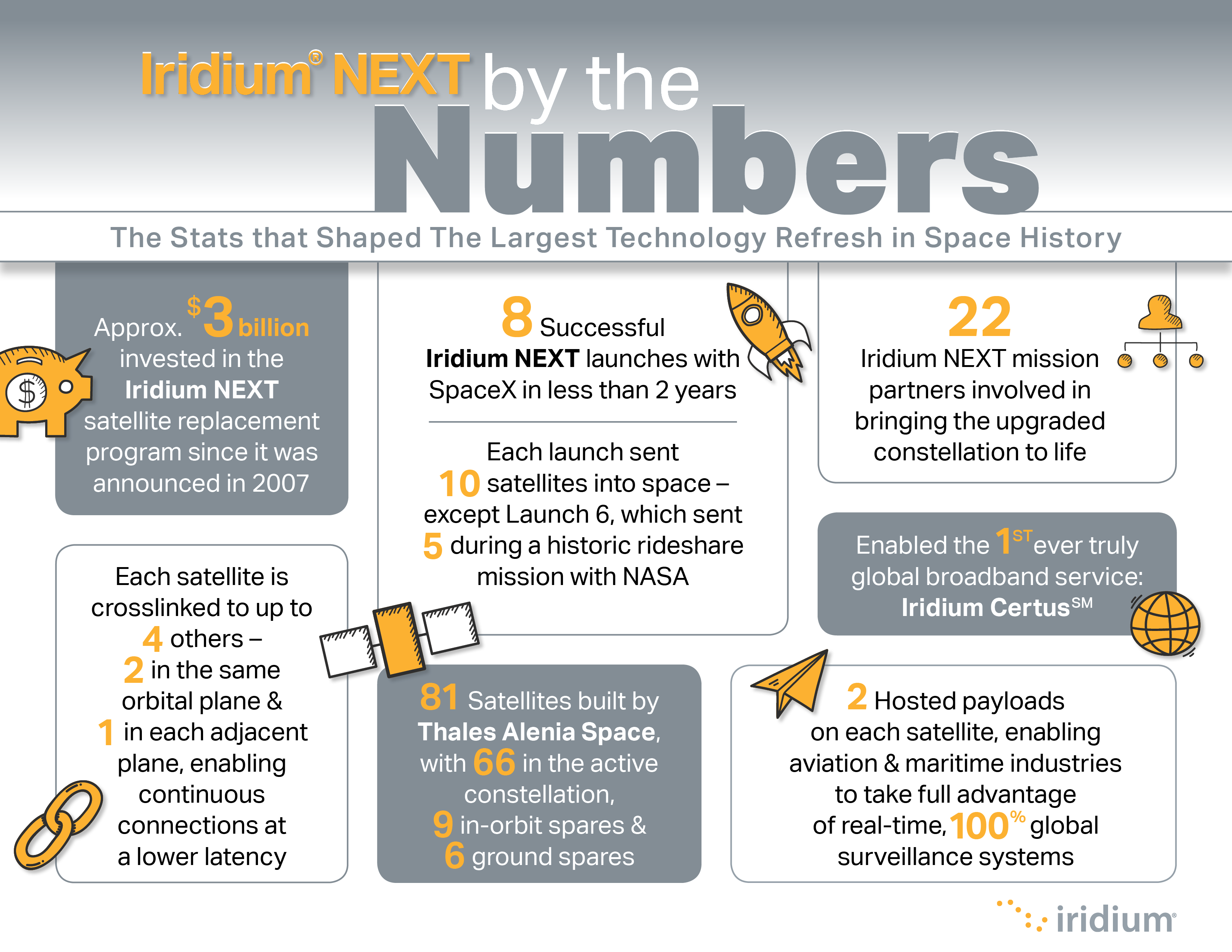
 In 2018 I went to Mongolia to be the first person in the world to walk alone the Mongolian part of the Gobi desert. I left Bulgan Gol in the province of Khovd on the western border with China to reach the village of Sainshand in the province of Dornogovi on the eastern border with China after 58 days and 1785 kilometers of walk.