Iridium Communications announced today that the second set of 10 Iridium NEXT satellites, launched yesterday by SpaceX, are functioning nominally and have begun the testing and validation process. This batch of 10 satellites was launched out of Vandenberg Air Force Base in California, increasing the total number of Iridium NEXT satellites in space to 20.
“We are thrilled with yesterday’s success. These new satellites are functioning well, and we are pressing forward with the testing process,” said Scott Smith, chief operating officer at Iridium. “Since the last launch, the team at our Satellite Network Operations Center (SNOC) has been anxiously awaiting this new batch of satellites. There is a lot of work to do, and we are up for the challenge.”
Now, and for approximately the next 45 days, these newly launched satellites will undergo a series of testing and validation procedures, ensuring they are ready for integration with the operational constellation. Once testing is completed, Iridium will also hand over control of Aireon’s Automatic Dependent Surveillance-Broadcast hosted payload, to the team at Aireon’s Hosted Payload Operations Center (HPOC), also in Leesburg, Va.
In this industry, innovation, precision and collaboration are key in bringing revolutionary technologies to market. As Iridium CEO Matt Desch has said, “In the satellite space industry, we have to work with others. Partnerships are crucial, and ours with SpaceX proves how important it is to work together to be successful.”
SpaceX is known as a leading commercial space exploration company that designs, manufactures and launches advanced rockets and spacecraft. It provides regular cargo resupply missions for NASA, and is the first rocket provider planning to send a human to Mars. But before all of its fame and notoriety, SpaceX was a startup with lofty goals. In 2010, Iridium believed in the company’s vision, and contracted with them to launch its entire next-generation global satellite constellation, Iridium NEXT, becoming SpaceX’s largest commercial customer. Iridium placed its largest initiative in the hands of a startup, essentially entrusting the future of the company with SpaceX.
As Iridium’s sole launch provider, the partnership with SpaceX is an example of trust, ingenuity and perseverance. “There are so many variables that need to be considered when finalizing launch preparations, and a slight deviation or unexpected behavior by any of them can jeopardize the launch integrity,” notes Iridium COO, Scott Smith.
Today, SpaceX employs more than 4,000 people, and Iridium remains its largest commercial customer. Seven years ago, Iridium purchased a new SpaceX Falcon 9 rocket that was going to set a new standard of excellence for the Space industry, with the goal of launching nine satellites per launch. Over the years, the rocket evolved and exceeded performance expectations, which now allows Iridium to launch 10 Iridium NEXT satellites per Falcon 9 rocket, an amazing technological feat.
Every Iridium NEXT satellite weighs 1,900 pounds, which is about the size of a Mini Cooper automobile. To put this into perspective, each rocket will carry approximately 19,000 pounds into space – that is the weight of a semi tractor trailer truck!
The two companies have been through numerous challenges; however, on January 14, 2017, the first Iridium NEXT launch occurred. On that date, SpaceX successfully launched the first 10 Iridium NEXT satellites on its Falcon 9 rocket. All subsequent launches will be on the same type of rocket, which is manufactured entirely in the United States, and is designed to be the world’s first fully reusable rocket, ultimately reducing the cost of space travel.
SpaceX’s President and Chief Operating Officer, Gwynne Shotwell shares, “I think both (Iridium and SpaceX) are incredibly innovative companies. Iridium and SpaceX obviously like the concept of change – change to make it better, not change just for change’s sake.”
Desch continued that, “In order to build successful LEO networks, you have to take it up a level of magnitude. You need to be 10 times better than the competition. Working with SpaceX allowed us to find an achievable and cost-effective launch plan to set us apart and allow us to start the largest tech refresh in space history.”
John McBride with Iridium NEXT satellites mated to their dispensers at the SpaceX complex at Vandenberg Air Force Base.
Today’s successful static fire test is yet another significant milestone passed along the way to the second Iridium® NEXT launch on June 25th. And, just like how the SpaceX Falcon 9 rocket has a sophisticated engine system, Iridium NEXT satellites each have their own thrusters for in-orbit maneuvering. Iridium NEXT Space System Engineer Contractor John McBride shared with us how the satellites’ engines don’t actually “burn” their fuel to produce thrust, among other curious facts. To get a better understanding of just how this system works, we sat down with John to learn more about the Iridium NEXT satellites’ fuel, hydrazine, and how while the fuel is great for satellites, it’s incredibly dangerous for people.
So just like how rockets have rocket fuel, satellites have a fuel of their own. Can you tell us a bit about the fuel for Iridium NEXT satellites?
Rockets like the SpaceX Falcon 9 develop tremendous thrust by “burning” fuel (combining the fuel with oxygen and heat), but Iridium NEXT satellite engines use only fuel and heat, no oxygen. This makes the propellant system much simpler and lighter, providing small amounts of controlled thrust using small quantities of fuel for a long mission. Block 1 (the original Iridium satellite constellation) and Iridium NEXT satellites use anhydrous hydrazine (N2H4) for the fuel because it is stable for long missions. We call this type of system monopropellant, or “monoprop.”
What are some of the properties that make it uniquely good for satellites, but also incredibly toxic for people? Are there alternatives to hydrazine?
Hydrazine is a clear liquid that looks and behaves much like water. It has a similar freezing point, surface tension, density, and viscosity. It has a unique characteristic of producing a white vapor that resembles cigarette smoke. It has a smell of ammonia (a close chemical cousin) and fish.
Hydrazine dissociates (separates) and expands in the presences of a catalyst and heat, providing the thrust needed to move the satellite. The Iridium NEXT engines contain small crystals of rare earth metal to act as a catalyst (cat bed) and heaters to get the chemical reaction started. In order to keep the engines clean we have to make sure there are as few impurities as possible in the fuel. For this reason, we buy a rare and expensive form of hydrazine called ‘ultra-pure’. We control the thrust by controlling the flow of hydrazine through valves. Despite these distinctions, we still say ‘burn’ when referring to what our engines do (a lot simpler than rapid energetic dissociation).
Hydrazine will burn if given the opportunity. In fact, in the presence of oxygen (air), a catalyst (a spot of rust in a room, for example), and a small amount of heat, hydrazine will spontaneously explode.
These characteristics make it desirable as a fuel for satellites, but dangerous to the humans who are around it. Besides being highly and easily combustible, it is extremely toxic, caustic, and probably carcinogenic. Humans exposed to hydrazine vapor will suffer burns in the eyes, nose, mouth, esophagus, and respiratory tract. Severe burns can be fatal. Liquid hydrazine on the skin is quickly absorbed and acts as a neurotoxin. Burning hydrazine is extremely hot, but produces no visible flame (yes, it’s like invisible fire!) which can quickly spread to other combustible materials (clothes, skin, etc.).
There are some new alternatives being developed called “green fuel” but these tend to be only slightly less caustic and combustible and the long-term performance in a space mission is just now being demonstrated.
With a substance so toxic and dangerous, what are some of the safety protocols followed for fueling with Hydrazine? How is it transported from one place to another?
Hydrazine is always transported in a Department of Transportation approved tank called a DOT 110. These tanks are very robust, and must demonstrate that they will not rupture or leak in a variety of conditions and forces.
For Iridium NEXT, the hydrazine is shipped to Vandenberg Air Force Base in California, where it is stored in an open-air fuel farm along with fuels for other missions. It is brought to the SpaceX Payload Processing Facility (PPF) days before fueling in order to stabilize to the ambient temperature. Handling these tanks require leak detectors and access to emergency breathing equipment (often called gag bags), but otherwise no special protective clothing.
Once we start moving the fuel from the DOT 110s to the satellites, all non-essential personnel are evacuated from the building and the operation is controlled from a building several hundred meters away. Personnel entering the PPF must wear Self Contained Atmospheric Protective Equipment (SCAPE). These suits are the same suits as used by Fire and Rescue departments everywhere. Breathing air is provided by hoses connected to a supply outside of the building.
Once the fuel is in the space vehicles, the tools are cleaned, the fuel transfer lines are purged, and everything including the operators are “sniffed” using a portable detector to make sure there is no contamination. The fuel valve on the satellite is closed and a secondary cover is lock wired into place. Once the fuel tanks are pressurized to flight pressure and they have been shown to be stable and leak free, personnel are free to re-enter the PPF. However, we always operate leak detectors and have access to gag bags.
How long can Hydrazine last in space? And how much is put in to each satellite?
Hydrazine is very stable and does not undergo any long term chemical changes. It can last indefinitely in a clean tank. The hydrazine in Block 1 satellites was produced in the mid ‘90s and still works perfectly. The Iridium NEXT satellites each have 164 kg of hydrazine and 1.5 kg of Nitrogen to pressurize the tanks. Most of this will be used to move the satellites from their insertion orbit to mission orbit, or to deorbit them when they have finished their mission, very little is used during the course of the mission.
How much does Hydrazine cost and what is the manufacturing process?
The Ultra-Pure hydrazine for Iridium NEXT was procured by our prime contractor as part of their contract, so the actual cost is not known to us, but during Block 1 we paid about $85/lb. Typical cost is around $100/lb. The real cost of hydrazine is probably in the protective measures we take to deal with it. SCAPE, detectors, disposal of waste, and mitigation plans are all very expensive.
Hydrazine is manufactured by chemically adding an oxygen atom to an ammonia molecule, then by using something like a giant a distillation column (really big still), which separates the hydrazine molecules from the ammonia and other impurities.
What else can you tell us about hydrazine?
Hydrazine is nasty. If you see water that is smoking, or if you smell fishy ammonia it is best to get away, go outside, and move upwind. But treated carefully it is stable, predictable, and critical for our mission success.
All 10 Iridium NEXT Satellites Undergoing Final Launch Preparations
Iridium Communications (NASDAQ: IRDM), today announced that all 10 Iridium NEXT satellites have arrived at Vandenberg Air Force Base (VAFB) in California and are being processed for the second launch. Scheduled for June 25th at 1:25 pm PDT (20:25 UTC), this launch begins an ambitious deployment cadence for the additional six SpaceX launches of Iridium NEXT satellites.
“First launch testing and validation activities went smoothly, so I have every confidence that our team will more than meet the challenge ahead,” said Matt Desch, CEO, Iridium. “We’re looking at a spectacular pace of new satellites entering service, that nobody has done since Iridium, the first time around.”
The June 25th launch is the second of eight launches for the Iridium NEXT program. Under the lead of Thales Alenia Space (Iridium NEXT System Prime Contractor), the satellites were shipped in pairs from the Orbital ATK Satellite Manufacturing Facility in Gilbert, Arizona. The satellites were transported in specially designed motion and temperature-controlled shipping containers. Upon arrival, each satellite began pre-launch processing which will continue up until launch day. This includes mating them to the dispensers, fueling and encapsulation within the payload fairing. Simultaneously, SpaceX is processing the first and second stages for static fire and launch. All components are on-site and on schedule at this time for launch.
Iridium NEXT is the Company’s next-generation global satellite constellation scheduled for completion in 2018. Iridium NEXT represents the evolution of critical communications infrastructure that governments and organizations worldwide rely upon to drive business, enable connectivity, empower disaster relief efforts and more. Iridium NEXT will introduce new capabilities including, Iridium CertusSM, the Company’s next-generation multi-service communications platform, that will deliver broadband speeds over L-band for aviation, maritime, land mobile, Internet of Things and government organizations. It will also enable the AireonSM space-based ADS-B real-time, global aircraft surveillance and flight tracking system.
You are currently browsing the IFP blog archives for June, 2017.
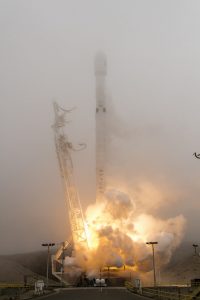 Iridium Communications announced today that the second set of 10 Iridium NEXT satellites, launched yesterday by SpaceX, are functioning nominally and have begun the testing and validation process. This batch of 10 satellites was launched out of Vandenberg Air Force Base in California, increasing the total number of Iridium NEXT satellites in space to 20.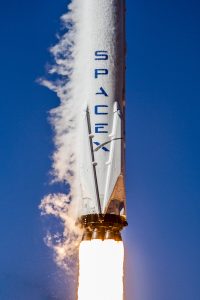

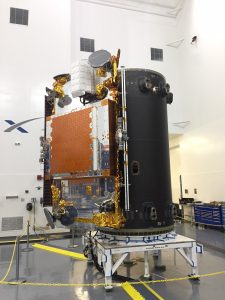 “First launch testing and validation activities went smoothly, so I have every confidence that our team will more than meet the challenge ahead,” said Matt Desch, CEO, Iridium. “We’re looking at a spectacular pace of new satellites entering service, that nobody has done since Iridium, the first time around.”