Colin Haley is a professional alpine climber, based in Seattle. He was in Nepal during the devastating earthquake on April 25, 2015, and shared his story:
____________________________________
Well, my first trip to Nepal didn’t go as planned… The craziest experience of my life? Yes. A moment at least as terrifying, if not more so, than my seven previous near-death experiences? Yes. I am extremely lucky to be alive, and so, so many people are extremely unlucky to no longer be alive. Most of the villagers in Kjianjing Gompa lost their homes, their livelihood and, in some cases, most of their family members in the span of about two minutes. The next village down-valley, Langtang, was essentially completely obliterated by an enormous avalanche, killing what I’ve heard speculated to be more than 300 people. The earthquake was nothing in comparison to the avalanches it triggered, and one of those avalanches very nearly killed me. The devastation is immense. I feel as though I overdosed on adrenaline every couple hours for three straight days. But despite all the sadness and fear, I loved Nepal.
I was on a climbing trip in the Langtang Valley with some French friends when the first earthquake struck. The Iridium Extreme® satellite phone was one of the first pieces of gear I made sure to salvage from the partially-destroyed lodge we had been staying in, and it of course started to see a lot of use after the earthquake and avalanche. Some of the use was my own, calling friends and family back in North America. They were overwhelmingly helpful, filling me in on what was going on elsewhere in Nepal, making arrangements for potential helicopter evacuation, and planning various options for me to eventually return home to the U.S. My travel mates Aymeric and Pauline made similar calls to friends and family in France. Soon, word spread throughout the village that I had a satellite phone, and I became a sort of village telephone booth. Some of the calls, those that I prioritized highest, were for rescue logistics – various residents of Kyanjin Gompa made many calls to the Nepali Army, describing the number of injured people in the village, detailing the degree of devastation, and coordinating for aid and helicopter evacuations. Though, the majority of the calls were locals calling family members. For literally several hours each day I stood in the grassy meadow and people waited their turn, holding little scraps of paper with phone numbers scribbled on them. It was often a frustrating process, as most of the Nepali phone numbers we were calling were not working, not surprisingly. When the calls went through successfully, it was usually emotionally intense. People cried for joy to hear that relatives elsewhere in Nepal were safe. People cried in grief when relaying the news to relatives in Kathmandu that everyone in Langtang had died.
I’ve been bringing satellite phones on climbing trips for years. Most of the time I use them to get updated weather forecasts, check in a few times with people back home, and occasionally ask someone to change my return flight, when the weather is good and we want one more chance to climb the mountain! Of course, in the back of my mind, the biggest reason I bring a satellite phone is in case something goes wrong. Aside from one mishap a few years ago involving me, a deep crevasse in Alaska and a broken orbital bone, I’ve rarely had the need to use a sat phone for its emergency capabilities. On this most recent trip in Nepal, however, being in the middle of a true natural disaster, the Iridium satellite phone became one of my most valuable and critical pieces of equipment. I made sure to keep it in my chest pocket non-stop, even when sleeping, for fear that another major avalanche might separate me from it, and therefore my connection to the outside world.
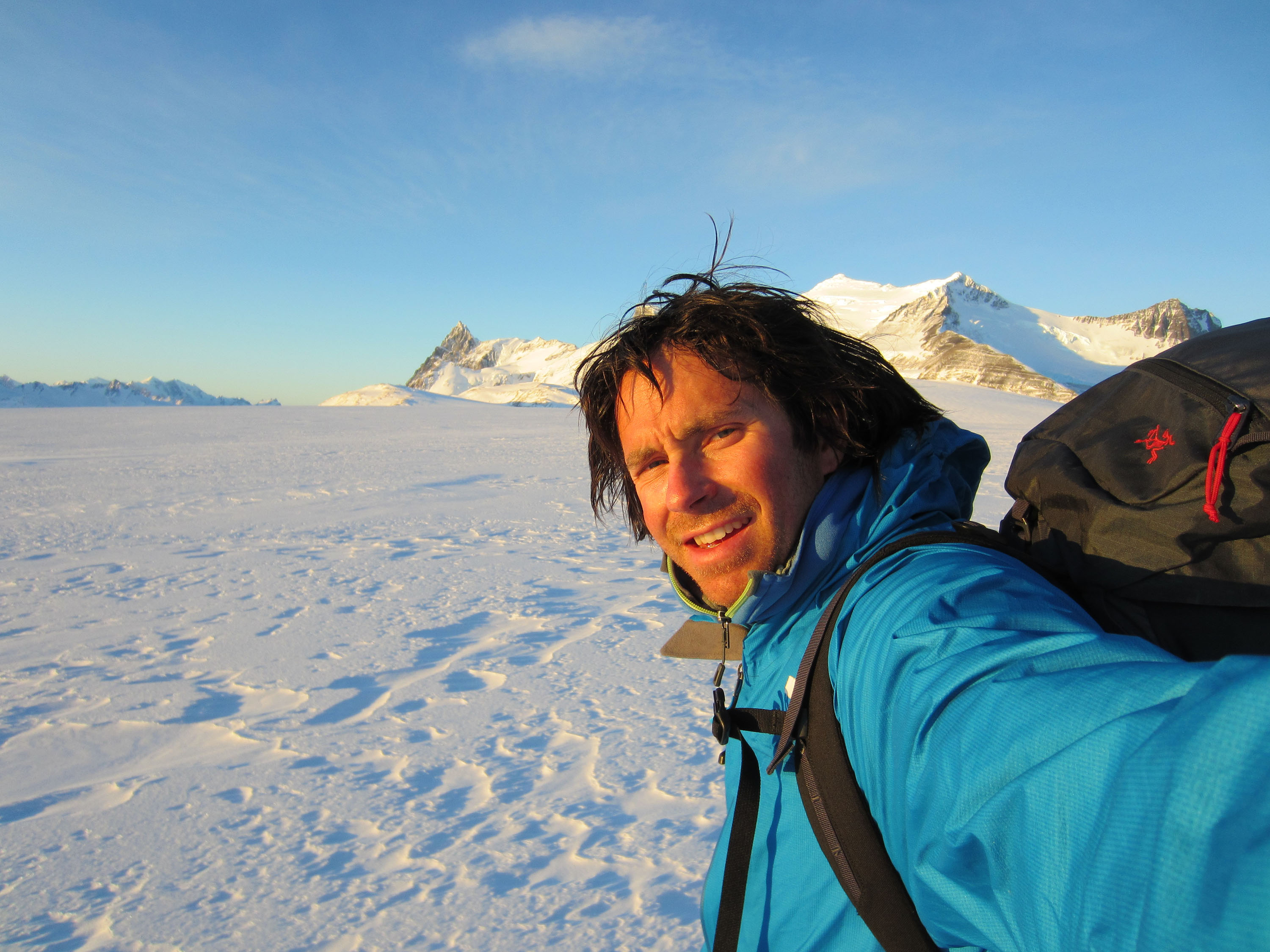
“The Iridium satellite phone became one of my most valuable and critical pieces of equipment. I made sure to keep it in my chest pocket non-stop, even when sleeping, for fear that another major avalanche might separate me from it, and therefore my connection to the outside world.” ~ Colin Haley
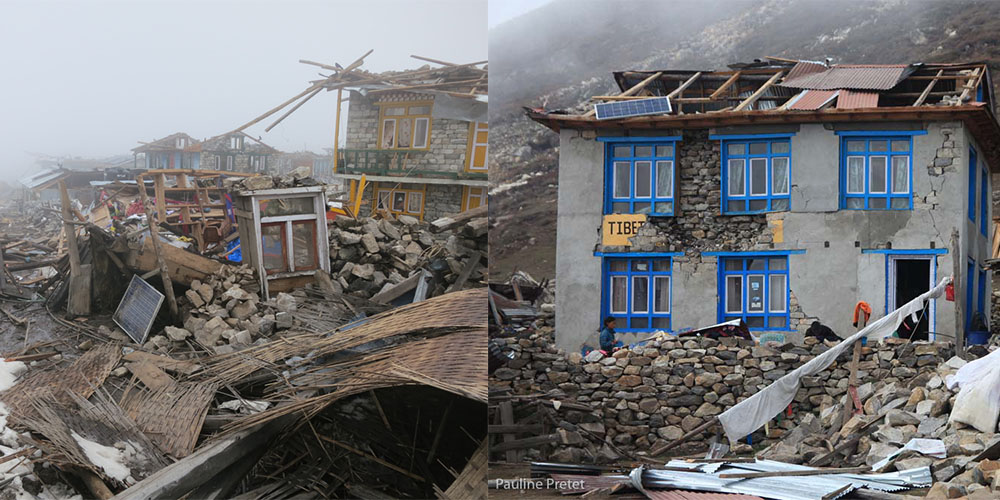
Damage and destruction in the Langtang Valley, photographed by Colin Haley.
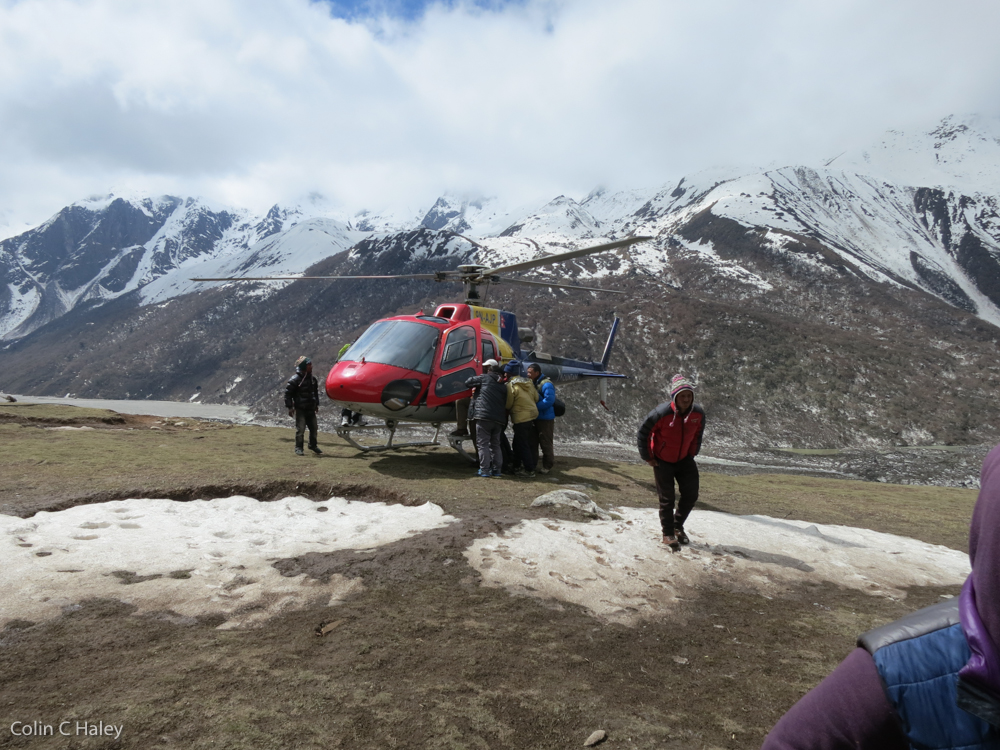
Rescue workers arrive via helicopter in the aftermath of the first earthquake, photographed by Colin Haley.
The 7.8-magnitude earthquake that struck Nepal on April 25 is a devastating tragedy, and a stark reminder of how critical it is to have reliable communications in the face of such a disastrous event. In a matter of seconds, basic infrastructure in cities and towns across Nepal was either badly damaged or destroyed, with that destruction only compounded by another 7.3-magnitude quake just a little over two weeks later. With terrestrial wireless networks overloaded at times or impacted by downed cell towers after the first earthquake, many victims were unable to communicate with family members or emergency services. In rural areas it was much worse, with communications infrastructure as well as roads destroyed, rendering many villages completely cut off from the rest of the world.
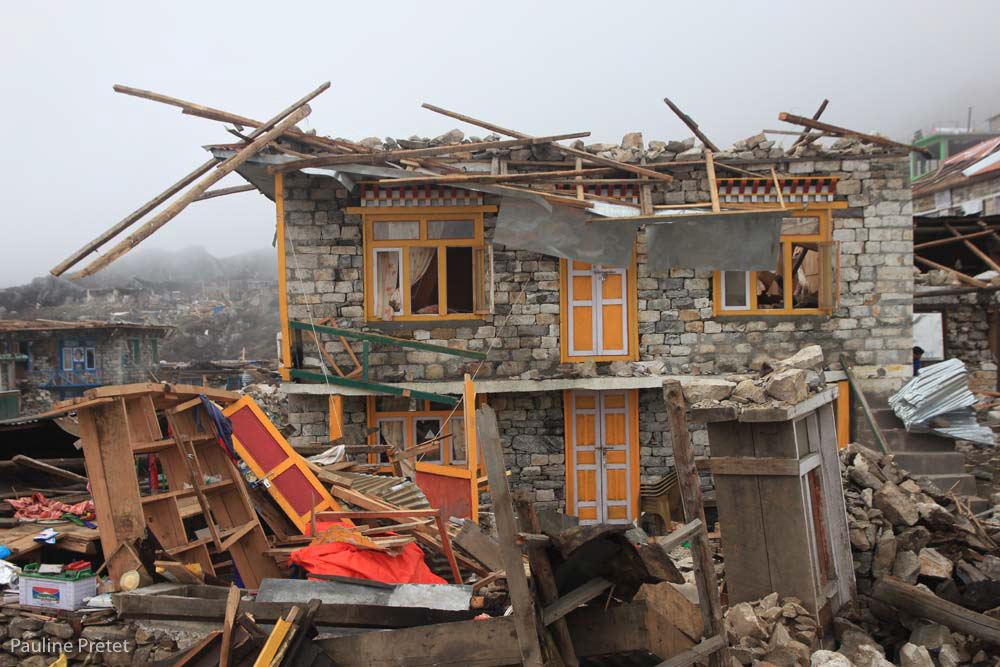
Contributed by Iridium Extreme user Colin Haley, who was on a climbing trip in the Langtang Valley in Nepal at the time of the first earthquake.
Early responders coming to help in the aftermath of disasters like these also struggle with the need for connectivity. Without a reliable line of communication, the challenge of deploying resources to the right areas and coordinating rescue workers on the ground can be insurmountable. It’s for that reason Iridium has a longstanding commitment to providing satellite services and equipment to organizations like the International Telecommunication Union, the United Nation’s agency for information and communication technologies, which is using Iridium® devices to support Nepal in coordination work on humanitarian efforts.
In fact, satellite communications enabled by Iridium rose significantly throughout the region affected by the earthquakes. Usage data shows that immediately after the first quake hit, hundreds of Iridium handsets were active on the network in the surrounding areas, supporting thousands of voice and data connections. Network activity increased exponentially in the days to follow, with the surge attributed to those using their existing devices such as the Iridium GO!® and Iridium Extreme® for voice and data connectivity, and relief organizations that use Iridium equipment blanketing the affected regions. In addition to ITU, NetHope, a collaboration of humanitarian groups that provides communications, infrastructure and emergency aid in disaster regions, has received in-kind donations of Iridium satellite handsets and airtime, as has Project HOPE, which focuses on providing medical supplies and volunteers during aid efforts. Both NetHope and Project HOPE are using Iridium handsets to stay connected and coordinate relief operations within Nepal. Additionally, a number of mountaineers and trekkers in the area are using sponsored Iridium devices for their own recovery and follow-on relief efforts, such as alpinist Colin Haley (Iridium Extreme) and teen climber and adventurist Matt Moniz (Iridium Extreme and Iridium Pilot® Land Station), to name a few.
According to Gisli Olafsson, Emergency Response Director for Nethope, “Iridium satellite phones were used by emergency responders all over Nepal in the early days following the first earthquake and resulting aftershocks. Communications is the key to delivering food, shelter, health care, water and much more to remote regions of Nepal.”
The Iridium network enables millions to stay connected daily, but it is situations like these that serve as a reminder of why a reliable network that enables communication everywhere on the globe is not just a luxury or business tool – it’s a critical lifeline.
In a world where threats and opportunities are increasingly global, and where people and organizations need reliable communications like never before, only one company connects the entire planet with voice and data coverage.
While this statement may sound like the opening of a movie trailer, the fact that it is grounded in the reality of Iridium’s unique pole-to-pole network makes it an even more interesting story. That can explain why Hollywood was inspired to use Iridium products in a few high-stake films and TV shows — proving once again that Iridium is truly everywhere.
In this blog, we take a look at the some of the most critically acclaimed acting performances by Iridium handsets. Spoiler alert: we often get typecast in the role of the critical lifeline.
Iridium’s biggest co-staring roles
24 – In a particularly action-packed episode of espionage TV series 24, Jack Bauer’s (Kiefer Sutherland) terrorist fighting days appear to be numbered after he is taken prisoner. Luckily for him however, his captors had an Iridium 9505A satellite phone on hand and the President was able to reach them just in time to save Bauer’s life.
Homeland – In season two of this political thriller, CIA operations officer Carrie Mathison (Claire Danes) receives a plot-changing tip that could finish the terrorist she is working against. Using an Iridium 9555 handset, she calls her boss to relay the message — bringing their solutions together, even when they were 6000 miles apart.
World War Z – In this zombie apocalypse blockbuster, Gerry Lane (Brad Pitt) gives his wife an Iridium 9555 before leaving to fight the international spread of an infection. Even though they aren’t able to call each other “once a day”, as agreed, Lane was able to complete his mission knowing the Iridium network was keeping their signal strong, and their love even stronger.
American Sniper – In a dramatic scene from this biographical war drama, Navy SEAL sniper Chris Kyle (Bradley Cooper) uses an Iridium 9505A to call his wife from the heat of the battle to let her know he wants to come home. Iridium was there to connect Kyle to what matters most, when he needed it most.
Cast Away – It may seem odd that a movie about a man marooned on a deserted island is related to global communications, but there is a little-known detail about the Cast Away story that could have shifted the plot line entirely. Director Robert Zemeckis was once asked what was inside the FedEx box that Chuck (Tom Hanks) never opens. His answer: a waterproof satellite phone. If Chuck missed his connection with the world, at least he made one with Wilson.
Now playing in a remote location near you
While zombie pandemics and nick-of-time phone calls from world leaders may just be in movies, critical situations taking place beyond the limits of traditional communication networks happen everyday in the real world. And Iridium is proud to play the role of trusted sidekick to many real-world heroes.
To watch a reel of some of the real-life scenarios when Iridium helped save the day, check the Iridium Connected stories.
To learn more about Iridium’s must-see global communications solutions, click through to the products section of our website.
To be continued…
Stay tuned with more Iridium in Hollywood appearing in upcoming major films in 2015 and 2016!
Antarctica is one of the most fascinating and remote places on the planet: its humidity is perpetually near zero, effectively making it a desert; it’s continually dark from March to late September, and it’s almost entirely covered by ice. It’s also the home to Emperor and Adelie penguins, which depend on ice for vital functions, such as eating and breeding. Monitoring these penguins is now imperative, as global temperatures continue to climb, and sea ice melts, in turn, endangering the penguins’ natural habitat – and their way of life.
In 2014, Cambridge Consultants developed cameras for the Zoological Society of London (ZSL) to monitor the dwindling Adelie penguin populations via solar-powered remote cameras. Driven by the Iridium® network and the Iridium 9523 modem, these cameras provide regular images for the Penguin Lifelines project. Since the project began in January 2014, researchers have been able to closely monitor the penguins and their habitat to analyze penguin behavior and get a complete picture of their changing populations. Results have shown that many factors can affect penguins in Antarctica – such as the absence of krill due to an increasing presence of fisheries and climate change. Over the last year, the cameras in Antarctica have gathered over 2,000 images, and more cameras will be deployed at new sites as ZSL reportedly prepares to expand the initiative.
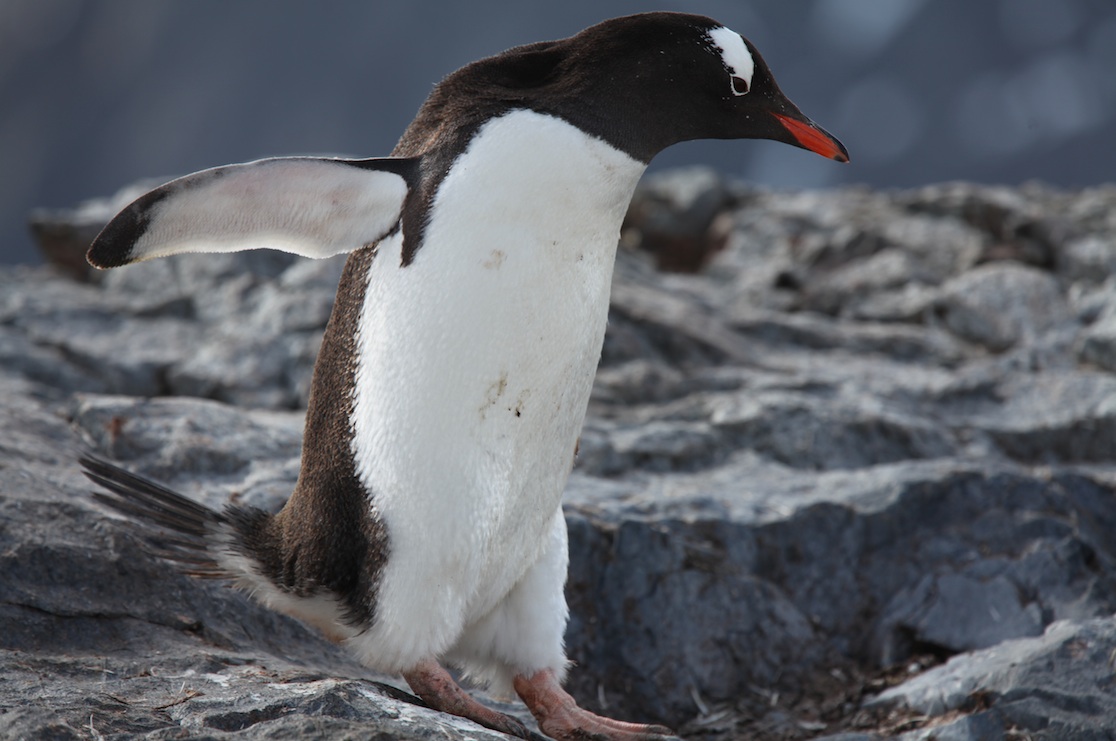
Copyright Alasdair Davies, ZSL
According to a TreeHugger article on the project, researchers have used remote cameras in the past, but previous implementations required them to trek back to their equipment to physically obtain memory cards. With Iridium technology, the scientists are freed from the constraints of memory cards and can view and evaluate images as they’re taken, from wherever they are on earth. These cameras, called Instant Detect, are also being used for anti-poaching efforts in Kenya through a partnership with the ZSL and the Kenya Wildlife Service.
The penguins on Antarctica’s Yalour Islands aren’t the only ones noticing the cameras; reporters across the web from technology, environmental and major media outlets are taking notice as well. Cambridge Consultants’ Jonathan Pallant told CNET’s Crave, “Iridium were chosen because they have the only truly global satellite system covering every inch of the earth’s surface. Obviously this is vital for getting information back from remote areas around the globe.”
For more information please go to http://www.zsl.org/ and www.iridium.com