Until recently, there have been roughly 3,000 American troops and 750 civilians aiding in efforts to stop the spread of the Ebola virus in West Africa. Whether it’s building treatment facilities or providing logistical support and medical training of healthcare workers, the U.S. military has been one of the many groups on the frontlines helping to fight the battle. It is imperative that all necessary measures and precautions are taken to monitor and protect everyone working to solve the medical crisis in Ebola affected regions, not just for their own protection, but for the safety and health of those affected as well, and leveraging satellite-tracking technologies is one way American military operations was able to make that happen.
Reasons to continue and expand the use of satellite-tracking devices
Right now, U.S. government personnel are using roughly 30,000 Iridium tracking devices primarily for tracking personnel safety, increasing situational awareness and asset tracking. Iridium tracking devices are cost-effective, easy-to-acquire, and can be smoothly integrated into existing Department of Defense tracking systems.
Expanding the use of satellite-tracking devices in military operations in general could provide a number of benefits and help immensely in protecting and managing troop ground operations. For example, today, tracking devices assist with command and control – but the ability to track an individual dismount (a soldier not in a military vehicle) is difficult. For commanders controlling large numbers of ground troops, having the ability to keep track of an individual dismount would help protect soldiers and help commanders maneuver their forces more effectively and efficiently.
But imagine taking those applications even further to global humanitarian efforts. Pertaining to the work that has been done in West Africa, Iridium tracking devices could be issued to all non-governmental organizations (NGOs) and local military working alongside U.S. military personnel. This “coalition-force tracking” function would provide a clear picture of where all related assets are located at any given time across multiple organizations and partners working towards the common goal of containing the Ebola virus, and preventing further harm and outbreaks.
Looking ahead, if approved, these devices could also go beyond military and public health personnel tracking, and move towards patient tracking. This type of use would not only protect the health and safety of those who have been in close proximity of Ebola-stricken patients, but would also help the patients themselves. Giving the ability to essentially “track the virus” would be a major innovation in controlling and containing the spread of the current Ebola outbreak and mitigating future risks.
Using the world’s largest and only truly global commercial satellite constellation, Iridium tracking devices can serve a greater purpose beyond typical usage, and expand into global humanitarian, health and safety initiatives.
For more information about Iridium devices and solutions for the federal government and DoD, please see www.iridium.com/emss.
It has been around since the 1930s, providing immediacy of voice, one-to-many communication and fast response times for individuals doing tough jobs around the world. Military personnel, industrial workers, government staff, emergency crews, and utility companies use it to stay connected. It has different names, but one thing in common – a push-to-talk button that helps transmit voice to hundreds or even thousands of users. Push-to-talk, embedded in a two-way radio, walkie-talkie or a phone app is here to stay. There is a critical need for a robust, global push-to-talk network that connects everyone everywhere and Iridium has now made it a reality.
What are the features of the revolutionary Iridium Push-to-Talk service?
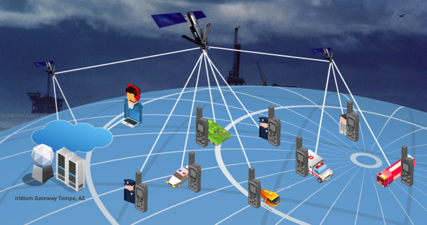
• Global: Traditionally walkie-talkies work when no terrestrial coverage is available, but they are designed for communication over short ranges (up to 20 miles). Cell phones, equipped with PTT apps tend to cover even longer distances, but are not reliable in remote areas. Iridium Push-to-Talk (PTT) allows you to communicate from every part of the world without limitations and compromise. Users working in the most remote areas where cell towers are nonexistent or have been destroyed can use Iridium Push-to-Talk to communicate quickly and effectively on a daily basis or in crisis.
• Mobile: Satellite push-to-talk devices may get cumbersome. Part of this is predefined by their function – they operate through higher power and need thicker housing to work in hazardous environments. Usually the tradeoff for a smaller radio size is a larger number of infrastructure sites. Since Iridium Push-to-Talk operates on Iridium’s constellation of 66 cross-linked, low-earth orbit satellites, you are free of bulky phones, towers and repeaters. There is no heavy equipment to slow you down. It is you and Iridium PTT connecting your entire team.
• Fast: Everything about Iridium PTT is fast. Starting with the service – Iridium PTT works as fast as terrestrial land-mobile radio solutions. Then the Iridium Extreme PTT device – you can initiate a talkgroup generally in less than 2 seconds. Last, but not least, the Iridium PTT Command Center allows you to define coverage areas and user talkgroups over-the-air in near real time. Iridium PTT is built for speed in order to support coordination and control of personnel and resources like never before.
• Simple and adaptable: The Iridium Push-to-Talk service is managed through a web-based interface called Iridium PTT Command Center. You can manage coverage areas, talkgroups, and devices with just your mouse and keyboard. Define coverage areas by shape and click “Save.” Changes will happen within seconds so your teams in the field can continue their operations and focus on the mission, not on the devices.
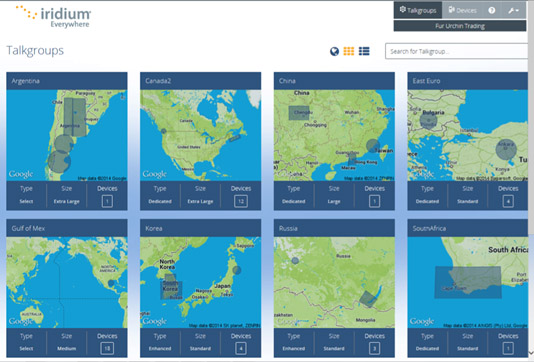
Iridium PTT Command Center
• Secure: All transmissions are sent using AES-256 encryption – one of the most secure protocols available. Your communications remain yours alone.
• Interoperable: The expediency in communication is easily translated in a number of industries. For example, an emergency dispatcher using Iridium PTT has the ability to communicate with police officers, fire fighters and paramedics to coordinate critical missions in different states and even different countries around the globe.
To determine if Iridium Push-to-Talk is right for you, check for updates on www.iridium.com. A list of Iridium Push-to-Talk service providers is coming soon. Stay tuned!
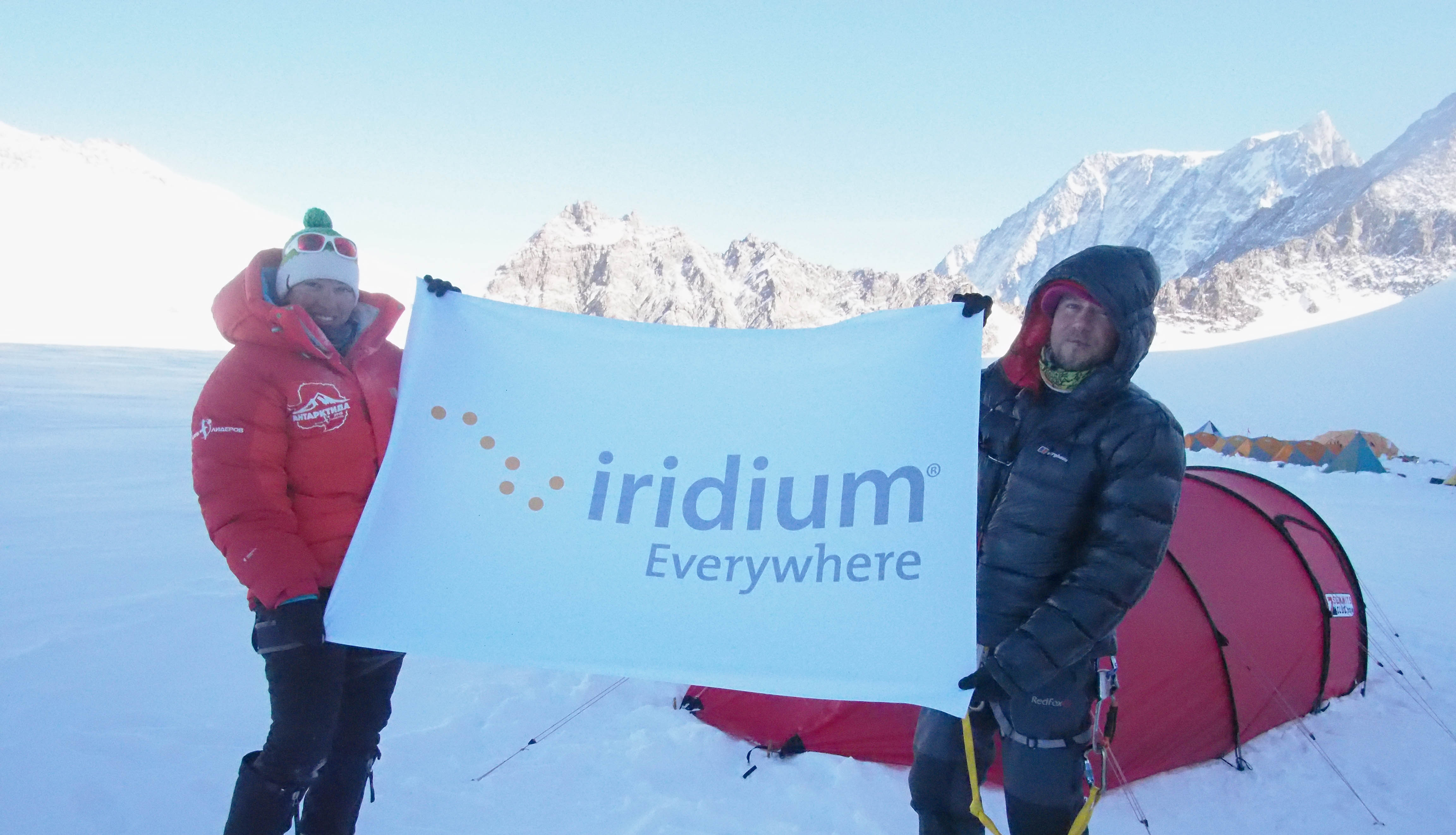
The Antarctica Leaders Club 2015 is an initiative organized by the Russian Business Leaders Club with the support of Russian President Vladimir Putin, the Russian Geographical Society and the Russian Mountaineering Federation. The expedition conquered some of the most inhospitable places in Antarctica and Iridium was an invaluable companion in this journey, providing reliable communication between its members and those far away.
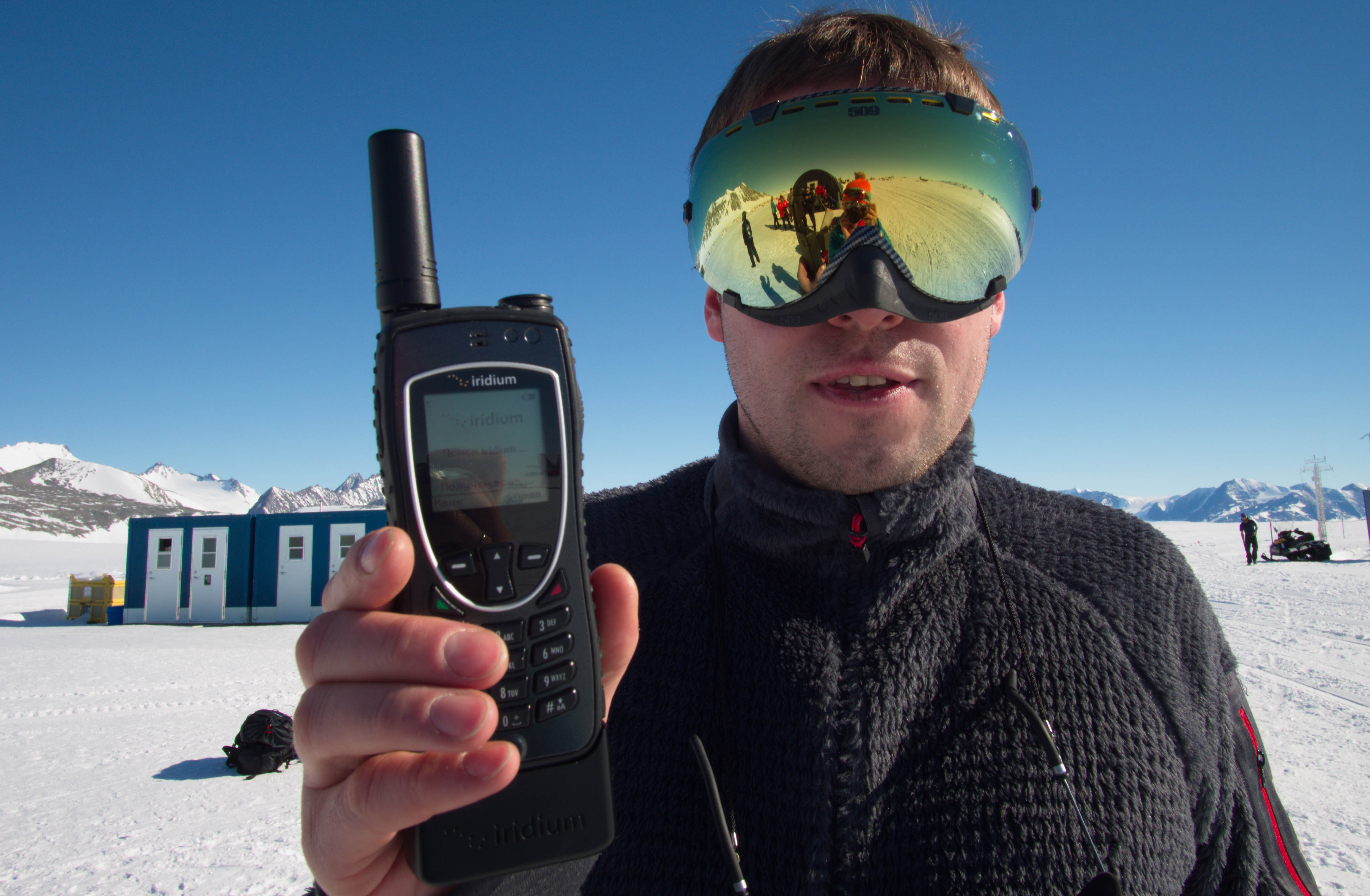
The Antarctica Leaders Club 2015 involved 14 people, including professional climbers, doctors and photographers. The group set off for Antarctica on December 20, 2014 with two goals: to test Russian-manufactured communications equipment and to do medical studies. To facilitate this critical mission and stay connected with family and friends, the group used two Iridium Extreme® phones, one Iridium GO!® device and one Iridium Pilot® unit. The Iridium devices allowed the members of the expedition to communicate with close ones, send social media updates and share pictures online even in very high altitudes (4000 meters) and very low temperatures (-40C).

On January 16, 2015, for the first time in the history of the Russian business community, entrepreneurs climbed the highest peak of Antarctica – Vinson (4897 m). The expedition received high public interest in Russia and was broadcasted live from Antarctica on one of the Russian federal channels on New Year’s Eve.
Interesting facts about the Antarctica Leaders Club 2015 expedition:
Fact 1: The expedition held a video conference call with Russian President Vladimir Putin, the first ever TV link-up between Moscow and Antarctica enabled by Russian-made equipment.
Fact 2: The expedition conducted medical research on untrained volunteers to assess the physical and psychological response to hypoxia in high altitudes.
Fact 3: Each member of the expedition carried a backpack of 70 liters, and pulled a sled of 120 liters. The participants of the expedition did not leave debris in their path – all waste was packed and carried away with them.

In today’s world, freedom of the press doesn’t just mean being allowed to report – you have to be able to report without interference, to convey stories from wherever they’re happening. Sometimes, that means being able to report from the North Pole. In 2012, cinematographer and editor Kenneth Sorento and journalist Martin Breum were tasked with doing just that for the Danish Broadcasting Corporation (DR).
Sorento and Breum traveled with a Danish expedition to the hotly contested Arctic seabed, where several countries have laid claim to various parts of the ocean floor. The Kingdom of Denmark was sending a team to collect scientific data and symbolically plant flags – Greenland’s and Denmark’s, among others. Sorento and Breum were mentally and physically prepared for the trying journey to the harsh north, but they had one problem: How would they send their reports back to their employer?

Enter Iridium, which, as the only truly global satellite communications network, was uniquely positioned to keep Bruem and Sorento connected. The team worked with Polaris Electronics A/S and Iridium to establish their own communication channel, using the Iridium Pilot® and Iridium 9555 satellite phone for their journey.
At one point, the reporting team was tasked with sending DR a 2.5-minute news story – at ready-to-run HD quality. Sending such a huge file from such a remote location seemed impossible, but with some planning – Sorento had worked with a technician at the Danish Broadcasting Corporation beforehand to develop a special method of compression up to the job – they were able to compress the video from 2.23 GB down to 40.6 MB and cut it into three parts. DR received the files, combined them, and the story aired soon after, with very little loss in quality.
You can watch a video about the expedition, and you can find out more about the team’s work here.